2026 Top Types of Temperature Monitoring Sensors
Temperature monitoring sensors are becoming more important as factories, laboratories, hospitals, and logistics networks demand tighter thermal control. In 2026, choosing a sensor involves more than comparing temperature ranges. Accuracy, response time, installation conditions, calibration stability, connectivity, and maintenance costs all influence the final decision.
Lord Kelvin, a respected authority in measurement science, said, “When you can measure what you are speaking about, and express it in numbers, you know something about it.” His statement still applies to modern temperature monitoring. A sensor placed beside a furnace may face vibration, dust, and rapid thermal changes. A sensor inside a vaccine shipment needs different protection, especially during long journeys and unexpected delays.
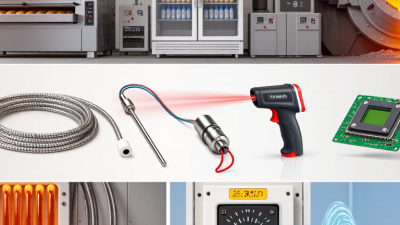
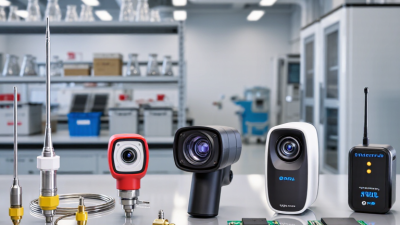
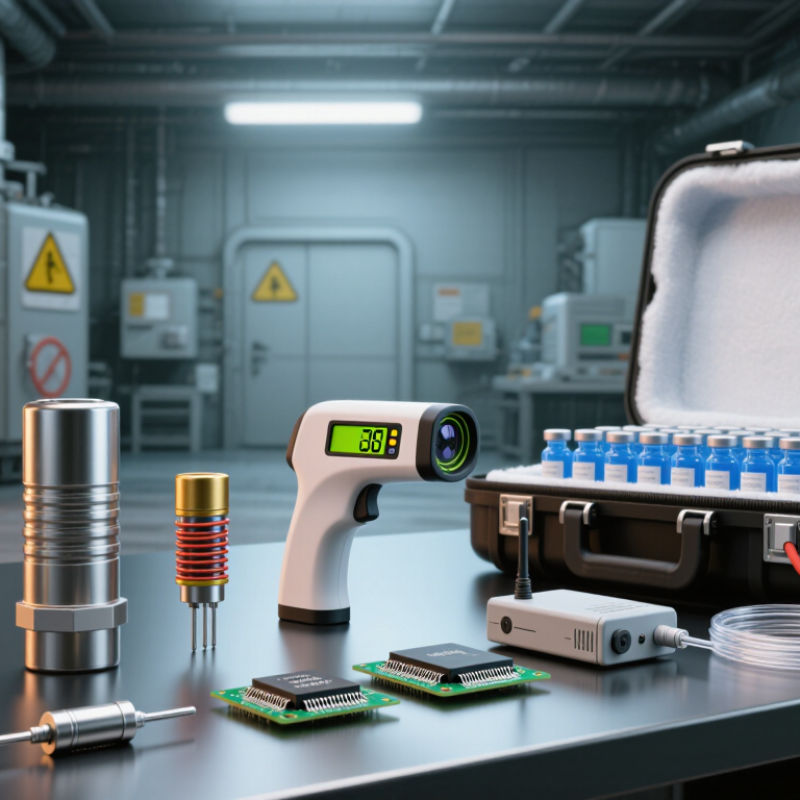
This guide examines the top types of temperature monitoring sensors, including thermocouples, RTDs, thermistors, infrared sensors, semiconductor devices, wireless sensors, and fiber-optic systems. Each technology has practical strengths and limitations. Thermocouples offer broad measurement ranges. RTDs provide strong stability. Thermistors can detect small changes at lower temperatures. Infrared devices measure without physical contact, but surface conditions can affect results.
No sensor is perfect. That matters.
A reliable selection begins with the application, not the product label. Engineers should examine calibration records, enclosure ratings, probe materials, data logging, and signal compatibility. They should also consider what happens when power fails or readings drift. Some recommendations may appear obvious, yet real installations often expose hidden weaknesses. This 2026 overview aims to support informed decisions through technical comparison, practical examples, and careful attention to measurement reliability.
What Temperature Monitoring Sensors Are and How They Work
2026 Top Types of Temperature Monitoring Sensors
What Temperature Monitoring Sensors Are and How They Work
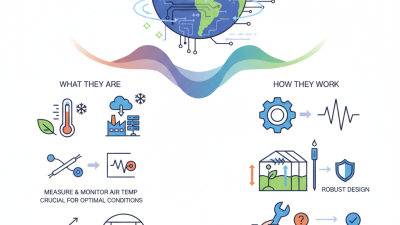
Temperature monitoring sensors convert heat into a measurable electrical or optical signal. A controller then displays, records, or triggers an alert from that reading. Common types include thermistors, resistance temperature detectors, thermocouples, and infrared sensors. Each suits different conditions.
Thermistors change resistance sharply as temperature changes. They respond quickly, making them useful in equipment cabinets and medical storage units. Resistance temperature detectors use a stable metal element, often for precise process monitoring. Thermocouples generate a small voltage where two different metals meet. They tolerate high temperatures, but their readings depend on correct reference compensation.
Infrared sensors measure thermal radiation without touching the surface. They work well on moving objects, hot machinery, and sealed packages. However, dust, steam, reflective surfaces, and an incorrect emissivity setting can distort results. The sensor may appear accurate while measuring the surrounding environment instead.
Reliable monitoring depends on placement, calibration, response time, and signal quality. A probe near a fan may read lower than the product center. Long cables can also introduce electrical noise. Technicians should compare readings with a traceable reference and document the test conditions. Calibration drift happens. It deserves attention. Sensor limits should remain visible in maintenance records, because a convenient reading is not always a trustworthy one.
Key Technologies Used for Accurate Temperature Measurement
2026 Top Types of Temperature Monitoring Sensors
Key Technologies Used for Accurate Temperature Measurement
Accurate temperature monitoring begins with matching the sensor to the environment. Resistance temperature detectors offer strong stability for process equipment and laboratory systems. Thermocouples tolerate high heat, vibration, and rapid changes. Thermistors provide high sensitivity across narrower ranges, making them useful in medical devices and battery packs. Infrared sensors measure surfaces without contact, but dust, reflection, and emissivity can distort readings.
The measurement chain matters as much as the sensor. IEC 60751 defines resistance characteristics for industrial platinum detectors, while IEC 60584 supports standardized thermocouple performance. NIST Technical Note 1297 emphasizes uncertainty evaluation, including calibration drift, wiring effects, and reference conditions. Small errors accumulate. They can become expensive.
The U.S. Department of Energy reports that heating, ventilation, and air conditioning can represent about 40% of commercial building energy use. Better sensing can expose inefficient control cycles, especially when sensors are placed near doors, ducts, or heat sources. Wireless and fiber-optic systems improve access in remote or electrically noisy areas. Digital compensation also reduces transmission errors, though it cannot repair poor installation. A sensor may be highly accurate in a laboratory and unreliable on a vibrating factory wall. That assumption deserves a second look.
How to Choose a Temperature Monitoring Sensor for Each Application
Choosing a temperature monitoring sensor starts with the process, not the catalog. Map the measured surface, expected range, response time, and acceptable error. For stable equipment between 0°C and 150°C, an RTD often provides dependable accuracy and repeatability. Thermistors can offer sensitive readings across narrower ranges. They suit incubators, battery packs, and compact control panels. Need fast response? Thermocouples tolerate high heat and vibration, but installation quality strongly affects their readings.
For moving products or sterile surfaces, infrared sensing avoids physical contact. Yet dust, steam, reflective metal, and changing emissivity can create misleading values. I check the target distance and surface condition before trusting a non-contact reading. A wireless sensor helps when cables obstruct doors, rotating equipment, or temporary storage areas. It also introduces battery limits, signal loss, and delayed data. Convenience is not free. For cold rooms, verify the sensor’s low-temperature rating, condensation resistance, and alarm behavior.
Sensor selection should include calibration evidence, traceable records, and a realistic maintenance interval. A highly accurate probe is useless if staff cannot clean, mount, or replace it correctly. Place the sensing point where the product actually changes temperature, not merely where wiring is convenient. During commissioning, compare readings with a calibrated reference under normal operating conditions. Wait for stability. I have seen a well-specified sensor fail because its cable was sharply bent beside a hot motor. That mistake changed my view of specifications: installation deserves the same scrutiny as the sensor itself.
2026 Top Types of Temperature Monitoring Sensors
Typical measurement ranges by sensor technology are shown below. Actual limits depend on the sensor construction, insulation, probe material, and installation method.
How to choose: Thermocouples are suitable for very high temperatures and fast response. RTDs provide strong accuracy and stability for industrial process monitoring. Thermistors are economical and sensitive over narrower ranges, while semiconductor IC sensors fit compact electronics and HVAC devices. Infrared sensors are useful for non-contact monitoring of moving, inaccessible, or extremely hot surfaces.
Emerging Trends Shaping Temperature Sensing in 2026
Temperature sensing in 2026 is becoming a connected engineering discipline, not merely a component choice. MarketsandMarkets estimates the global temperature sensor market will grow from approximately 8.1 billion dollars in 2024 to 11.1 billion dollars by 2029. That expansion reflects stronger demand for real-time visibility across factories, buildings, laboratories, and energy systems.
Wireless sensors are gaining importance because installation can avoid costly cabling. IoT Analytics reported 18.8 billion connected IoT devices worldwide in 2024. This wider network supports battery-powered thermistors, RTDs, thermocouples, and infrared sensors with edge processing.
Data can trigger alarms near a refrigeration door, a motor bearing, or a medical storage cabinet. Tiny temperature changes matter. Fiber-optic and MEMS sensors are also entering applications requiring electrical isolation, compact size, or resistance to electromagnetic interference.
The WMO State of the Global Climate 2024 report identified 2024 as the warmest year recorded, at about 1.55°C above pre-industrial levels. That pressure encourages denser environmental monitoring and faster data analysis. Yet, wireless convenience can hide battery decay, signal loss, and calibration drift. No sensor is perfect. A practical 2026 system should combine self-diagnostics, traceable calibration, and local data buffering. Artificial intelligence may detect unusual patterns, but poor sensor placement can still produce confident mistakes. This remains an engineering weakness.