What Are the Top 10 Temperature Monitoring Sensors?
Choosing the right temperature monitoring sensors can protect products, equipment, and people from unnoticed thermal changes. A cold-storage room may look stable while one shelf rises several degrees overnight. A machine bearing can feel normal before heat signals serious wear. These small differences matter.
This guide examines the top 10 temperature monitoring sensors used across laboratories, warehouses, manufacturing sites, healthcare facilities, and building systems. It compares thermocouples, resistance temperature detectors, thermistors, infrared sensors, semiconductor devices, and wireless monitoring solutions. Each option has different strengths in accuracy, response time, durability, installation, and cost.
The ranking is not based on popularity alone. It considers measurement range, calibration needs, environmental resistance, data-recording capability, and long-term reliability. Practical conditions matter. A sensor exposed to vibration may need a stronger probe. A wireless device may require careful battery planning. A highly accurate sensor can still underperform when installed poorly.
Details matter.
Reliable selection also depends on evidence from manufacturers, recognized testing practices, and real operating experience. However, no sensor is perfect. Even well-calibrated equipment can drift, lose connectivity, or produce misleading readings when positioned incorrectly. That limitation deserves attention, not concealment. The following overview explains where each temperature monitoring sensors category performs best, where it may struggle, and what decision-makers should verify before installation. Admittedly, rankings can change with the application. A low-cost thermistor may outperform a premium device in a narrow temperature range. Clear requirements should guide the final choice.
Temperature Monitoring Sensors: Definition, Purpose, and Core Measurement Principles
Temperature Monitoring Sensors: Definition, Purpose, and Core Measurement Principles
A temperature monitoring sensor detects thermal energy and converts it into a readable signal. Common choices include thermocouples, resistance temperature detectors, thermistors, infrared sensors, and semiconductor devices. Each type responds differently to heat. A thermocouple generates a small voltage from two joined metals. An RTD measures resistance changes in a conductive element. A thermistor uses a stronger resistance shift, often within a narrower range. Infrared sensors measure emitted radiation without touching the surface.
Their purpose extends beyond displaying a number. Sensors help protect equipment, control processes, verify storage conditions, and identify unusual heat patterns. Placement matters greatly. A sensor near an air vent may report 22°C, while the center of a loaded chamber reaches 28°C. That difference can affect product quality and safety. In practical installations, technicians also consider response time, operating range, humidity, vibration, and cable length.
Reliable monitoring depends on calibration, stable installation, and suitable measurement principles. A sensor may be precise but poorly positioned. That is an easy mistake. Calibration against a traceable reference helps reveal drift over time, while routine checks can expose loose connections or damaged probes. No measurement is perfect. Even a well-selected sensor can produce misleading data when the surrounding airflow, surface condition, or thermal lag is ignored. The best choice matches the sensor’s physical principle to the environment, required accuracy, and expected temperature changes.
The Top 10 Temperature Monitoring Sensors and Their Operating Methods
What Are the Top 10 Temperature Monitoring Sensors?
The Top 10 Temperature Monitoring Sensors and Their Operating Methods
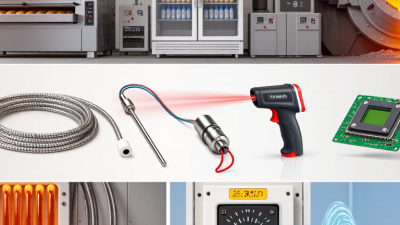
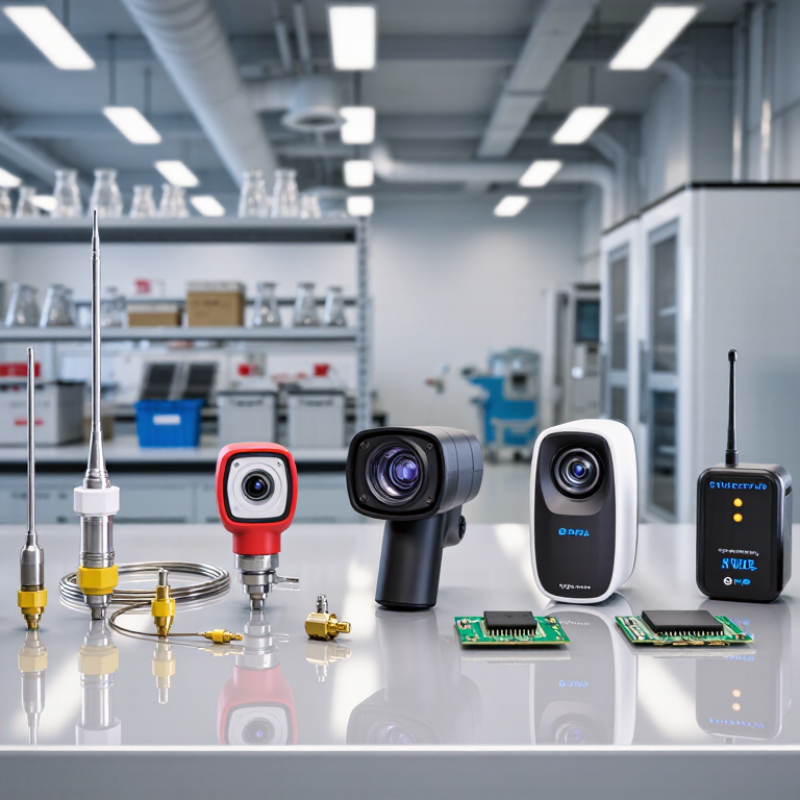
Temperature sensors convert heat into a measurable electrical, optical, or mechanical signal. The ten most useful types are thermocouples, RTDs, thermistors, semiconductor IC sensors, infrared sensors, fiber-optic sensors, bimetallic sensors, liquid-filled sensors, resistance-wire sensors, and wireless sensor nodes. Thermocouples generate voltage through the Seebeck effect and tolerate harsh environments. RTDs measure resistance changes in platinum or other metals. Thermistors use semiconductor resistance, offering high sensitivity across narrower ranges. Semiconductor IC sensors combine sensing and signal processing inside one circuit.
Infrared sensors estimate surface temperature from emitted radiation without physical contact. Fiber-optic sensors detect temperature through changes in light transmission, making them suitable near strong electromagnetic fields. Bimetallic devices bend when two bonded metals expand differently. Liquid-filled sensors show expansion inside a calibrated tube. Resistance-wire sensors use predictable conductor changes, while wireless nodes combine a sensor, transmitter, battery, and data logger. Practical testing matters.
NIST’s temperature measurement guidance emphasizes traceable calibration and uncertainty evaluation, while ASTM E230/E230M standardizes thermocouple terminology and reference tables. IEC 60751 supports industrial platinum RTD accuracy classes. The International Energy Agency reports that buildings consume about 30% of global energy, increasing demand for reliable monitoring in HVAC systems. Yet no sensor is perfect. Infrared readings can drift with emissivity, thermistors may saturate, and wireless batteries weaken in cold rooms. A careless installation can defeat an excellent sensor. Calibration records, probe placement, response time, and environmental exposure deserve equal attention.
Selecting the Right Temperature Sensor for Different Monitoring Applications
Choosing the Right Temperature Sensor for Different Monitoring Applications
The best temperature sensor depends on the environment, response speed, accuracy, and installation space. Ten common options are thermocouples, RTDs, thermistors, semiconductor sensors, infrared sensors, fiber-optic sensors, bimetallic sensors, liquid-expansion sensors, gas-actuated sensors, and quartz sensors. Each measures temperature differently. That difference matters.
Thermocouples suit furnaces, engines, and rapid process changes because they tolerate high heat and respond quickly. RTDs provide stable, accurate readings in laboratories, food processing, and equipment testing. Thermistors work well in medical devices and compact electronics, especially within a limited temperature range. Semiconductor sensors simplify monitoring inside control panels.
Infrared sensors measure moving or delicate surfaces without contact, but dust, steam, and surface reflectivity can distort readings. Fiber-optic sensors are useful near strong electromagnetic fields. They require careful installation.
Bimetallic sensors are simple for alarms and mechanical controls. Liquid-expansion sensors remain practical where visual readings are acceptable. Gas-actuated sensors can monitor distant tanks through connected capillary systems. Quartz sensors deliver exceptional stability, although their cost and electronics may limit adoption.
In a cold storage room, probe placement matters as much as sensor type. A sensor near the door may report warmer air than the stored products. Calibration also deserves attention. Even accurate equipment can drift after vibration, cleaning, or repeated thermal shocks. No sensor is perfect. A rushed selection can create confident but misleading data. Teams should document range, tolerance, response time, maintenance access, and failure behavior before installation.
Installation, Calibration, Maintenance, and Data Reliability Considerations
What Are the Top 10 Temperature Monitoring Sensors?
The practical ten include thermocouples, RTDs, thermistors, infrared sensors, semiconductor sensors, bimetallic sensors, fiber-optic sensors, liquid-in-glass thermometers, MEMS sensors, and wireless probes. Each suits a different environment. Thermocouples tolerate high heat, while RTDs usually provide stronger stability. Infrared devices measure surfaces without contact, but steam, dust, and reflective metal can distort readings. Installation matters more than many buyers expect. Place the sensing tip inside the true measurement zone, avoid dead spaces, and protect cables from vibration. WMO’s State of the Global Climate 2023 reported global temperatures about 1.45 ± 0.12°C above the 1850–1900 average. Reliable sensors now support decisions with serious consequences.
Tips: Record the sensor location, insertion depth, response time, and ambient conditions. Use traceable reference equipment. NIST’s ITS-90 framework supports high-accuracy temperature calibration across defined fixed points. ISO/IEC 17025 also emphasizes competent laboratories and documented measurement uncertainty. Calibration should follow risk, not habit. Critical storage systems may need shorter intervals than stable factory equipment. A perfect schedule does not exist.
Maintenance should include visual checks, connector inspections, battery replacement, and drift reviews. Compare readings against a calibrated reference during planned shutdowns. Keep raw data, adjustment records, and alarm history together. A clean dashboard can still hide a failing probe. Cross-check unusual changes with a second sensor before rejecting the data. This step is sometimes skipped. That is a mistake worth reconsidering. Sensor redundancy improves confidence, but poor installation can duplicate the same error. Data reliability depends on the entire chain, from probe placement to software timestamps.
What Are the Top 10 Temperature Monitoring Sensors?
This comparison shows representative achievable accuracy under proper installation and calibration conditions. Actual performance depends on the temperature range, sensor class, wiring, environmental conditions, calibration method, and maintenance schedule.
RTDs and thermistors generally provide the best accuracy for contact measurement, while thermocouples offer a wider operating range and strong durability. Infrared sensors enable non-contact monitoring but require careful alignment, emissivity settings, and control of ambient conditions. Regular calibration, secure installation, shielding from electrical noise, and inspection of wiring and sensor surfaces are essential for reliable data.