Choosing between analog sensors and digital sensors is not a simple contest between old and new. The right choice depends on the signal, environment, accuracy needs, and the electronics receiving the data. A pressure sensor in a noisy factory may need different protections than a light sensor in a compact wearable. Small details matter.
IoT Analytics’ State of IoT—Spring 2024 report estimated 18.8 billion connected IoT devices worldwide by the end of 2024, with the total projected to reach 39 billion by 2030. More connected equipment means more sensor readings to capture, process, and trust. Yet a digital output does not automatically mean better measurements, and an analog signal is not automatically outdated. Wiring, conversion quality, calibration, power use, and operating conditions can change the result.
It depends.
This guide compares five practical sensor options and explains where analog or digital outputs make sense. The comparison focuses on real selection factors, including signal conditioning, noise sensitivity, interface compatibility, and maintenance. Measurement traceability also deserves attention; NIST guidance emphasizes linking measurements to recognized standards when reliable results matter. Still, no shortlist can replace testing in the intended installation. A sensor that performs well on a bench may behave differently beside a motor or under temperature swings. That part is often overlooked. Read on to weigh the trade-offs before choosing a sensor for your next design.
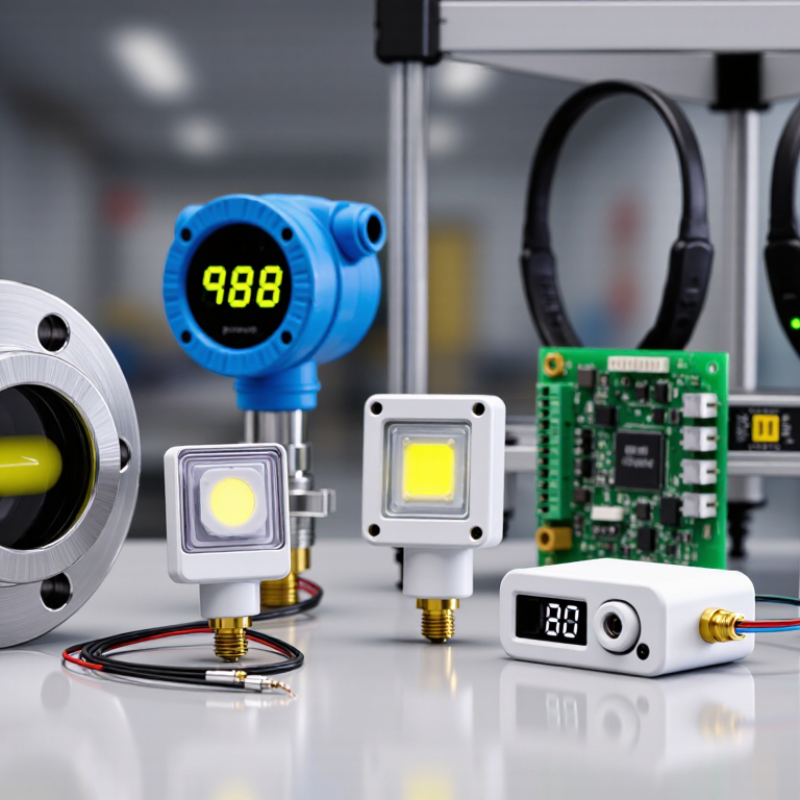
An analog sensor produces a signal that changes smoothly with the quantity it measures. A thermistor, for example, changes resistance as its surroundings warm or cool. A circuit can read that change as a varying voltage. At a workbench, a small voltage shift may reveal a temperature change before it feels noticeable. The signal is continuous, not a set of separate steps. That matters.
A digital sensor reports measurements as numbers, often through a communication interface. Many still use an analog sensing element inside; a converter changes its signal into digital values. The distinction is useful, but not perfectly clean. Analog outputs can be simple and responsive, yet long wires may pick up electrical noise. Digital signals often resist that interference better, though they still have limits in resolution, sampling speed, and wiring. A displayed reading of 22.4°C looks exact, but the sensor’s calibration and the conversion process affect how trustworthy it is. A practical choice depends on the whole measurement setup, not just the output type. I would not treat “digital” as automatically more accurate.
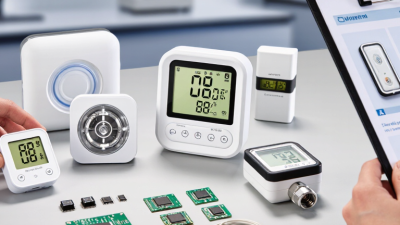
Analog sensors measure physical changes as continuously varying electrical signals. A thermistor, for example, changes resistance as temperature shifts; a pressure element may produce a small voltage as a surface flexes. The signal can preserve fine changes, but wire resistance and electrical noise can distort it. Small differences matter.
Digital sensors convert a measured signal into numerical values, often inside the sensor package. A 12-bit converter represents readings with 4,096 possible codes, calculated as 2¹². That sets a finite step size: changes smaller than one code may not appear in the output. Digital data is easier to transmit consistently, though conversion does not remove calibration errors or noise already present.
Sampling speed matters too. Shannon’s 1949 paper, “Communication in the Presence of Noise,” establishes a minimum sampling rate of twice the highest signal frequency for ideal reconstruction. A 10 Hz vibration therefore needs at least 20 samples per second; real systems often sample faster to handle filtering and changing conditions. That rule is useful, but easy to overtrust. NIST Technical Note 1297 explains how measurement uncertainty should be evaluated and reported, including contributions from multiple sources. In practice, sensor choice depends on the physical signal, required resolution, wiring, and environment—not simply whether its output is analog or digital.
Five common analog sensor types measure temperature, pressure or force, vibration, light, and position. Temperature sensing commonly uses thermocouples, RTDs, or thermistors. NIST Monograph 175 lists a Type K thermocouple output of about 4.096 mV at 100°C. IEC 60751 specifies a nominal 100-ohm resistance for a Pt100 platinum thermometer at 0°C. These figures show why analog readings need suitable signal conditioning and careful calibration.
Pressure and force sensors often use strain gauges, whose resistance shifts as a metal element flexes. Piezoelectric sensors produce a changing voltage when vibration or impact strains their sensing material. Photodiodes generate current that varies with incident light, while potentiometric sensors provide a voltage that changes with position. Real installations are less tidy: long cables, electrical noise, and temperature drift can distort a small signal. Analog is not automatically simpler.
Tips: Check the sensor’s output range before choosing an amplifier or data-acquisition input. Keep signal wires short, and compare readings with a known reference during calibration. Small errors matter. A sensor may be accurate on a bench but behave differently beside a motor or under changing temperatures.
Accuracy depends more on the sensing element, calibration, and signal conditioning than on whether its output is analog or digital. Analog signals can change continuously, but long cables may pick up electrical noise before the reading reaches a controller. Digital sensors convert readings internally, yet conversion does not remove sensor drift or poor calibration. Not automatically better.
IEEE Std 1241-2010 describes ADC performance and quantization; an ideal 12-bit converter has a quantization step of about 1/4,096 of its input range, with rounding error up to half a step. That is only one part of measurement error. NIST Technical Note 1297 advises evaluating uncertainty from both statistical variation and other sources, such as calibration and instrument limits. On cost, compare the complete circuit, not just the sensor: an analog part may need an amplifier, filter, and separate converter, while a digital part may add bus wiring and firmware work. For a short cable and simple reading, analog can be economical. In a noisy cabinet, fewer signal-conditioning components may make digital more practical. The awkward part is that assembly and testing costs can outweigh the sensor’s unit price.
Analog sensors suit applications where a changing value matters. A thermistor can track gradual temperature shifts, while a pressure sensor may provide a continuous voltage for a controller. This output is easy to inspect with a meter, but the receiving circuit needs a suitable input and careful calibration. Long wires can also pick up electrical noise.
Digital sensors fit systems that need direct readings or several devices on one connection. A room-temperature monitor, for example, can read a digital sensor and display the result without a separate analog-to-digital converter. Digital communication can reduce sensitivity to signal variation along short cables, though it does not guarantee better accuracy. Check the sensor’s measurement range, update rate, and interface before choosing one. Small details matter.
It depends. For a fast motor-control loop, an analog signal may offer a straightforward path to continuous measurements. For a battery-powered weather station, a digital sensor may simplify wiring and processing. Either type can disappoint if installed poorly: a sensor near a warm circuit board may report the board’s heat, not the room’s. Test placement and readings under real operating conditions; specifications alone can miss practical problems.
A qualitative comparison of how well each sensor type fits five common applications.
Scores range from 1 (less suitable) to 5 (more suitable) and represent general design considerations, not measured performance. Analog sensors can offer simple, continuous outputs; digital sensors commonly provide integrated conversion and can be less affected by noise during transmission. The best choice depends on the sensor, interface, environment, and system requirements.
As a specialist in environmental and flow sensor technology, ScioSense enables companies to use the planet’s resources more sustainably, helping to create a healthier future for all.