
Selecting reliable Ultrapure Water Equipment suppliers requires more than comparing catalog prices. Laboratories, pharmaceutical plants, semiconductor facilities, and research centers depend on stable water quality every day. A minor conductivity increase can affect sensitive testing, cleaning, or production results.
This guide, “10 Best Ultrapure Water Equipment Suppliers in 2026,” examines manufacturers through practical and technical criteria. These include purification performance, system design, monitoring accuracy, consumable availability, installation support, maintenance response, and documented quality controls. Experience matters here. A polished website cannot replace consistent operation at the point of use.
Water quality is measurable.
The review considers technologies such as reverse osmosis, deionization, ultraviolet treatment, ultrafiltration, and final polishing. It also looks at Type I water specifications, resistivity, total organic carbon, microbial control, and system alarms. Suppliers with clear validation documents and transparent service procedures receive greater attention. Regional support is important, especially when cartridge replacement or calibration cannot wait.
Still, no ranking is permanent. Product lines change, service quality differs by country, and published specifications may not reflect every installation. Some evidence can remain uneven. Buyers should verify current certifications, warranty terms, delivery times, and compatibility with existing laboratory systems.
A strong supplier should explain limitations, not only advantages. The best choice depends on daily water demand, application risk, available space, and operating budget. This overview offers a practical starting point for informed comparison, while independent testing and site-specific consultation remain essential.
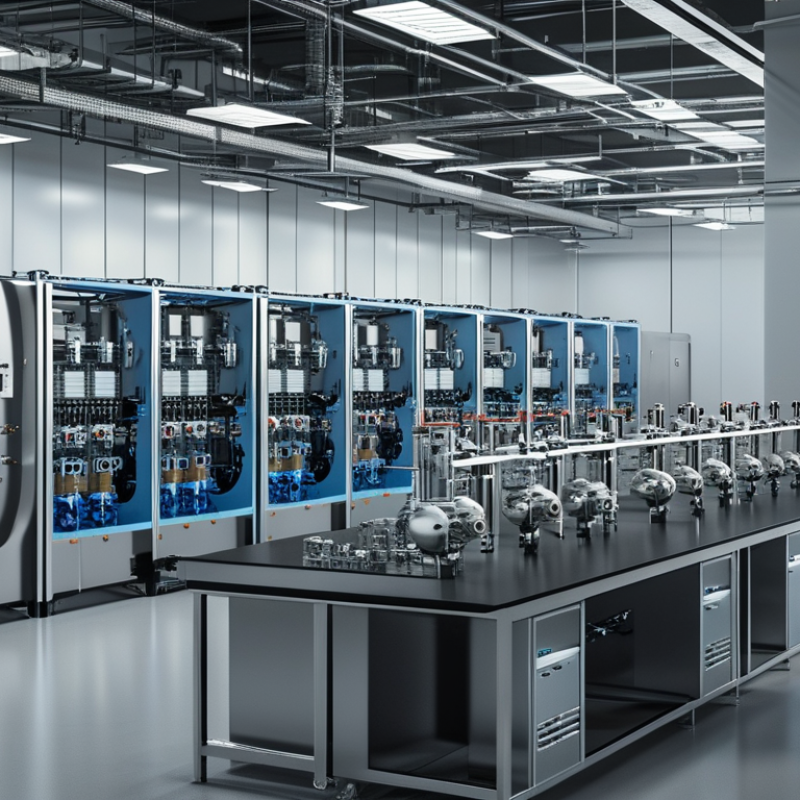
Ultrapure water equipment removes dissolved ions, organic compounds, particles, microbes, and other trace contaminants from feed water. A typical system may combine pretreatment, reverse osmosis, deionization, ultraviolet treatment, ultrafiltration, and final point-of-use filtration. Each stage has a specific job. Skipping one can weaken the entire process.
In laboratory work, ultrapure water often reaches a resistivity of 18.2 megohm-centimeters at 25°C. That number alone is not enough. Technicians also monitor total organic carbon, microbial levels, particles, and endotoxins when the application requires it. Clean water supports accurate chromatography, sensitive molecular testing, cell culture, and semiconductor processing. A minor residue can distort a result. It can also damage expensive instruments.
Choosing an equipment supplier requires more than comparing purchase prices. Look for documented performance data, clear validation support, calibration records, replacement-part availability, and responsive maintenance. Experienced operators know that water quality changes with seasons, feed-water conditions, and user habits. No system stays perfect.
I have seen routine checks neglected.
That mistake is easy to repeat. A reliable design should include alarms, online monitoring, sanitation procedures, and practical operator training. Supplier expertise matters because installation, storage, and daily handling can affect water quality as much as the equipment itself. Some specifications may look impressive, yet fail to match the actual laboratory workflow. Careful review remains essential.

Ultrapure water equipment combines purification, deionization, filtration and monitoring technologies to produce water with extremely low ionic and organic contamination. Electrical resistivity is a key quality indicator: the higher the value, the lower the concentration of dissolved ions.
The chart presents commonly referenced ASTM D1193 water-grade resistivity benchmarks at 25°C. Type I water, generally associated with ultrapure laboratory and analytical applications, reaches approximately 18.0 MΩ·cm. Type II and Type III water are commonly used for upstream purification, general laboratory work and equipment feedwater. Actual system performance depends on feedwater quality, purification technology, maintenance and monitoring.
Evaluating the 10 leading ultrapure water equipment suppliers required more than comparing catalogue specifications. Grand View Research estimated the global ultrapure water market at approximately USD 7.5 billion in 2023, with strong growth expected through 2030. That expansion increases supplier claims, but not every system performs equally under daily laboratory pressure.
We examined water quality against recognized benchmarks, including ASTM D5127 and USP standards. Key measurements included resistivity near 18.2 MΩ·cm, total organic carbon, microbial control, particle levels, and flow stability. We also reviewed pretreatment design, filter replacement intervals, recovery rates, and alarm functions. Energy use mattered. The International Energy Agency reports that industrial water services continue facing rising efficiency demands, so a system wasting large volumes of feedwater deserves closer scrutiny.
Service evidence carried similar weight. We compared installation records, calibration support, spare-part access, operator training, and documented maintenance response times. A polished interface is useful, but it cannot compensate for weak validation records. Independent test data was preferred over unsupported claims. The evaluation also considered total ownership cost across five years, including consumables and planned shutdowns. A perfect score is unrealistic. Site conditions change results. Feedwater temperature, seasonal contamination, and operator habits can expose weaknesses that brochures rarely mention. Supplier transparency became a practical test: could each provider explain failures, limitations, and corrective procedures clearly?
Sources reviewed included Grand View Research’s Ultrapure Water Market report, ASTM D5127, USP guidance, and International Energy Agency efficiency data.
The ten supplier profiles compare capability, not advertising reach. Each is assessed by system design, validation, service coverage, and documented operating results. MarketsandMarkets’ 2024 Ultrapure Water Market report forecasts annual growth of nearly 10% through 2028, driven by semiconductor, pharmaceutical, and laboratory demand. That growth raises the cost of weak technical decisions.
The profiles examine pretreatment, reverse osmosis, electrodeionization, ultrafiltration, and final polishing. Strong suppliers should consistently deliver 18.2 megohm-centimeter water at 25°C. They should also control total organic carbon near or below five parts per billion. ASTM D5127 identifies these quality controls as important for electronics applications. Pharmaceutical-focused profiles receive extra scrutiny for sanitization records, microbial monitoring, and data integrity.
Service quality matters. A reliable supplier provides commissioning reports, sensor calibration records, spare-parts planning, and operator training. The ten profiles also review recovery rates and wastewater handling. The U.S. Department of Energy reports that industrial water efficiency can reduce both energy use and operating costs, but recovery claims need independent verification. No supplier is perfect. Some systems perform well in factory tests yet struggle with unstable feedwater. Buyers should request site references, failure histories, and realistic maintenance intervals before ranking any supplier.
Top ultrapure water equipment suppliers in 2026 focus on purification accuracy, system visibility, and long-term service. Their solutions commonly combine pretreatment, reverse osmosis, deionization, ultrafiltration, and UV oxidation. Each stage removes a different risk, from particles to dissolved ions and organic residues. Final polishing units can produce water suitable for chromatography, trace analysis, and sensitive laboratory instruments. Many systems now include real-time resistivity, conductivity, temperature, and total organic carbon monitoring. Clear digital records also help technicians verify daily performance and investigate unusual readings.
Automation is another important feature. Modern controllers can alert users when filters require replacement or when water quality falls below a set limit. Remote diagnostics may reduce downtime, but they should not replace skilled inspections. In my experience, installation quality affects results as much as equipment specifications. Poor tubing connections, stagnant loops, or irregular sanitization can weaken an otherwise advanced system. No system is perfect. Supplier training, calibration support, spare-part access, and documented maintenance procedures remain practical measures of reliability.
Tips: Compare recovery rates, operating costs, sensor accuracy, and service response times before choosing a system. Ask for application data, not only polished brochures. Confirm that the equipment fits your feed-water quality and daily volume. Leave room for future demand. A system that barely meets today’s needs may become expensive sooner than expected.
Choosing an ultrapure water equipment supplier starts with your process, not a glossy catalog. Define required resistivity, TOC, microbial limits, flow rate, and daily demand. ASTM D5127 recognizes 18.2 MΩ·cm at 25°C as the theoretical resistivity of ultrapure water. Your supplier should explain how the system maintains that value at the point of use.
Ask for recent performance data, not only laboratory demonstrations. ISO 3696 Grade 1 water requires conductivity below 0.1 mS/m at 25°C. A qualified supplier should provide calibration records, sensor uncertainty, maintenance intervals, and validation procedures. Request a factory acceptance test using your feed-water profile. Hardness, silica, chlorine, and seasonal temperature changes can alter results. Small details matter.
Service capability often decides whether equipment performs well after installation. Check response times, spare-parts availability, remote monitoring, operator training, and documented change control. The WHO World Water Development Report 2024 highlights agriculture as responsible for roughly 70% of global freshwater withdrawals, reinforcing the need to measure water use and recovery carefully. I would not trust a supplier promising zero maintenance. That sounds attractive, but it is rarely realistic. Compare lifecycle cost over five years, including filters, membranes, sanitization, rejected water, and instrument calibration. Talk with two existing users. Ask what failed.
| Supplier Profile | Recommended Application | Core Treatment Configuration | Product Water Target | Typical Flow Range | Online Monitoring | Compliance References | Service Requirement | Selection Priority | Evaluation Score |
|---|---|---|---|---|---|---|---|---|---|
| Profile 01 Laboratory Type I Specialist | Analytical laboratories, molecular biology, reagent preparation | Reverse osmosis, deionization, UV photo-oxidation, ultrafiltration, final polishing | Up to 18.2 MΩ·cm at 25°C; low-ppb organic carbon target | 2–30 L/min at point of use | Resistivity, temperature, TOC, product-water status | ASTM D1193 Type I; ISO 3696 Grade 1 | High: annual calibration and filter replacement | High | 9.6/10 |
| Profile 02 Pharmaceutical Water Specialist | Pharmaceutical formulation, cleaning validation, quality-control laboratories | Pretreatment, RO, EDI, UV, ultrafiltration, sanitary storage and distribution | Typically designed around purified-water specifications; final values set by validated use | 50–2,000 L/h | Conductivity, temperature, TOC, flow, pressure and sanitization status | USP <1231>; applicable GMP and data-integrity requirements | High: documented validation and preventive maintenance | High | 9.5/10 |
| Profile 03 Semiconductor Grade Supplier | Microelectronics, wafer cleaning, precision process laboratories | Multi-stage RO, EDI, UV oxidation, membrane filtration and point-of-use polishing | 18.2 MΩ·cm at 25°C with stringent particle, ionic and organic control | 0.5–100 m³/h | Resistivity, TOC, silica, dissolved oxygen, particles and temperature | SEMI-related process requirements; ASTM D5127 commonly used for UPW monitoring | Very high: continuous qualification and redundancy | High | 9.4/10 |
| Profile 04 Healthcare and Clinical Supplier | Clinical laboratories, medical-device production, hospital support areas | RO, UV, deionization, bacteria-control filtration and hygienic distribution | Application-dependent; Type I water available for laboratory endpoints | 20–500 L/h | Conductivity or resistivity, temperature, flow and leak detection | ISO 3696; ASTM D1193; local medical and electrical safety requirements | High: sanitation records and service traceability | High | 9.1/10 |
| Profile 05 Modular Research Laboratory Supplier | Universities, research institutes and multi-user laboratories | Compact RO, deionization, UV and final polishing with optional tank feed | Up to 18.2 MΩ·cm at 25°C for Type I dispensing | 1–20 L/min | Resistivity, temperature, cartridge status and operating alarms | ASTM D1193 Type I; ISO 3696 Grade 1 | Medium: scheduled cartridge and lamp changes | High | 8.9/10 |
| Profile 06 Industrial Process-Water Supplier | Manufacturing, coatings, food processing and general industrial use | Multimedia filtration, softening, RO, EDI or mixed-bed polishing | Configured to process needs; Type II or Type III quality commonly available | 1–100 m³/h | Conductivity, pressure, flow, tank level and pretreatment status | ISO 3696 Grades 2–3; project-specific quality specifications | Medium: remote monitoring is advantageous | High | 8.7/10 |
| Profile 07 Point-of-Use Dispenser Supplier | Small laboratories, shared workspaces and low-volume ultrapure water demand | Central RO or deionized feed with final polishing at the dispenser | Up to 18.2 MΩ·cm at 25°C, depending on feed-water quality and maintenance | 0.5–3 L/min | Resistivity, temperature, filter life and water-quality alarms | ASTM D1193 Type I; ISO 3696 Grade 1 | Medium: frequent point-of-use filter checks | Medium | 8.5/10 |
| Profile 08 Containerized and Skid-Mounted Supplier | Remote sites, temporary facilities and rapidly deployable plants | Containerized pretreatment, RO, EDI, UV, storage and distribution skid | Defined by project specification; Type II or Type I output possible | 0.5–20 m³/h | Conductivity, flow, pressure, tank level, temperature and alarms | ISO 9001-based quality systems; ASTM or ISO water grades by application | High: spare-parts logistics and commissioning support | Medium | 8.4/10 |
| Profile 09 High-Recovery and Sustainability Supplier | Facilities seeking lower wastewater generation and reduced operating costs | High-recovery RO, concentrate recovery, EDI, UV and smart water reuse controls | Quality matched to application; final polishing used for Type I requirements | 1–50 m³/h | Conductivity, recovery rate, flow, pressure, energy and water-use data | ISO 14001 may support environmental management; water grade remains application-specific | High: process optimization and membrane monitoring | Medium | 8.3/10 |
| Profile 10 Turnkey Validation and Service Supplier | Regulated laboratories requiring documented qualification and lifecycle support | Customized pretreatment, RO, EDI, UV, ultrafiltration, storage and loop distribution | Defined through URS, risk assessment and validated operating limits | 100–10,000 L/h | Conductivity, TOC, temperature, flow, pressure, microbial-control indicators and audit trails | GMP, USP <1231>, ASTM D1193 and applicable local regulations | Very high: IQ/OQ/PQ and change-control support | High | 9.3/10 |
As a specialist in environmental and flow sensor technology, ScioSense enables companies to use the planet’s resources more sustainably, helping to create a healthier future for all.