2025 Top Particulate Sensors for Air Quality Monitoring You Must Know

Air quality has become a pressing concern worldwide as urbanization and industrialization continue to rise. Particulate matter (PM) pollution poses significant health risks, contributing to respiratory diseases and cardiovascular issues. According to the World Health Organization (WHO), 7 million people globally die each year due to exposure to polluted air, with particulate matter being a major contributor. As awareness of air quality issues grows, the need for reliable air monitoring technologies is more critical than ever. This is where particulate sensors play an essential role.

Particulate sensors are advanced devices designed to monitor and measure airborne particles in real time, providing valuable data for environmental assessment and public health protection. The Global Air Quality Sensor Market is projected to exceed $5 billion by 2025, driven by increasing government regulations and rising public awareness of air quality's impact on health. Innovations in particulate sensors are enhancing their accuracy, affordability, and accessibility, making them indispensable tools for researchers, policymakers, and consumers alike. This article delves into the top particulate sensors for air quality monitoring that are set to redefine industry standards by 2025, equipped to combat the pervasive issue of air pollution in a more effective manner.

2025 Top Particulate Sensors for Air Quality Monitoring You Must Know

2025's Leading Particulate Sensors: Overview of Top Technologies

2025 Top Particulate Sensors for Air Quality Monitoring You Must Know

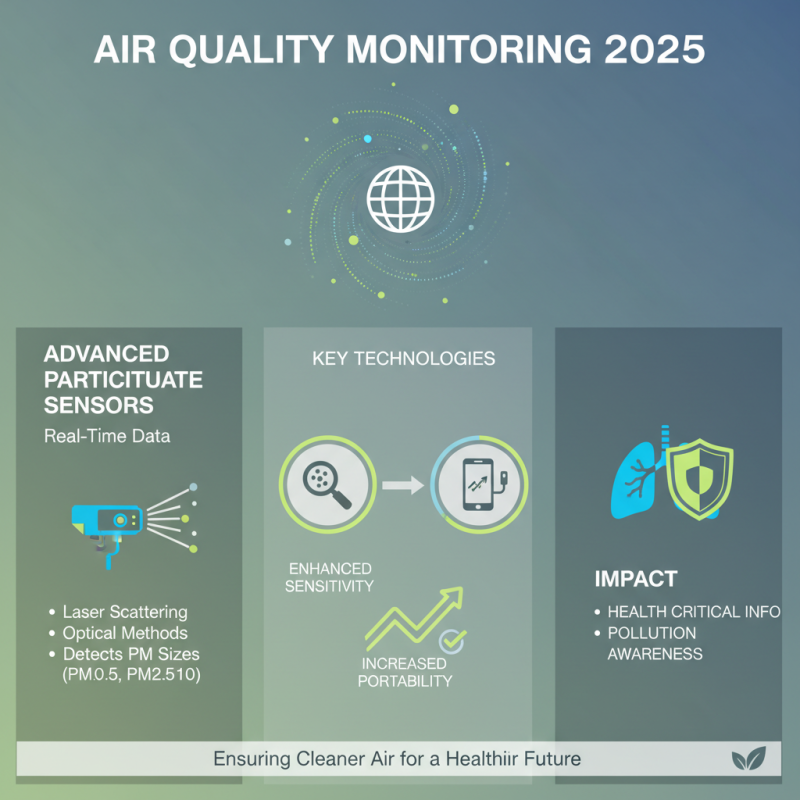
In 2025, the landscape of air quality monitoring is significantly shaped by advanced particulate sensors, which utilize cutting-edge technologies to ensure accurate and real-time data collection. These sensors leverage laser scattering techniques and optical methods to detect particulate matter (PM) at various sizes, providing critical information for assessing air quality. With growing concerns over pollution and its impacts on health, the technology behind these sensors is rapidly evolving, featuring enhanced sensitivity and portability.

Moreover, the integration of IoT capabilities is becoming a game changer in particulate sensor technology. By connecting sensors to the cloud, users can access instant data on air quality, allowing for proactive measures to mitigate exposure to harmful particulates. Some of the most innovative sensors also incorporate machine learning algorithms, which improve their accuracy and reliability over time. These advancements not only empower individuals and communities to monitor their environments efficiently but also facilitate governmental and organizational efforts in tackling air pollution on a larger scale.

Understanding PM2.5 and PM10: Key Metrics for Air Quality Sensors

Particulate matter (PM) is a crucial factor in air quality monitoring, with PM2.5 and PM10 serving as the key metrics. PM2.5 refers to particles with a diameter of 2.5 micrometers or smaller, while PM10 encompasses particles with diameters up to 10 micrometers. The smaller the particle size, the more deeply it can penetrate the respiratory system, leading to significant health issues. Monitoring these levels is essential for understanding the air quality of an environment and its potential impact on public health.

To effectively measure PM2.5 and PM10, air quality sensors must be utilized. These sensors not only track the concentration of these particles but also help in identifying pollution sources, improving community awareness, and prompting regulatory actions when necessary. Individuals can monitor outdoor air quality and limit exposure during peak pollution times, ensuring better health outcomes.

Tips: When using particulate sensors, make sure to calibrate them regularly for accurate readings. It’s also beneficial to familiarize yourself with local air quality indexes and travel advisories to protect yourself and loved ones from pollutants. Setting up notifications on air quality thresholds can help you stay informed and take action when air quality deteriorates.

Innovative Sensor Designs: Enhancements and Accuracy Improvements

As air quality continues to be a pressing global concern, the evolution of particulate sensors is at the forefront of technological advancements. Innovative sensor designs are making strides in enhancing both sensitivity and accuracy. Recent studies indicate that next-generation sensors can now detect particulate matter as small as PM1, allowing for more precise monitoring of harmful pollutants. These advancements not only improve data quality but also enable real-time tracking of air quality variations, a critical feature for both public health and environmental protection.

Furthermore, ongoing research emphasizes the integration of machine learning algorithms with sensor technology, which could revolutionize air quality monitoring. Data from industry reports show that sensors employing AI capabilities can achieve up to 95% accuracy in identifying specific pollutant sources. This level of precision facilitates targeted interventions, making it easier for municipalities and organizations to tackle air quality challenges effectively.

Tips: When selecting particulate sensors, consider those with multi-pollutant detection capabilities and ensure they are equipped with calibration features for maintaining accuracy over time. Regular data analysis and interpretation are also essential to maximize the benefits of these advanced sensor technologies, leading to informed decision-making for air quality management.

2025 Top Particulate Sensors for Air Quality Monitoring You Must Know - Innovative Sensor Designs: Enhancements and Accuracy Improvements

Sensor Model Measurement Range (µg/m³) Response Time (Seconds) Accuracy (%) Power Consumption (mW) Weight (grams)
Model A 0 - 500 10 ±2 50 15
Model B 0 - 1000 15 ±3 60 20
Model C 0 - 1500 12 ±2.5 40 18
Model D 0 - 2000 20 ±1.5 70 22
Model E 0 - 300 8 ±2 30 10

Market Trends: Growth and Adoption Rates of Air Quality Sensors in 2025

The air quality sensor market is experiencing significant growth driven by increasing awareness of air pollution's health impacts and regulatory pressures on air quality monitoring. According to recent reports, the global air quality monitoring market is projected to expand from approximately $4 billion in 2023 to over $6 billion by 2025, with a compound annual growth rate (CAGR) of around 8% during this period. As urbanization continues and more individuals seek solutions to mitigate air quality concerns, the adoption rates of particulate sensors are on the rise. The demand for real-time monitoring systems that provide accurate and actionable data is pushing innovation in sensor technology.

Moreover, advancements in sensor accuracy and miniaturization are fueling the proliferation of these devices across various sectors, including residential, commercial, and industrial applications. A study by industry analysts forecasts that by 2025, household adoption of air quality sensors will increase by approximately 15%, as consumers become more proactive in monitoring indoor air quality. Additionally, the integration of IoT (Internet of Things) technology is streamlining data collection and analysis processes, making it easier for end-users to access vital information. With industries, governments, and individuals prioritizing health and environmental standards, the market for air quality sensors is poised for substantial growth in the coming years, paving the way for smarter cities and healthier living environments.

Comparative Analysis: Cost-Effectiveness of Leading Particulate Sensors

When it comes to ensuring a healthy environment, the cost-effectiveness of particulate sensors plays a crucial role in selecting the best options for air quality monitoring. Recent comparative analyses reveal that while some high-end models may offer advanced features and precision, their price tags can be a barrier for many users. On the other hand, more budget-friendly sensors have emerged that provide adequate performance for everyday monitoring needs without breaking the bank. This balance between performance and affordability is essential, especially for community projects and personal use.

Tips: When selecting a particulate sensor, consider factors beyond just the initial purchase price. Look for warranties and customer support options, which can save money in the long run. Additionally, evaluate the total cost of ownership, including maintenance and any required calibration services, as these can influence the overall budget.

Another important aspect of cost-effectiveness in particulate sensors is their operational longevity. Users should seek out models that are durable and require minimal upkeep. The ability to replace filters or parts easily can also enhance the sensor's lifespan and ensure more accurate readings, ultimately making it a more sound investment. Understanding these nuances can lead to well-informed decisions in purchasing air quality monitors tailored to specific needs.