
LED screen rental has become a practical choice for concerts, exhibitions, sports venues, and corporate events. It gives organizers bright, scalable visuals without requiring permanent installation. Demand also reflects the wider growth of display technology. Fortune Business Insights estimated the global LED display market at USD 9.5 billion in 2023 and projected it to reach USD 17.5 billion by 2032. That figure covers the broader display market, not rental services alone. It offers useful context, but it should not be mistaken for a measure of rental-company revenue.
Choosing a provider takes more than comparing day rates. Pixel pitch, screen brightness, viewing distance, weather protection, and image processing all affect the result. So do delivery, installation, on-site technicians, and backup equipment. AVIXA’s industry outlooks track continued investment across professional audiovisual markets, including live events and digital displays. Still, a growing market does not guarantee consistent service. Specifications can look impressive on paper. Performance matters on site.
This guide examines top LED screen rental companies worldwide through practical criteria: equipment quality, technical support, project experience, and geographic coverage. Readers should verify current product specifications and service availability directly with each provider. Rental inventories and regional capabilities change. That detail is easy to overlook. A screen that suits a bright outdoor festival may be excessive for a small conference room. The strongest choice is the one that fits the venue, audience, content, and event budget—not simply the largest display.
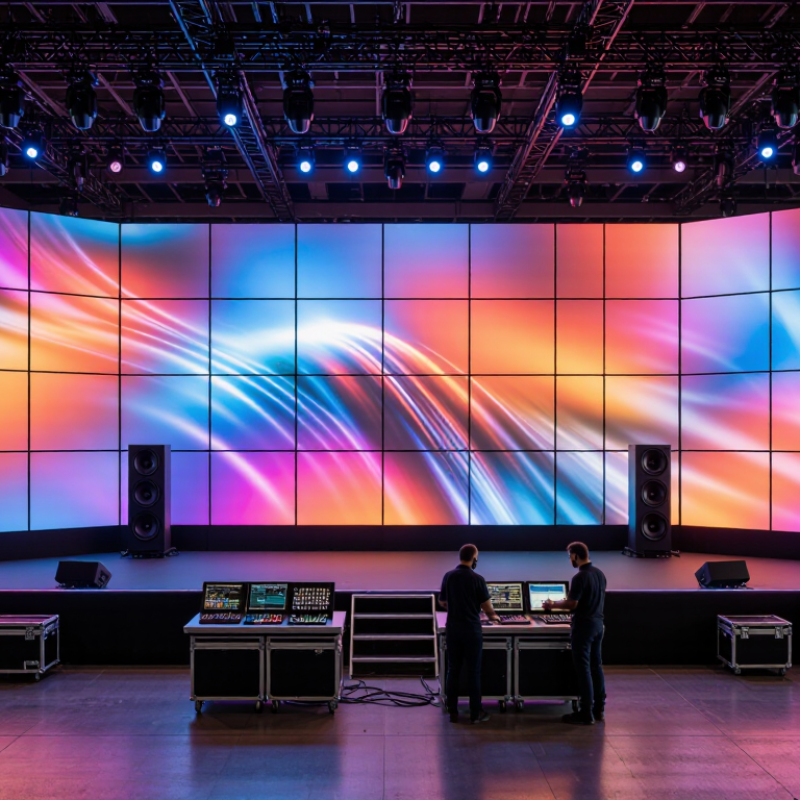
LED screen rental companies turn a display requirement into a working event system. They assess viewing distance, room dimensions, ambient light, rigging limits, and power access before recommending screen size and pixel pitch. A camera rehearsal may reveal moiré that a phone preview misses. Small details matter. Teams supply modular LED panels, processors, control systems, cabling, and backup components. Technicians assemble and align panels, calibrate brightness and color, test signal paths, and monitor playback. They also coordinate with stage, lighting, and audio crews, since screens can block sightlines or strain a shared power plan. Timing matters.
AVIXA’s 2024 Industry Outlook and Trends Analysis projects global professional audiovisual revenue will exceed US$325 billion in 2029. This figure covers the wider pro-AV market, not LED rental alone, but it shows the scale of services supporting live production. Rental quotes typically combine equipment, labor, transport, setup, operation, and teardown. They should specify screen area, resolution, refresh rate, and service hours. A polished quote can still hide a weak contingency plan. Venue access changes, late content, and uneven wall surfaces can disrupt installation. Even a sound technical plan may need last-minute brightness adjustments. The handoff can be messy.

LED screen rental services are usually organized around a project, not a screen alone. Clients share venue dimensions, audience distance, schedule, and content requirements. The provider then recommends screen size, pixel pitch, brightness, and processing equipment. A ballroom may need fine-pitch panels, while an outdoor stage often needs brighter displays and weather-aware planning. Typical packages include panels, processors, cables, transport, installation, technicians, and dismantling. Larger productions may also need structural support, power distribution, or playback operators.
A quotation may list equipment, labor, and logistics separately. Setup days, show days, standby hours, and strike time can have different rates. Some providers offer equipment-only rental; others manage the full production. Confirm who coordinates venue access, rigging, power, and content testing. Ask whether spare panels and on-site technical support are included. Small details matter. A polished quote can still leave practical gaps, so review the scope line by line.
Tips: Compare inclusions, not just the total price. Ask for a written schedule covering delivery, testing, operation, and removal. Share the venue’s technical specifications early; late changes can affect both cost and screen layout. I have seen plans look complete on paper, yet cable routes still need a second check.
| Service Model | Equipment Typically Supplied | Technical and On-Site Support | Logistics and Installation | Common Commercial Structure | Best Suited To | Client Responsibilities |
|---|---|---|---|---|---|---|
| Full-Service Rental | LED cabinets or panels, processors, signal distribution, cables, control equipment, and commonly required spare parts. | Pre-event configuration, installation, testing, show operation, and dismantling are generally included in the agreed scope. | The provider coordinates delivery, rigging or ground support, installation, and collection. Venue access and approved rigging points must be confirmed. | Usually quoted as a project package, with equipment, labor, transport, and optional services itemized or grouped. | Concerts, conferences, exhibitions, sports events, and other productions that need a managed technical service. | Provide event dates, venue details, screen content requirements, access schedules, power information, and production contacts. |
| Dry Hire (Equipment Only) | Specified LED panels or cabinets and agreed accessories; processing, cabling, spares, or support may be optional. | On-site technicians are not usually included unless separately booked. Equipment checks and handover arrangements vary by contract. | The client or production contractor arranges collection, transport, installation, operation, and return, unless those services are added. | Typically charged by rental period and equipment quantity, with separate charges for delivery, damage protection, or technical support where applicable. | Experienced production teams with their own crew, transport, control systems, and installation capability. | Confirm technical compatibility, handling requirements, insurance or deposit terms, collection times, and return condition. |
| Production-Partner Rental | LED display equipment integrated with other event production elements such as staging, lighting, audio, or video control. | Support is coordinated with the wider production team; responsibilities for system design, operation, and troubleshooting should be defined in advance. | Schedules and installation plans are coordinated across production departments and venue requirements. | May be included within a broader production estimate or priced as a separate LED display line item. | Events requiring coordinated audiovisual and staging services or a single production workflow. | Identify the lead production contact and approve the division of responsibilities between suppliers and departments. |
| Local Delivery and Installation | LED panels, processing, cabling, and accessories selected for the venue and event design. | Local technicians generally handle installation, testing, and dismantling; show operation may be included or separately contracted. | Local transport can simplify access and scheduling. Installation remains subject to venue rules, loading access, and rigging approvals. | Often structured as equipment rental plus delivery and labor, with overtime or additional shifts specified separately. | Regional events where local crew availability and venue familiarity are important. | Share the site plan, load-in and load-out windows, power provision, access restrictions, and any venue safety requirements. |
| Multi-Location or Networked Service | Consistent display specifications and supporting equipment allocated across multiple venues or event dates. | Support may be provided by a central technical team, local crews, or a combination; escalation and service coverage should be agreed. | Requires coordinated inventory planning, delivery schedules, and standardized setup information for each location. | May use project, event-day, or recurring-period pricing, with transport and local labor handled per location. | Touring productions, roadshows, recurring exhibitions, and events delivered at multiple sites. | Supply a consolidated schedule, venue contacts, consistent technical specifications, and location-specific requirements. |
| Hybrid or Custom Package | A tailored combination of rented LED equipment, client-owned equipment, and third-party components. | Support can range from equipment consultation to full technical operation; the scope should specify who configures, tests, and operates each component. | Transport, installation, and dismantling can be split between the client and provider, subject to a documented handover plan. | Priced according to the selected equipment, labor, rental period, transport, and any custom engineering or preparation. | Projects with existing inventory, unusual display layouts, or specific budget and production constraints. | Disclose existing equipment specifications and condition, and confirm system compatibility and responsibility for each item. |
Note: Service inclusions and pricing vary by provider, market, venue, rental period, and project scope. Confirm equipment specifications, labor hours, transport, insurance, cancellation terms, and responsibility for operation in the written quotation.
Across global markets, LED screen rental providers differ in more than inventory size. Strong operators can recommend suitable pixel pitch, brightness, and screen dimensions for a venue’s viewing distance and ambient light. AVIXA’s 2024 Industry Outlook and Trends Analysis estimates global professional audiovisual industry revenue at about US$325 billion for 2024, with continued growth projected through 2029. This broader industry figure is not specific to rental screens, but it signals sustained demand for event technology and technical services.
When comparing providers, check their regional delivery coverage, tested spare panels, processing equipment, and on-site crew experience. Ask how they handle uneven floors, tight load-in windows, and last-minute layout changes. Request a detailed quote covering transport, rigging, setup, operation, and dismantling. A large inventory sounds reassuring; it does not guarantee a smooth show. Even careful planning can miss a venue-specific constraint, so a site visit or technical drawing review matters.
Tips: Share the venue plan, audience size, viewing distances, and content format before requesting quotes. Ask for a recent project reference in a comparable setting. Confirm who owns signal testing and backup equipment. Small details count. A spreadsheet alone cannot predict every cable route or sightline, and that is worth admitting.
Estimated population by world region, mid-2024 (billions). Population offers broad market context; it is not a measure of rental-company size or market share.
Source: United Nations Department of Economic and Social Affairs, World Population Prospects 2024. Figures are rounded estimates.
Comparing LED screen rental companies means looking beyond quoted price. AVIXA’s 2024 Industry Outlook and Trends Analysis projects global professional audiovisual revenue will reach $325 billion by 2029. That growth signals a busy market, not equal equipment quality. Ask each supplier for the exact panel model, pixel pitch, brightness, refresh rate, and processor included in the quote. Match pixel pitch to viewing distance: a close audience needs finer detail, while a distant crowd may not. Get a sample image or test the content on the actual panels. Specs can look impressive on paper.
Then check the practical details. Request the screen’s cabinet dimensions, weight, power draw, and outdoor protection rating if the event is outside. Ask how many spare panels and power supplies travel with the order, and who handles on-site repairs. Clarify whether setup, calibration, signal testing, and an overnight technician are included. A low price can hide labor or transport costs. So can a vague quote.
Compare service plans, not just hardware. Ask for a written delivery schedule, named technical lead, and backup plan for late shipments or panel failure. Check references for events with similar screen size and venue conditions. One limitation: supplier case studies rarely show every problem. Request a recent client reference, and allow time for a site survey. The best choice is the team that explains trade-offs clearly, including what its equipment cannot do.
Planning an LED screen rental starts with the audience, not the equipment list. Measure the farthest viewing distance and available screen width. A six-metre viewing distance may call for finer pixel pitch, but room layout matters too. Walk the site if possible. Check sightlines.
Match screen brightness to the setting. Indoor displays can look washed out beside bright windows, while excessive brightness may distract viewers in a dark hall. Outdoor plans need suitable weather protection and a clear backup arrangement. Confirm power capacity, cable routes, rigging points, and floor loading with the venue team. A low beam or awkward doorway can change the whole setup. Plans still miss things.
Before booking, share the content format, event schedule, and installation window with the rental provider. Ask who handles delivery, setup, operation, and removal, and request a written equipment list. Check that the proposal includes a technician during the event, spare modules, and time for a full signal test. If the screen will show live video, test the actual cameras and playback devices—not just a sample file. Keep a little schedule slack; load-in rarely goes perfectly.
As a specialist in environmental and flow sensor technology, ScioSense enables companies to use the planet’s resources more sustainably, helping to create a healthier future for all.