
Choosing the right Fire Pump Hose can affect water flow, response time, equipment life, and site safety. Global buyers often compare suction hoses, discharge hoses, layflat designs, and reinforced delivery hoses. Each type behaves differently under pressure, bending, heat, abrasion, and repeated storage.
This guide introduces ten practical hose types used with portable and fixed fire pump systems. It considers pressure ratings, diameter, coupling compatibility, temperature limits, flexibility, and chemical resistance. Real purchasing decisions also depend on pump capacity, water source, installation distance, and local fire protection requirements. A hose may look strong on a warehouse floor, yet fail when dragged across gravel or sharply folded near a pump connection.
Details matter.
The selection approach reflects common engineering practice: verify manufacturer data, inspect test certificates, confirm connection standards, and review maintenance instructions before ordering. Buyers should also check labeling, traceability, delivery condition, and replacement support. A perfect ranking does not exist. The best hose for a municipal truck may be unsuitable for an industrial plant or remote construction site. Some recommendations require closer review, especially when suppliers provide incomplete performance information. By comparing these ten Fire Pump Hose types through practical use conditions, international buyers can make more informed, safer, and more reliable purchasing decisions.
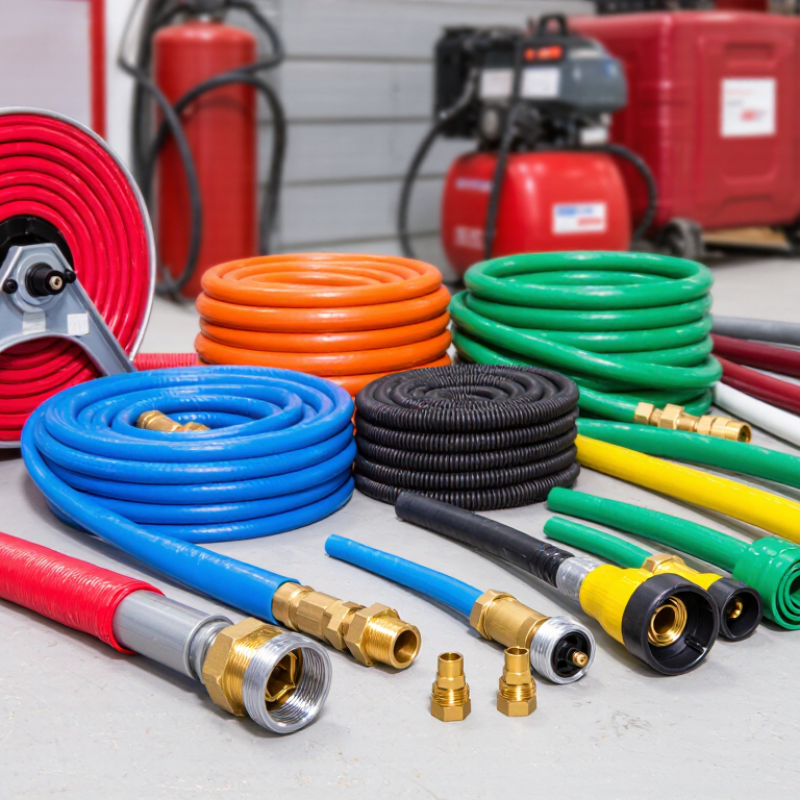
Fire pump hose transfers water from a pump to a nozzle, hydrant, or fixed firefighting system. Its construction determines how safely it performs under pressure. Common designs include discharge hose, suction hose, layflat hose, and reinforced delivery hose. Each type serves a different role.
A discharge hose usually uses woven textile reinforcement and a flexible rubber or thermoplastic lining. The lining should resist abrasion, heat, and water exposure. Suction hose needs stronger walls and spiral reinforcement to resist collapse under negative pressure. Layflat hose stores easily and deploys quickly, but sharp edges can damage its outer cover. Fit matters.
Global buyers should check working pressure, burst pressure, internal diameter, coupling size, bending radius, and temperature range. The hose must match the pump’s flow rate without creating excessive friction loss. Couplings should lock securely and remain compatible with local equipment. Fire safety testing, traceable materials, and clear inspection records support reliable purchasing decisions.
Field conditions often reveal weaknesses that catalogs hide. A hose may meet pressure requirements yet fail after repeated dragging across concrete. I would also question vague service-life claims. No hose is perfect. Inspect covers, liners, gaskets, and couplings before every critical use. Store hoses clean, dry, and away from sunlight, chemicals, and standing water. Performance depends on maintenance as much as construction.

Top 10 Fire Pump Hose Types and Their Key Applications
Fire pump hose selection depends on pressure, distance, heat, chemicals, and deployment speed. Layflat discharge hose supports fast water transfer from pumps to hydrants or remote attack lines. Hard suction hose connects a pump to tanks, ponds, or open water, resisting collapse under suction. Attack hose delivers controlled streams through hand nozzles inside buildings, warehouses, and industrial sites. Supply hose moves large volumes between engines, manifolds, and standpipe systems.
Forestry hose is lightweight and flexible for steep ground, brush, and limited-access areas. Wildland hose serves similar terrain but usually emphasizes compact storage and abrasion resistance. Rubber-lined hose handles repeated municipal or industrial use, especially where durability matters. Thermoplastic hose reduces weight and can resist selected chemicals, although compatibility must be confirmed. Reel hose enables rapid response for small fires and maintenance operations. High-pressure hose supports specialized pump systems, but excessive pressure can increase handling risks.
Tips: Match hose diameter with pump flow and friction-loss calculations. Check couplings, gaskets, cover damage, and pressure ratings before every deployment. Store hose dry, shaded, and loosely coiled. A hose may look serviceable while its lining is already weakened. Local standards and operating procedures still matter, because one specification cannot fit every region. Teams should test the complete pump-and-hose assembly, not only the hose itself.
Comparing the top 10 fire pump hose types starts with working pressure, not appearance. Check the hose’s rated working pressure, test pressure, and safety margin against the pump’s maximum output. A discharge hose may handle high pressure, while a suction hose must resist collapse under vacuum. These are different duties.
Material changes performance. Rubber hoses usually tolerate abrasion, heat, and repeated deployment well. PVC hoses are often lighter and easier to clean. Thermoplastic designs can offer useful chemical resistance, but cold conditions may reduce their flexibility. Reinforced canvas and synthetic jackets can improve burst resistance. Always inspect the reinforcement, cover, couplings, and lining together. One strong part cannot correct a weak assembly.
Flexibility matters too. A stiff hose may kink around a pump outlet or sharp vehicle corner. A very soft hose may twist under pressure. Bend the sample by hand and check its published minimum bend radius. Measure twice. I have seen hoses pass a pressure test yet fail during fast deployment because their couplings snagged on the reel. That detail is easy to miss.
For global buyers, compare weight, storage diameter, temperature range, abrasion resistance, and connection compatibility. Request traceable test records and clear material data. Verify certification requirements for the destination market before ordering. Field conditions can be messy, and laboratory figures may not reflect muddy ground, freezing weather, or repeated dragging. Leave room for doubt. A lower-cost hose may become expensive after frequent replacement.
| No. | Fire Pump Hose Type | Typical Construction | Typical Working Pressure | Typical Burst Pressure | Flexibility | Main Advantages | Common Applications | Buyer Considerations |
|---|---|---|---|---|---|---|---|---|
| 1 | Single-Jacket Layflat Hose | Woven polyester jacket with a thermoplastic or rubber lining | 10–14 bar 145–200 psi | 30–42 bar 435–610 psi | High | Lightweight, compact when empty, and economical | Portable fire pumps, temporary water transfer, agricultural fire protection | Check lining adhesion, abrasion resistance, coupling compatibility, and pressure certification |
| 2 | Double-Jacket Attack Hose | Two woven textile jackets surrounding an elastomeric lining | 14–20 bar 200–290 psi | 42–60 bar 610–870 psi | High to medium | Good abrasion resistance and higher pressure capability than single-jacket designs | Fire brigade discharge lines, hydrant systems, structural firefighting | Confirm minimum bend radius, jacket treatment, and applicable fire-service standard |
| 3 | Rubber-Covered Fire Hose | Synthetic rubber tube and cover, often reinforced with textile or aramid layers | 16–25 bar 230–360 psi | 48–75 bar 700–1,090 psi | Medium | Durable, weather-resistant, and suitable for repeated deployment | Fire pump discharge, industrial plants, fixed and mobile firefighting systems | Compare cover resistance to heat, oil, ozone, chemicals, and dragging damage |
| 4 | Nitrile-Lined Fire Hose | Nitrile rubber lining with woven textile reinforcement and protective outer jacket | 14–25 bar 200–360 psi | 42–75 bar 610–1,090 psi | Medium to high | Good resistance to petroleum-based liquids, abrasion, and rough handling | Industrial fire protection, fuel-handling areas, emergency response units | Select only when the lining is compatible with the intended liquid and temperature range |
| 5 | EPDM-Lined Fire Hose | EPDM rubber lining with textile reinforcement and synthetic outer cover | 14–25 bar 200–360 psi | 42–75 bar 610–1,090 psi | Medium to high | Strong resistance to ozone, weathering, hot water, and many chemicals | Outdoor fire systems, marine environments, chemical and process facilities | Not generally preferred for extended contact with petroleum oils; verify chemical compatibility |
| 6 | PVC Layflat Discharge Hose | PVC tube reinforced with high-tenacity woven polyester | 8–16 bar 115–230 psi | 24–48 bar 350–700 psi | High | Light, flat-storing, cost-effective, and easy to clean | Low- to medium-pressure pump discharge and temporary water delivery | Performance can decrease in cold conditions; confirm UV and abrasion protection |
| 7 | TPU Layflat Hose | Thermoplastic polyurethane tube reinforced with woven textile | 10–20 bar 145–290 psi | 30–60 bar 435–870 psi | High | Excellent abrasion resistance, low weight, and good flexibility over a broad temperature range | Portable fire pumps, emergency water supply, mining, and remote-site response | Check hydrolysis resistance, temperature rating, and compatibility with couplings |
| 8 | Hard-Wall Suction Hose | Flexible rubber or thermoplastic tube with embedded helical wire reinforcement | 6–10 bar 85–145 psi | 18–30 bar 260–435 psi | Medium | Maintains flow under suction and resists collapse caused by vacuum | Fire pump inlet lines, drafting from tanks, ponds, rivers, and open reservoirs | Evaluate vacuum rating, bending radius, end-coupling sealing, and flotation requirements |
| 9 | Wire-Reinforced Discharge Hose | Rubber or thermoplastic tube reinforced with textile layers and spiral wire | 20–40 bar 290–580 psi | 60–120 bar 870–1,740 psi | Low to medium | Suitable for demanding pressure cycles and reduced risk of hose expansion | High-pressure industrial firefighting and specialized pump systems | Heavier and less flexible; confirm electrical conductivity, wire corrosion protection, and weight limits |
| 10 | Marine and Offshore Fire Hose | Synthetic textile jacket with rubber or thermoplastic lining and marine-grade protective treatment | 14–20 bar 200–290 psi | 42–60 bar 610–870 psi | Medium to high | Designed for saltwater exposure, UV radiation, moisture, and frequent handling | Ships, offshore platforms, ports, coastal facilities, and marine pump systems | Verify marine approval, saltwater compatibility, mildew resistance, and storage requirements |
Note: Pressure figures are typical market ranges for comparison only. Actual ratings vary by diameter, reinforcement, temperature, coupling method, service medium, and applicable certification. Buyers should confirm the manufacturer’s working pressure, burst pressure, vacuum rating, minimum bend radius, and testing documentation before purchase.
Fire pump hose selection is not only about pressure ratings. Buyers should match the hose, couplings, and intended use to the destination market’s requirements. Standards such as EN 14540 or NFPA-related requirements may apply, but their scope differs. Confirm the current edition and product category with the local authority or project specification. A familiar standard name alone is not proof of compliance.
Ask suppliers for test reports that identify the exact hose construction, diameter, working pressure, and test method. Check whether certificates cover the complete assembly or only the hose material. They are not the same. Inspect markings on sample lengths and compare them with the documents. During export, verify coupling thread compatibility, labeling language, country-of-origin details, and required customs paperwork before shipment. Moisture barriers and sturdy packaging also matter; a damp container can damage products during a long voyage. Requirements can change, and paperwork may still leave gaps. Buyers should review documents with an independent testing body or qualified local adviser when specifications are unclear.
Choosing the right fire pump hose starts with the conditions at the site, not the catalog description. For paved streets and frequent vehicle movement, a durable jacket and abrasion-resistant construction can reduce wear from dragging and sharp edges. In forests or rough terrain, a lighter hose may be easier to carry, but check that its lining and outer layer can handle grit, moisture, and repeated bending. Every choice involves a trade-off.
Water temperature, pressure, and source quality matter too. A hose used with muddy pond water may need thorough flushing after use, while a long supply line can lose pressure through friction. Match the hose diameter and working-pressure rating to the pump and the expected flow; do not rely on appearance alone. Check couplings for a secure fit, and inspect seams and linings for cracks or soft spots. Small defects can grow under pressure.
Cold weather brings another challenge. Water left inside can freeze and damage the lining, even when the exterior looks sound. Drain and dry hoses before storage, then coil them without tight kinks. These steps take time, and they are easy to skip after a difficult shift. A practical selection also considers crew size, storage space, and how quickly the hose must be deployed. A technically suitable hose may still be a poor fit if crews cannot handle it safely.
As a specialist in environmental and flow sensor technology, ScioSense enables companies to use the planet’s resources more sustainably, helping to create a healthier future for all.