Choosing reliable digital pressure sensors suppliers requires more than comparing prices or browsing polished product pages. Global buyers need evidence that sensors perform consistently in real operating conditions. A supplier should explain pressure ranges, accuracy, response time, output protocols, temperature limits, and installation requirements in clear language. Small details matter. A sensor installed on a hydraulic line may face vibration, oil exposure, pressure spikes, and sudden temperature changes.
This guide examines suppliers through a practical, evidence-based lens. It considers manufacturing experience, calibration procedures, quality management, product traceability, technical documentation, and after-sales support. Certifications can strengthen confidence, but they should not replace independent verification. Buyers should request test reports, sample units, warranty terms, and communication records before placing large orders. That gap matters. A supplier may advertise exceptional accuracy while providing limited information about long-term drift or field maintenance.
The comparison also recognizes that no shortlist is perfect. Regional service coverage, minimum order quantities, customization capacity, and delivery reliability can change the final decision. Some published claims remain difficult to verify without testing. Therefore, this overview encourages buyers to match each supplier with a specific application rather than selecting the most visible brand. Consider a food-processing plant, a mobile excavator, or a clean laboratory; each requires different materials, connections, and compliance evidence. With careful evaluation, purchasing teams can reduce integration risks and choose digital pressure sensors that remain dependable beyond the first installation.
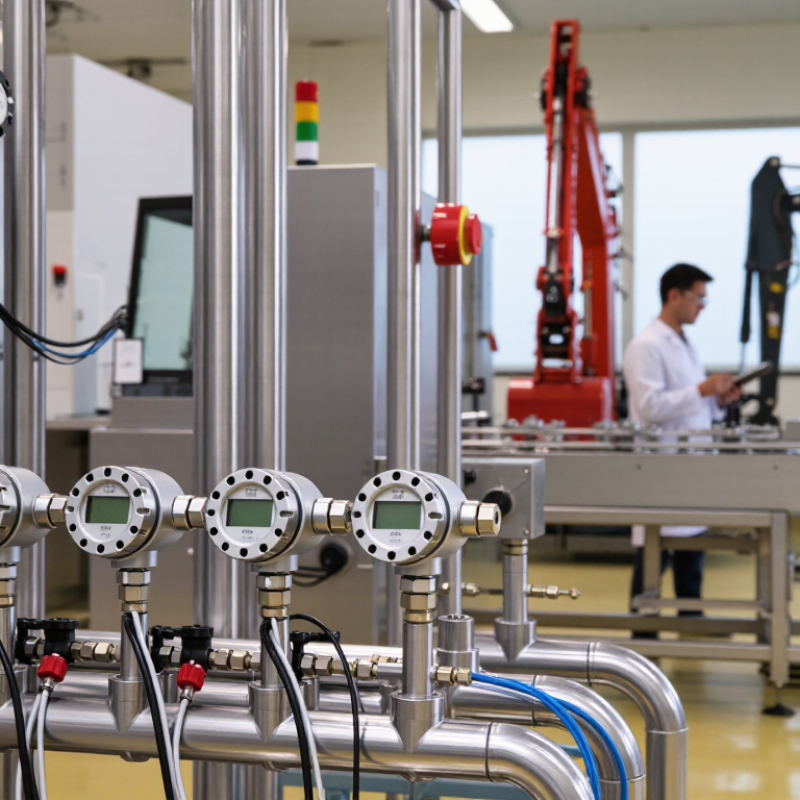
Digital pressure sensors measure force from air, gas, or liquid and convert it into a digital signal. A sensing diaphragm moves slightly under pressure. That movement changes electrical resistance, capacitance, or a microscopic silicon structure. An internal analog-to-digital converter then produces numerical data for a controller.
The process is more detailed than it appears. The sensor samples pressure at set intervals, applies temperature compensation, and sends readings through I2C, SPI, UART, or industrial communication networks. Calibration data is often stored inside the device. This helps maintain accuracy when temperatures change. It does not remove every error. Vibration, moisture, clogged ports, and poor installation can still distort readings.
Demand reflects this growing role. Grand View Research estimated the global pressure sensor market at about USD 14.1 billion in 2023, with continued expansion through 2030. IoT Analytics reported approximately 16.6 billion active IoT devices worldwide at the end of 2023. More connected equipment means more pressure data points in factories, vehicles, buildings, and medical instruments. However, market figures vary by research method. Buyers should examine accuracy, pressure range, response time, ingress protection, and calibration procedures rather than relying on headline growth. A cheap sensor can become expensive when its readings drift.

Digital pressure sensors are increasingly specified across process control, medical equipment, and industrial automation. Grand View Research reported that the global pressure sensor market was valued at approximately USD 14.7 billion in 2023. Its growth outlook makes supplier comparison more important, especially when small specification differences affect production reliability.
Start with measurement range, accuracy, repeatability, and long-term stability. A sensor rated from 0 to 1,000 bar may perform poorly at 20 bar if resolution is weak. I have seen wider ranges look impressive on paper, yet deliver less useful readings in real equipment. Check total error across temperature, not accuracy at room temperature alone.
The NIST pressure measurement guidance emphasizes traceability, uncertainty evaluation, and documented calibration practices. Ask suppliers for calibration points, uncertainty values, and test conditions.
Output compatibility also matters. Compare 4–20 mA, voltage, digital bus, and communication protocols against the control system already installed. Review response time, power demand, ingress protection, vibration resistance, and wetted-material compatibility. The IEC 60529 framework provides the basis for IP protection ratings, but an IP rating does not prove chemical durability.
Request lifecycle data, failure-rate evidence, calibration intervals, and sample inspection reports. Supplier claims can be incomplete. Independent testing or ISO/IEC 17025-accredited calibration records provide stronger confidence, although they may increase procurement cost.
Global buyers usually assess digital pressure sensor suppliers by category, not by price alone. Large-scale electronic manufacturers often provide MEMS sensing elements, automated assembly, and stable output across high-volume orders. Their strength is repeatability. They may also support pressure ranges from vacuum applications to demanding industrial systems.
Specialist sensor manufacturers focus on customization. They can adjust port designs, sealing materials, electrical interfaces, and firmware for medical equipment, process controls, or vehicle systems. Smaller production runs are often easier to manage. However, engineering capacity may vary, so buyers should review calibration methods, temperature compensation, and sample validation records.
Industrial component suppliers add practical value through regional inventory and application support. They may combine sensors with transmitters, connectors, or monitoring modules. This can simplify integration and reduce procurement delays. Ask for traceable calibration data, ingress protection results, vibration testing, and documented quality controls. Manufacturing strength is not proven by a polished catalog. It appears in stable lot performance, clear corrective actions, and honest communication when specifications change. No supplier category is perfect. A low unit price can conceal redesign costs, while advanced customization can create longer lead times. Careful buyers compare total operating risk, not only the quotation.
Global buyers should evaluate digital pressure sensor suppliers through evidence, not polished webpages. The ISO Survey 2023 recorded 1,265,216 ISO 9001 certificates worldwide. Certification helps, but it does not prove sensor accuracy. Ask for recent audit scope, production traceability, and documented corrective actions. A supplier should also provide calibration records linked to national standards. ISO/IEC 17025 accreditation is especially valuable for calibration laboratories.
Examine the full technical file. It should state accuracy, repeatability, hysteresis, temperature drift, overload limits, and response time. Ask whether performance data comes from real production units or selected samples. In a factory trial, compare readings at low, middle, and high pressure points. Check the sensor after thermal cycling and vibration.
Small details matter. A missing uncertainty statement can make an impressive accuracy figure difficult to trust.
Certifications must match the installation environment. Review applicable EMC, electrical safety, ingress protection, and hazardous-area requirements with a qualified engineer. Support quality is equally practical. Request a named application contact, response-time targets, firmware-change notices, and a clear replacement process. The 2023 World Quality Report highlights the growing importance of measurable quality processes and reliable data governance in industrial operations. Still, reports cannot replace a field test. I would treat a supplier’s fast answer as useful, but not conclusive. A careful supplier will explain limitations, recommend suitable ranges, and provide failure-analysis results when requested. That honesty is sometimes more valuable than another certificate.
Selecting digital pressure sensor suppliers for global purchasing requires more than comparing unit prices. Buyers should review sensing range, accuracy, pressure port size, output signal, operating temperature, and calibration method. A clear datasheet matters. So does traceability.
During ordering, request samples before approving a large batch. Test them under real conditions, including vibration, temperature changes, and repeated pressure cycles. Confirm minimum order quantities, production lead times, packaging, spare units, and inspection procedures. A supplier should explain how failed units are handled, not only how successful units are shipped.
Customization can involve housing materials, connectors, display functions, communication protocols, or firmware settings. Share drawings, installation photos, and performance targets early. Small details matter. A port thread mismatch can delay an entire assembly line. Custom work may also change tooling costs and delivery schedules, so written approval is essential.
International sourcing adds another layer of risk. Check export documents, product classifications, certificates, warranty terms, and destination-country requirements before payment. Agree on shipping responsibilities, insurance, currency, and acceptable delivery delays. Independent pre-shipment inspection can provide useful evidence, especially for unfamiliar suppliers. However, inspection does not replace technical testing.
I have seen buyers focus heavily on price and overlook calibration records. That decision often creates higher costs later. A supplier may appear responsive during quotation, yet perform poorly after the purchase order. Ask for recent production references, sample reports, and a realistic escalation contact. Leave room for doubt. A careful sourcing process is slower, but usually easier to defend when specifications, quality, and delivery are questioned.
As a specialist in environmental and flow sensor technology, ScioSense enables companies to use the planet’s resources more sustainably, helping to create a healthier future for all.