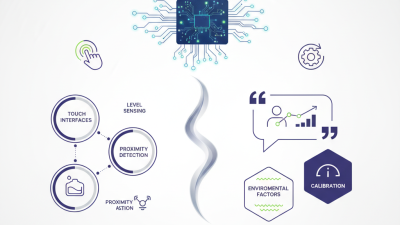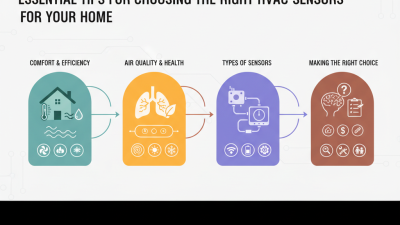
Capacitance sensors are versatile tools used in various projects across industries. They are effective for sensing position, distance, and even liquid levels. The technology relies on measuring the change in capacitance caused by the proximity of an object. This ability makes them indispensable in automation and robotics.
While selecting the right capacitance sensor, it's crucial to understand their specifications. Factors such as sensitivity, range, and environmental resilience play a vital role. Different applications will require different capabilities. For example, industrial automation requires robust sensors, while consumer electronics may need more compact designs.
Despite their advantages, capacitance sensors are not without their challenges. Interference from environmental factors can lead to inaccurate readings. Users must often calibrate sensors for best performance. It’s essential to evaluate various products to find the right fit for your next project. In this article, we will explore the top 10 capacitance sensors available today, highlighting their unique features and applications. Each option provides a blend of reliability and efficiency for diverse needs.
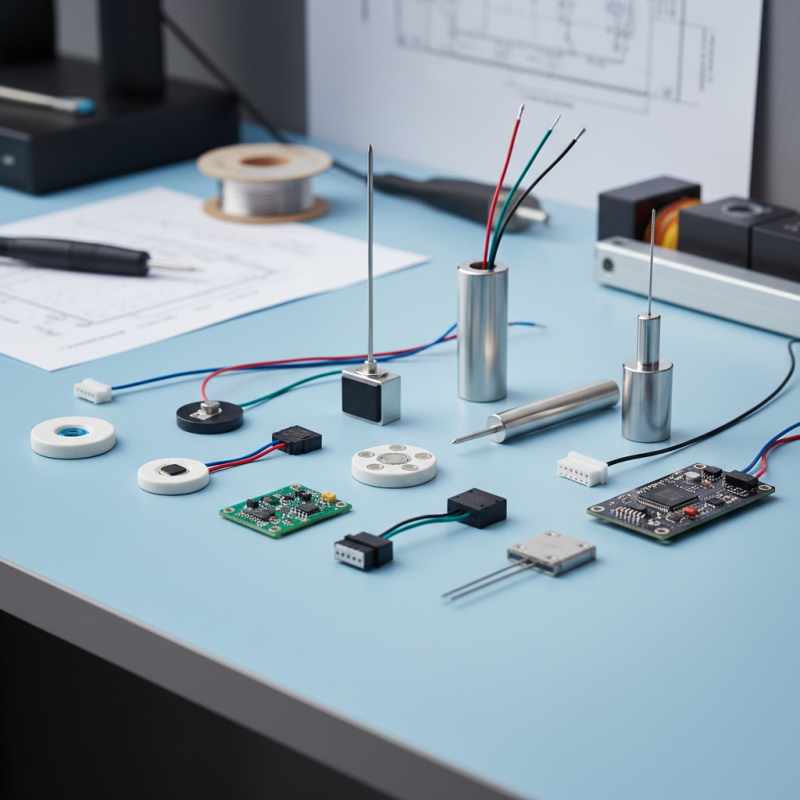
Capacitance sensors work on the principle of measuring changes in capacitance caused by the proximity of an object. They consist of two conductive plates separated by a dielectric material. When an object comes close, the dielectric constant changes, which alters the capacitance. This technology is widely used in various applications, from touch-sensitive controls to distance measurement.
One common application is in industrial automation. Here, these sensors help detect the presence of non-metallic materials. They also play a vital role in consumer electronics. For instance, many smartphones use capacitance sensors for touchscreens, enabling precise inputs. Yet, understanding their limitations is crucial. Environmental factors like temperature and humidity can affect their performance.
While capacitance sensors are reliable, they can sometimes yield false readings, especially in cluttered environments. Design considerations must include these variables to optimize their performance. A clear understanding of these principles can help in choosing the right sensor for your next project.
| Sensor Type | Capacitance Range | Operating Voltage | Response Time | Applications |
|---|---|---|---|---|
| Capacitive Proximity Sensor | 0-100 pF | 12-24 VDC | 1 ms | Object detection, touch sensors |
| Capacitive Level Sensor | 1-1000 pF | 5-15 VDC | < 5 ms | Liquid level measurement |
| Touch Sensor | 0-50 pF | 3.3-5 VDC | 10 ms | User interface, touch panels |
| Soil Moisture Sensor | 20-300 pF | 5 VDC | 100 ms | Agriculture, gardening |
| Capacitive Pressure Sensor | 1-1000 pF | 10-30 VDC | 5 ms | Industrial pressure measurement |
| Capacitive Displacement Sensor | 0-1 nF | 5-15 VDC | 2 ms | Position sensing, automation |
| Capacitive Humidity Sensor | 1-100 pF | 3.3-12 VDC | 200 ms | Environmental monitoring |
| Capacitive Angle Sensor | 0-10 nF | 5 VDC | 20 ms | Robotics, CNC machines |
| Capacitive Energy Meter | 1-1000 pF | 12-24 VDC | 50 ms | Energy consumption measurement |

When selecting capacitance sensors for your project, several key features warrant careful consideration. An essential element is the sensing range. The distance between the sensor and the target can impact performance, particularly in varied industrial environments. According to a report by MarketsandMarkets, the global market for capacitance sensors is projected to grow significantly, driven by enhanced sensing technologies.
Another crucial factor is the sensor's accuracy. High precision is vital in applications such as liquid level detection, where even slight deviations can cause issues. In fact, a 2021 study highlighted that sensors with higher accuracy can reduce operational errors by up to 25%. It’s beneficial to review technical specifications to ensure the device meets your project's demands.
**Tip:** Always assess the environmental conditions. Humidity, temperature, and physical obstacles can affect sensor performance.
Response time is equally important. Faster response times ensure that systems can react quickly to changes, critical in automation and process control. The ideal response time would depend on the specific application, but generally, sensors with sub-millisecond response times offer the best performance.
**Tip:** Consider the longevity of the sensor. A more durable model can minimize maintenance and replacement costs.
Selecting a capacitance sensor involves weighing these features carefully. The right choices can truly enhance the effectiveness of your project.
This chart compares the capacitance values of the top 10 capacitance sensors. The performance is measured in picofarads (pF), providing a visual representation of how each sensor ranks in terms of capacitance. This information can help in selecting the right sensor for your upcoming project.
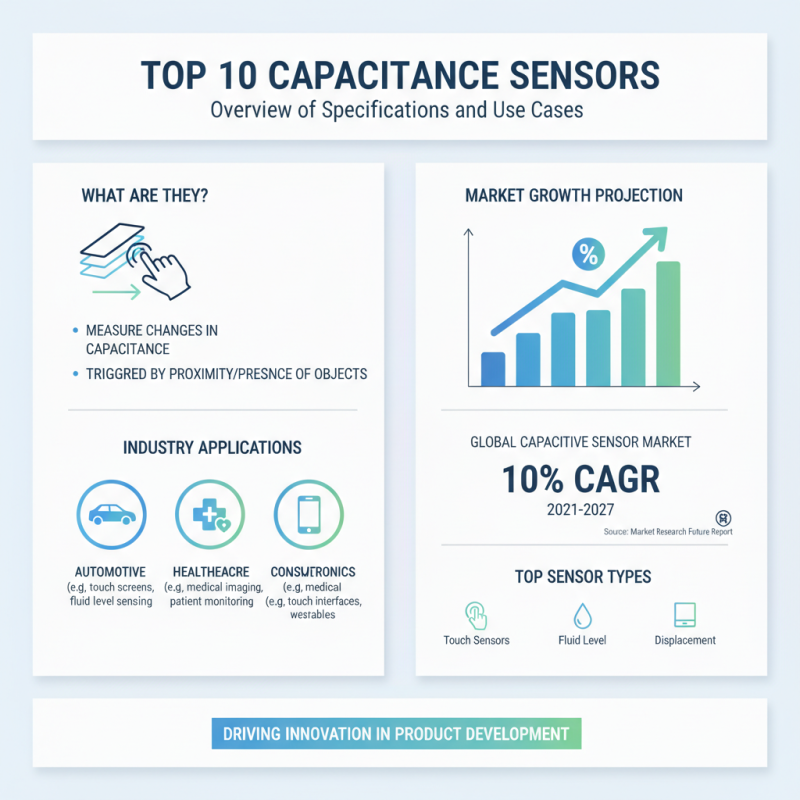
Capacitance sensors are widely used in various industries, including automotive, healthcare, and consumer electronics. They measure changes in capacitance caused by the proximity or presence of an object. A recent industry report by Market Research Future indicates that the global capacitive sensor market is projected to grow at a CAGR of 10% from 2021 to 2027. This growth highlights the increasing reliance on these sensors in product development.
For instance, capacitive sensors offer high sensitivity and can detect minute changes in distance. They are preferred for non-contact applications, making them suitable for touchscreens and liquid level measurements. Specifications such as response time, operating temperature, and measurement range play crucial roles in selecting a suitable sensor. Some sensors can operate accurately in extreme conditions, but others may fail if not properly equipped, reinforcing the need for thorough testing.
In real-world applications, factors like environmental noise and material types can affect performance. While many sensors perform well in controlled settings, they might struggle in dynamic environments. Understanding these limitations is key for effective design integration. Reports indicate that improperly calibrated sensors can lead to inaccurate readings, ultimately impacting product quality. This underscores the necessity for engineers to pay close attention to detailed specifications and conduct extensive field tests.
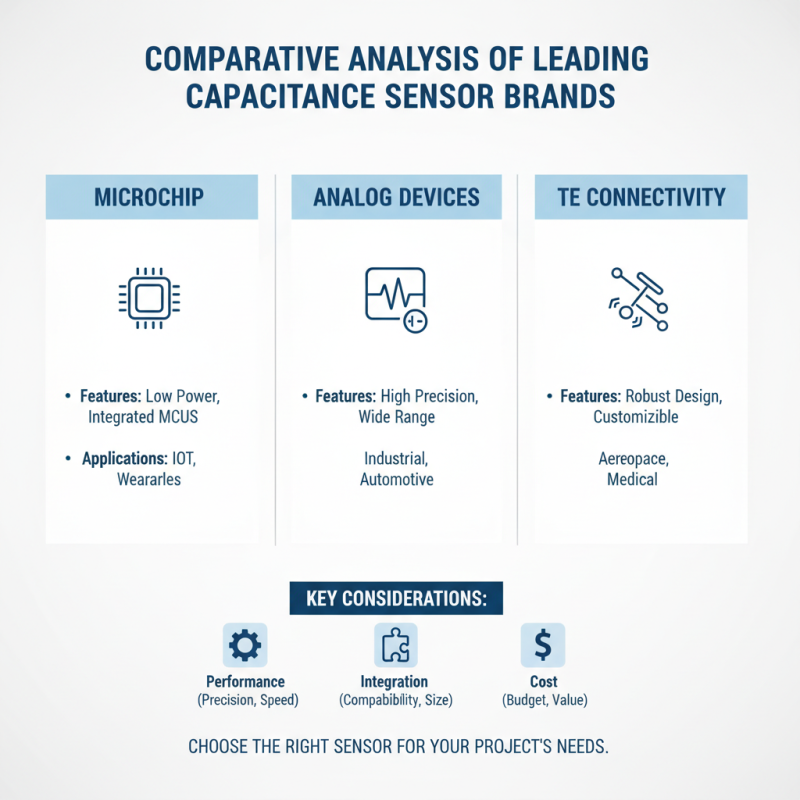
When selecting a capacitance sensor for your project, understanding the various brands is essential. Each brand has distinct features and specifications. These differences can impact performance and integration into your system.
Some brands focus on high sensitivity, while others prioritize stability across different environments. Consider how factors like temperature and humidity affect sensor output. Moreover, the ease of integration varies; some devices offer seamless connections, while others require more complex setups. Analyzing these attributes is vital for optimal performance.
Cost can also reflect the quality of capacitance sensors. Although a higher price may indicate advanced technology, it's not always the case. Some affordable sensors perform surprisingly well. It’s important to look at reviews and user feedback for a real view of reliability. Testing sensors in your specific application is crucial, as laboratory conditions may not mimic real-world scenarios. How do these sensors perform under stress?
The landscape of capacitance sensor technology is evolving rapidly. Recent market reports indicate a projected growth of 12% annually through 2026. Innovations are being driven by the increasing demand for smart devices and IoT applications. In particular, the integration of capacitive sensors in consumer electronics is notable. These sensors are crucial for touchscreens, proximity sensing, and several automation processes.
One emerging trend is miniaturization. Smaller sensors open doors for applications in wearable devices, enhancing user experience. Capacitive sensors are also becoming more precise, thanks to advances in materials and design. The use of graphene and nanotechnology is reshaping sensor capabilities. These advancements enable sensors to detect minute changes in capacitance, vastly improving accuracy.
Tip: When selecting capacitance sensors, consider their sensitivity and operating range. These factors are vital for achieving desired performance in your projects. Additionally, take time to investigate new materials and technologies that may offer better reliability.
Another aspect to watch is energy efficiency. Many new capacitive sensors consume less power. This shift is essential for battery-operated devices, extending their lifespan. Companies are prioritizing sustainability, driving innovations in low-power sensor designs. Yet, challenges remain, such as the trade-off between sensitivity and power consumption. Evaluating these trade-offs is key to successful project outcomes.
As a specialist in environmental and flow sensor technology, ScioSense enables companies to use the planet’s resources more sustainably, helping to create a healthier future for all.