Choosing among the top Barite Drywall Radiation Shielding manufacturers requires more than comparing product prices. Performance depends on barite concentration, panel thickness, density, and installation quality. A reliable manufacturer should explain these variables clearly. It should also provide technical data, quality records, and project-specific guidance.
This introduction examines manufacturers serving hospitals, dental clinics, laboratories, and industrial imaging facilities. It considers product consistency, radiation attenuation data, fire performance, moisture resistance, and manufacturing capacity. Independent testing can strengthen confidence, especially when panels are used around X-ray or other controlled imaging equipment. Buyers should also review delivery schedules, cutting services, technical support, and replacement procedures. Small gaps around sockets, doors, and pipe penetrations can reduce shielding effectiveness. Details matter.
Not every highly visible supplier is the best fit. Some companies offer strong engineering support but limited regional availability. Others provide competitive pricing but less transparent test documentation. That difference deserves careful attention. The most dependable choice usually combines verified manufacturing controls, experienced technical staff, and clear installation instructions. However, product claims should not replace calculations from a qualified radiation protection professional. Room design, equipment output, occupancy, and local requirements must guide the final specification. Manufacturer rankings can also change as certifications, production capacity, and customer feedback develop. This review therefore focuses on practical evidence rather than promotional language. It aims to help project owners compare Barite Drywall Radiation Shielding suppliers with greater confidence, while recognizing that real-world performance depends on both materials and workmanship.
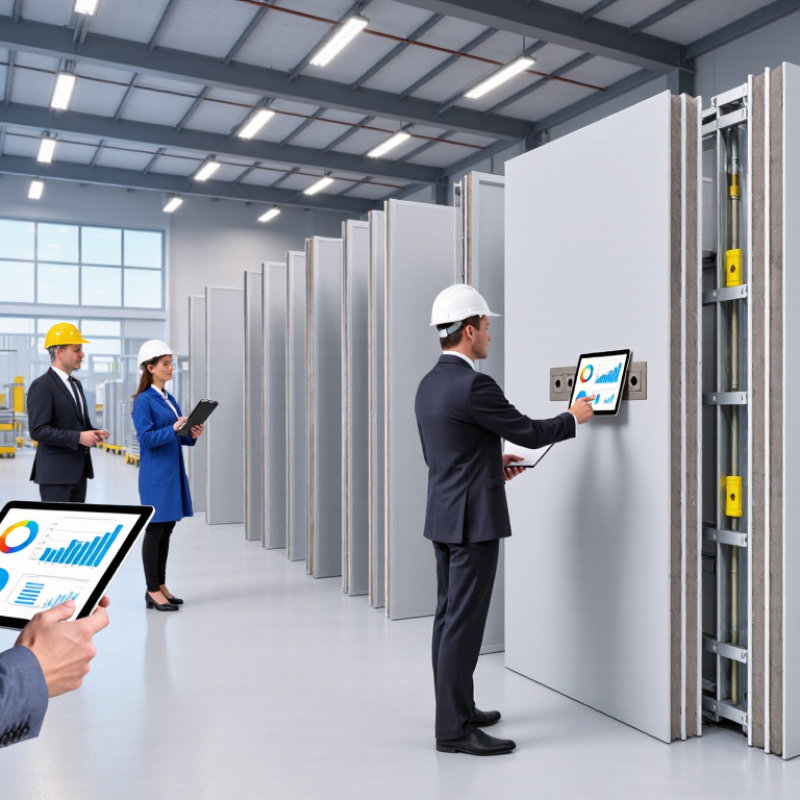
Barite drywall is a specialized gypsum panel containing barium sulfate, a dense mineral that helps reduce scattered X-ray and gamma radiation. Its performance depends on more than the mineral’s presence. Panel density, thickness, joint design, and installation quality all influence shielding results.
Higher density usually means greater attenuation, but density alone can mislead. A heavy panel may still perform poorly if seams remain open or if electrical boxes create weak points. For example, a two-millimeter gap behind a wall outlet can compromise an otherwise carefully built barrier. Staggered joints, sealed penetrations, and properly fixed fasteners deserve equal attention.
Radiation shielding calculations should match the equipment, workload, distance, and room layout. Qualified radiation physicists normally review these factors before installation. Product data should include measured density, thickness, testing conditions, and installation guidance. Marketing language is not enough.
Details matter most.
A practical inspection can include weighing sample panels, checking joint offsets, and photographing penetrations before closure. However, field measurements may vary between batches or sites. That limitation deserves honest discussion. Barite drywall is not automatically the best solution for every room, either. Structural capacity, moisture exposure, handling difficulty, and future maintenance can change the decision. Careful documentation makes the final shielding system more dependable.
Representative engineering reference values show how increasing bulk density and barium sulfate content can improve X-ray attenuation per unit thickness. Standard gypsum board typically has a bulk density of about 0.6–0.9 g/cm³, while barite-loaded drywall commonly falls near 1.8–2.2 g/cm³ with approximately 50–80% barium sulfate by mass. Actual shielding performance must be verified for the specified board thickness, tube voltage, and radiation-protection design.
When comparing top barite drywall radiation shielding manufacturers, focus on measurable performance, not polished product claims. Barite panels use dense mineral content to reduce scattered and primary X-ray radiation. Lead equivalence shows how much lead protection a panel may provide under specific conditions. A 1.0 mm Pb equivalent rating is meaningful only when the test energy is stated. kVp indicates the X-ray tube’s peak voltage. A panel tested at 80 kVp may perform differently at 120 kVp. Request laboratory reports, test geometry, and beam-quality details before choosing a supplier.
Thickness in millimeters also deserves close attention. A 12.5 mm panel is not automatically comparable to a 20 mm panel. Density, uniformity, joints, and installation quality can change the final result. Reliable manufacturers publish thickness tolerances, density data, and documented attenuation results. Experienced technical teams should explain wall intersections, fasteners, service openings, and door interfaces. Small gaps matter. I have seen specifications look excellent on paper, yet poor detailing weakened the installed barrier.
Tips: Ask for results at your actual kVp range, not a generic rating. Confirm lead equivalence per thickness and beam energy. Request independent testing when claims seem unusually strong. Have a qualified medical physicist review the shielding design. Keep photographs and installation records. One caution remains: manufacturer data may not reflect every room condition, so verify assumptions before construction.
Top Barite Drywall Radiation Shielding Manufacturers?
Panel density, size, and weight reveal more than a product label. The U.S. Geological Survey’s Mineral Commodity Summaries identifies barite with a specific gravity near 4.5. However, a finished shielding panel may contain gypsum, resin, fibers, or other binders. Its actual density can differ greatly. Ask manufacturers for tested density, lead-equivalent performance, and areal weight. NCRP Report 147 also shows that shielding design depends on workload, distance, occupancy, and radiation energy—not density alone.
Size changes installation risk. A 1.2 × 2.4 metre panel, 25 millimetres thick, weighs about 180 kilograms at 2,500 kg/m³. That may require lifting equipment, stronger framing, and carefully planned joints. Smaller panels reduce handling stress but create more seams. Larger panels install faster, yet damage more easily during transport. Custom thickness, curved sections, cut-outs, edge profiles, and pre-drilled service openings can improve fit. They can also increase lead time and waste.
Tips: Request a sample, technical datasheet, independent test report, and batch traceability. Compare kg/m², not only panel density. Check whether test results represent the installed joint system. ASTM C637 and C638 provide useful references for heavyweight shielding materials, but they do not replace project-specific calculations. One practical weakness remains: some comparisons publish impressive density figures while omitting seam details. That omission deserves scrutiny.
| Common Specification Tier | Typical Dry Density | Typical Panel Thickness | Common Panel Sizes | Approx. Weight per m² | Approx. Weight per 600 × 1200 mm Panel | Typical Shielding Applications | Customization Options |
|---|---|---|---|---|---|---|---|
| Standard barite drywall panel | 2.70–2.90 g/cm³ | 12.5 mm 15 mm | 600 × 1200 mm 600 × 2400 mm 1200 × 2400 mm | 34–44 kg/m² | 24–32 kg | General diagnostic X-ray rooms, dental rooms, veterinary imaging areas, and low-to-moderate shielding requirements. | Cut-to-size panels, tapered or square edges, moisture-resistant core, fire-resistant facing, and factory-applied edge treatment. |
| High-density barite drywall panel | 2.90–3.20 g/cm³ | 15 mm 20 mm | 600 × 1200 mm 600 × 2400 mm 1200 × 2400 mm | 44–64 kg/m² | 32–46 kg | Higher-output diagnostic imaging rooms, CT areas, fluoroscopy rooms, and installations requiring greater attenuation within limited wall thickness. | Specified density, thickness tolerance, custom length and width, reinforced edges, laminated surfaces, and coordinated openings for services. |
| Extra-thick shielding panel | 2.90–3.20 g/cm³ | 25 mm 30 mm | 600 × 1200 mm 600 × 2400 mm 900 × 1800 mm | 73–96 kg/m² | 53–69 kg | High-radiation areas, specialized medical imaging rooms, industrial radiography enclosures, and projects where multiple thinner layers are undesirable. | Non-standard thickness, staggered-joint layouts, pre-cut service penetrations, sealed edges, and project-specific mounting details. |
| Multi-layer drywall shielding system | 2.70–3.20 g/cm³ per barite layer | 2 × 12.5 mm 2 × 15 mm 3 × 12.5 mm | 600 × 1200 mm 600 × 2400 mm 1200 × 2400 mm | 68–144 kg/m² | 49–104 kg | CT, angiography, radiation therapy support spaces, and rooms requiring increased attenuation through layered construction. | Staggered joints, alternating board orientation, custom layer combinations, acoustic insulation, fire-rated assemblies, and integrated lead-lined components. |
| Barite board with moisture-resistant facing | 2.80–3.10 g/cm³ | 12.5 mm 15 mm 20 mm | 600 × 1200 mm 600 × 2400 mm | 35–62 kg/m² | 25–45 kg | Imaging rooms exposed to frequent cleaning, humid environments, healthcare utility zones, and installations requiring improved surface durability. | Moisture-resistant paper or glass-fiber facing, low-absorption core, sealed edges, washable surface finish, and custom cut-outs. |
| Acoustic and radiation shielding composite panel | 2.70–3.20 g/cm³ barite core | 15 mm 20 mm 25 mm system thickness | 600 × 1200 mm 600 × 2400 mm 1200 × 2400 mm | 45–80 kg/m² | 32–58 kg | Hospitals, imaging suites, control rooms, and technical spaces where radiation attenuation and sound reduction are required together. | Mineral wool or acoustic membrane backing, perforated or smooth finish, fire-rated facing, custom edge profiles, and prefabricated modules. |
| Project-specific custom panel | 2.70–3.40 g/cm³ | 12.5–50 mm or engineered thickness | Custom width and length subject to handling and transport limits | 34–170 kg/m² | 24–122 kg | Industrial radiography rooms, research facilities, nuclear medicine support areas, and projects with engineered shielding calculations. | Specified density, custom dimensions, compound layers, non-standard edges, embedded reinforcement, prefabricated penetrations, color-coded surfaces, and special packaging. |
Reliable barite drywall selection begins with clear quality benchmarks, not impressive product claims. ASTM C1396 helps evaluate gypsum panel requirements, including dimensions, strength, and physical consistency. However, it does not certify radiation shielding performance by itself. NCRP 147 supports room-specific shielding design for diagnostic X-ray facilities. It considers workload, occupancy, distance, and radiation direction. A qualified physicist should review calculations before production begins. Small errors matter.
Factory testing should connect material data with real performance. Manufacturers should document panel thickness, density, moisture content, flexural strength, and barite distribution. Attenuation tests should use suitable radiation energies and controlled geometry. Test reports need sample identification, equipment details, exposure settings, and measured results. Repeated samples are more trustworthy than one excellent result. Field conditions differ. Joints, fasteners, penetrations, and uneven installation can reduce protection, even when panels meet laboratory targets. This is where many specifications become too optimistic.
Tips: Ask for current ASTM-related quality records and NCRP 147-based design documentation. Request batch traceability and independent laboratory verification when project risk is high. Inspect panel edges for cracking, voids, or loose aggregate. Confirm that installers follow the approved layout. Do not accept density alone as proof of shielding performance. A practical review should compare factory results with the actual room design, because a perfect test specimen may not represent site conditions.
Selecting a barite drywall manufacturer requires more than comparing product photos. Request current test reports showing density, thickness, and shielding performance. Check whether certificates come from recognized laboratories and match the exact panel specification. A supplier should explain testing methods clearly, not hide behind general compliance statements. Ask for project references involving hospitals, imaging rooms, or industrial inspection areas. Practical experience matters.
Delivery capacity can decide whether a project stays on schedule. Confirm monthly output, available stock, packaging methods, and realistic lead times. Heavy panels need reinforced pallets and careful unloading arrangements. Ask how the supplier handles damaged sheets or inconsistent batches. A written warranty should identify coverage periods, moisture limitations, dimensional tolerances, and replacement procedures. Vague promises create expensive arguments later.
Cost per m² must include more than the panel price. Calculate the required shielding thickness, cutting waste, fasteners, joint treatment, transport, and installation labor. Some suppliers quote a low figure but exclude special corner details or additional layers. Compare like-for-like specifications. A sample installation can reveal cracking, difficult handling, or poor seam alignment before full production. This step may feel slow. It can prevent rework.
Supplier claims still need independent checking. Ask for batch records and inspect delivered labels before installation. Even experienced buyers can overlook freight costs or local handling limits. A modestly higher price may provide better consistency and faster technical support, but that assumption should be tested against written evidence.
As a specialist in environmental and flow sensor technology, ScioSense enables companies to use the planet’s resources more sustainably, helping to create a healthier future for all.