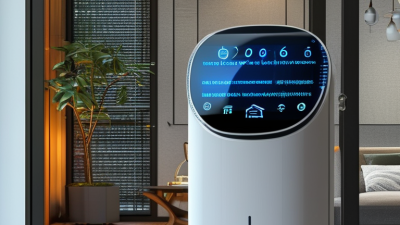
China Top Environmental Sensors Suppliers?

China has become a major source of environmental sensors for air quality, water monitoring, soil analysis, and industrial safety. Its supplier landscape includes large electronics manufacturers, specialized instrument makers, and flexible original equipment manufacturers.

The choice is not simple.

As MIT sensing researcher Dr. Joseph Paradiso has said, “Sensors are the eyes and ears of the Internet of Things.” For environmental monitoring, those “eyes and ears” must remain accurate beside dusty roads, factory walls, farms, and wastewater channels. A low price means little if readings drift after heavy rain or calibration becomes difficult.

This guide examines China’s top environmental sensors suppliers through practical criteria. These include sensor accuracy, detection range, calibration procedures, product certifications, communication protocols, and long-term support. It also considers whether suppliers provide clear technical documents, sample testing, and field installation guidance. Strong manufacturers should explain measurement limits instead of promising perfect performance.

Look beyond the catalog.

Supplier experience matters. A company serving municipal air-quality networks may offer different strengths from one producing compact sensors for smart agriculture. Hardware integration is another concern. Modbus, RS-485, LoRaWAN, cellular connectivity, and cloud platforms can affect the total project cost.

Some rankings remain imperfect. Public information may be incomplete, and supplier capabilities can change quickly. Therefore, buyers should verify factory records, request recent test data, and compare pilot results under real operating conditions. The best supplier is not always the largest one. It is the partner that delivers dependable measurements, transparent communication, and support after installation.
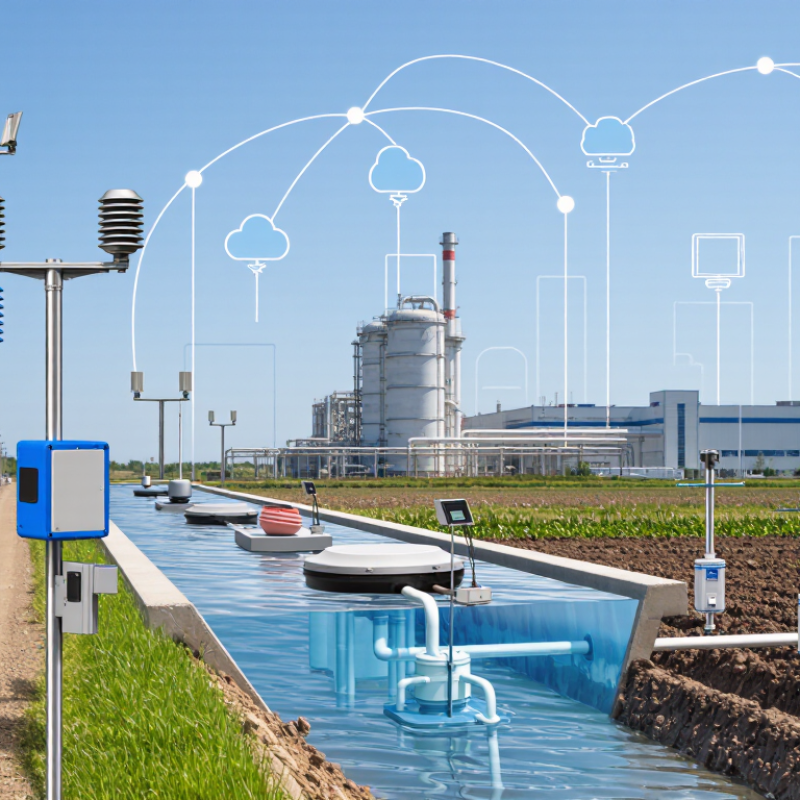
China Top Environmental Sensors Suppliers?

Types of Environmental Sensors Supplied by Chinese Manufacturers

Chinese environmental sensor manufacturers supply a broad range of monitoring devices. Common products include PM2.5, PM10, carbon dioxide, carbon monoxide, VOC, temperature, humidity, pressure, noise, and radiation sensors. Water-quality systems measure pH, dissolved oxygen, turbidity, conductivity, and chemical oxygen demand. Soil and weather stations add moisture, salinity, rainfall, wind speed, and solar radiation measurements.

The need is practical. The World Health Organization’s 2022 Air Quality Database covered more than 6,000 cities and showed that almost everyone breathes air above its guideline limits. China’s 2023 Ecological Environment Bulletin reported a national average PM2.5 concentration of 30 micrograms per cubic metre in cities at prefecture level and above. Manufacturers therefore supply fixed stations, portable meters, and compact IoT nodes for factories, schools, farms, and construction sites.

Field performance depends on calibration, enclosure design, and maintenance. A sensor beside a busy road may show different readings from one mounted on a rooftop. No device is perfect. Dust, humidity, condensation, and aging can distort results. Buyers should request calibration records, measurement ranges, response times, IP ratings, and data quality procedures. Modbus, RS485, LoRaWAN, and cellular communication are widely available. Yet connectivity alone does not prove accuracy. Independent verification remains essential, and this is where some low-cost deployments still need improvement.
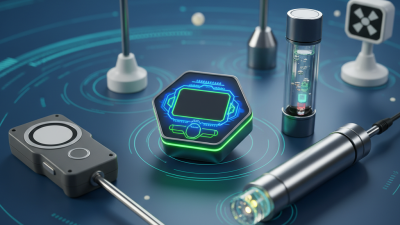
Key Applications of China’s Environmental Sensor Technologies

China’s Environmental Sensor Suppliers: Key Applications of China’s Environmental Sensor Technologies

China’s environmental sensor technologies support air, water, soil, and industrial monitoring. In field projects, particulate sensors help measure PM2.5 near roads, schools, and construction areas. Gas sensors can track nitrogen dioxide, sulfur dioxide, and carbon monoxide. These readings support ventilation control and local pollution assessments. However, sensor accuracy can change with humidity, dust, and temperature. No sensor is perfect.

Water monitoring systems measure pH, turbidity, dissolved oxygen, and conductivity. They are used in rivers, aquaculture ponds, wastewater facilities, and drinking water networks. Soil sensors also guide irrigation by measuring moisture, salinity, and temperature. In smart agriculture, this data can reduce water waste and reveal dry zones. Industrial sites use connected sensors for leak detection and emission management. Data becomes useful only when calibration and maintenance remain consistent.

Tips: Check calibration records before purchasing. Ask about operating temperature and humidity ranges. Confirm the device supports your preferred data protocol. Test several units in real conditions, not only in a showroom. Review replacement costs, cleaning needs, and sensor drift. A cheaper unit may require more frequent checks. Keep a clear maintenance log. Small errors can become large decisions.

China Top Environmental Sensors Suppliers? - Key Applications of China’s Environmental Sensor Technologies

Application-focused overview of environmental sensing technologies commonly supplied and integrated in China

Application Area Common Sensor Technologies Key Parameters Measured Typical Deployment Locations Primary Use Cases Important Technical Considerations
Ambient Air Quality Optical particle counters, electrochemical gas sensors, metal-oxide sensors, ultraviolet fluorescence and non-dispersive infrared analyzers PM1, PM2.5, PM10, nitrogen dioxide, sulfur dioxide, carbon monoxide, ozone and carbon dioxide Urban monitoring stations, roadside networks, industrial parks, construction sites and commercial buildings Pollution mapping, public alerts, emission investigation, traffic management and indoor-air assessment Humidity effects, particle-size calibration, cross-sensitivity, inlet design, data validation and regular zero/span checks
Industrial Emission Monitoring Extractive gas analyzers, in-situ optical analyzers, particulate monitors, opacity monitors and flow or temperature sensors Sulfur dioxide, nitrogen oxides, particulate matter, oxygen, flue-gas flow, temperature, pressure and moisture Power plants, cement facilities, steel mills, waste-incineration plants and chemical production lines Continuous emissions monitoring, process optimization, compliance reporting and abnormal-condition alarms High temperature, dust loading, corrosive gases, sampling-line conditioning, response time and traceable calibration
Water Quality Electrochemical probes, optical fluorescence sensors, ion-selective electrodes, turbidity sensors and spectroscopic analyzers pH, dissolved oxygen, electrical conductivity, temperature, turbidity, chemical oxygen demand, ammonia and chlorophyll-a Rivers, lakes, reservoirs, drinking-water facilities, wastewater plants and aquaculture systems Early pollution warning, treatment-process control, eutrophication assessment and water-resource management Biofouling, suspended solids, sensor drift, cleaning intervals, sample representativeness and site-specific calibration
Soil and Agricultural Monitoring Capacitive and frequency-domain moisture sensors, thermistors, ion-selective probes and soil electrical-conductivity sensors Volumetric water content, soil temperature, salinity, electrical conductivity, pH and selected nutrient indicators Greenhouses, open-field farms, irrigation zones, research plots and land-restoration projects Precision irrigation, fertilizer management, drought monitoring, crop-condition analysis and soil remediation Soil texture, temperature compensation, installation depth, spatial variability and the distinction between indirect and laboratory measurements
Meteorological Observation Cup or ultrasonic anemometers, tipping-bucket rain gauges, barometers, thermohygrometers, pyranometers and visibility sensors Wind speed, wind direction, rainfall, air temperature, relative humidity, atmospheric pressure, solar radiation and visibility Weather stations, airports, ports, highways, renewable-energy sites and agricultural fields Weather forecasting support, flood warning, road safety, solar and wind assessment and farm planning Exposure height, siting rules, precipitation undercatch, wind turbulence, radiation shielding and time synchronization
Indoor Environmental Quality Particulate sensors, carbon-dioxide NDIR sensors, volatile-organic-compound sensors, temperature and humidity sensors PM2.5, carbon dioxide, total volatile organic compounds, formaldehyde indicators, temperature and relative humidity Schools, offices, hospitals, factories, hotels, homes and public transportation facilities Ventilation control, occupant comfort, health-risk screening and energy-efficient building management Sensor placement, airflow patterns, occupancy effects, humidity compensation and the need for laboratory confirmation of specific compounds
Noise and Vibration Class-compliant sound-level meters, MEMS microphones, accelerometers and geophones A-weighted sound level, equivalent continuous sound level, peak level, frequency spectrum, vibration acceleration and ground motion Urban roads, rail corridors, construction sites, industrial facilities and sensitive buildings Environmental noise mapping, construction supervision, equipment diagnostics and community complaint assessment Microphone protection, wind screening, calibration, background-noise separation, sampling duration and mounting conditions
Ecological and Remote Monitoring Multispectral cameras, thermal imaging sensors, water-level sensors, acoustic recorders and low-power environmental data loggers Vegetation indices, surface temperature, water level, habitat sound, soil moisture and microclimate variables Wetlands, forests, protected areas, coastlines, reservoirs and ecological restoration zones Habitat assessment, biodiversity surveys, wildfire-risk screening, wetland management and restoration evaluation Radiometric calibration, cloud cover, seasonal baselines, power autonomy, transmission coverage and interpretation of indirect indicators
Smart Environmental Networks Multi-parameter sensor nodes, edge gateways, cellular, LoRaWAN and NB-IoT communication modules, plus cloud data platforms Air, water, weather, noise, energy-use and equipment-status measurements, combined with location and time metadata Cities, industrial parks, campuses, transport corridors, watersheds and distributed infrastructure Real-time dashboards, predictive maintenance, incident response, environmental enforcement support and resource optimization Interoperability, cybersecurity, battery life, network availability, data quality flags, remote firmware updates and sensor replacement planning
Data-quality note: Sensor outputs are application-dependent. Regulatory reporting generally requires approved methods, documented calibration, quality assurance procedures and comparison with reference measurements where applicable.

Leading China-Based Environmental Sensor Suppliers

China Top Environmental Sensors Suppliers?

China-based environmental sensor suppliers are expanding as cities, factories, and farms demand denser monitoring networks. MarketsandMarkets estimates the global environmental sensor market could grow from about USD 1.9 billion in 2023 to USD 3.1 billion by 2028. That growth creates opportunity, but supplier quality remains uneven. Buyers should examine calibration records, measurement ranges, drift data, and repair procedures. A low unit price means little if a particulate sensor loses accuracy after months outdoors.

Leading China-based suppliers typically provide sensors for particulate matter, gases, temperature, humidity, water quality, and soil conditions. Stronger manufacturers often operate ISO 9001 quality systems and use ISO/IEC 17025-accredited laboratories for calibration. Look for practical details: sealed housings near roads, replaceable filters, Modbus or cellular communication, and stable readings across seasonal humidity. The World Health Organization reported that 99% of the global population breathed air exceeding its guideline limits in 2019. Reliable local measurement is therefore not a luxury.

Certification alone is not enough. Some product sheets look precise, yet omit cross-sensitivity or warm-up time. That is a warning sign. Independent testing against reference instruments should be requested before large deployment. Supplier selection also needs field evidence from factories, campuses, and municipal networks. Reported market figures vary by research firm, partly because sensor categories overlap. This uncertainty deserves attention.

Manufacturing Standards and Quality Certifications

China’s top environmental sensor suppliers are judged by manufacturing discipline, not catalog size. Buyers should examine ISO 9001 quality systems, ISO 14001 environmental management, and ISO/IEC 17025 calibration competence. These standards reveal how factories control materials, production records, testing, and measurement traceability. IEC 61326-1 testing is also relevant for electromagnetic compatibility in monitoring equipment.

99%
The World Health Organization reports that 99% of people breathe air exceeding its recommended pollution limits.
420.0 ppm
The World Meteorological Organization recorded atmospheric carbon dioxide at 420.0 ppm in 2023.

The need is measurable. The World Health Organization reports that 99% of people breathe air exceeding its recommended pollution limits. The World Meteorological Organization recorded atmospheric carbon dioxide at 420.0 ppm in 2023. Such conditions demand stable readings, low drift, and documented calibration. Reliable suppliers should provide batch test results, uncertainty data, sensor aging tests, and calibration certificates linked to recognized reference standards. A certificate can age faster than a sensor. That weakness deserves attention.

Tips: Request three recent calibration records, not one sample. Check serial-number traceability from components to shipment. Ask how suppliers handle humidity, dust, temperature cycling, and failed units. Independent laboratory verification adds credibility. Factory audits also expose practical gaps, such as handwritten corrections or missing maintenance logs. Certifications support trust, but they do not prove perfect field accuracy. Sensor performance still depends on installation, maintenance, and local conditions.

How to Select a Reliable Chinese Environmental Sensor Supplier

Selecting a reliable Chinese environmental sensor supplier requires more than comparing catalog prices. Define the measurement task clearly: indoor CO2, outdoor particles, water pH, temperature, or industrial gases. Request the measuring range, accuracy, response time, humidity limits, and expected service life. A supplier that asks these questions shows technical discipline. A fast quotation may hide unsuitable assumptions.

Request sample units and raw test data before approving a large order. Compare readings with a calibrated reference instrument under stable conditions. Check calibration traceability, uncertainty statements, and the laboratory’s accreditation. Ask whether calibration follows recognized procedures and whether certificates identify each sensor. Do not rely on attractive graphs alone. Inspect drift after several days, especially in warm, humid rooms. I have found that connector quality and cable sealing often receive less attention than advertised accuracy. That detail matters outdoors.

Review production controls, incoming component checks, firmware records, and final inspection reports. A factory audit, remote or in person, can reveal storage conditions and test equipment. Ask for batch identification, spare-part availability, repair procedures, and realistic warranty terms. Confirm communication protocols and data formats before integration. Use a written acceptance plan with measurable limits. Leave room for doubt. Sensor performance can change after installation, and supplier promises may not cover every site condition. A pilot deployment across several locations exposes weaknesses that a single bench test may miss.