10 Tips for Buying Welded Steel Pipe
Buying a Welded Steel Pipe is not simply a price comparison. It is a technical decision involving dimensions, materials, welding quality, and service conditions. A pipe that looks perfect on a warehouse floor may fail under pressure, vibration, or outdoor exposure.
These ten practical tips help buyers ask better questions before placing an order. They cover pipe diameter, wall thickness, steel grade, weld inspection, surface protection, and supplier documentation. Confirm the intended use first. Water lines, structural supports, and process systems may require very different specifications.
Small details matter.
In real purchasing work, many mistakes begin with incomplete drawings or unclear delivery terms. Buyers sometimes compare prices before checking tolerances, coating requirements, or certification. That approach can create expensive rework. I have seen a low-cost shipment become costly after mismatched lengths delayed installation.
Reliable suppliers should provide traceable test certificates, clear product markings, and consistent inspection records. Ask how the mill controls welding temperature, alignment, and dimensional accuracy. Request samples or inspection photographs when the project allows it. A serious supplier should explain limitations instead of promising everything.
Do not ignore transportation and storage. Moisture trapped under poor packaging can leave rust marks before installation. Measure the actual application carefully, then compare offers using the same technical requirements. These habits improve purchasing confidence, although no checklist replaces professional engineering review. When specifications remain uncertain, pause and verify them with a qualified engineer.
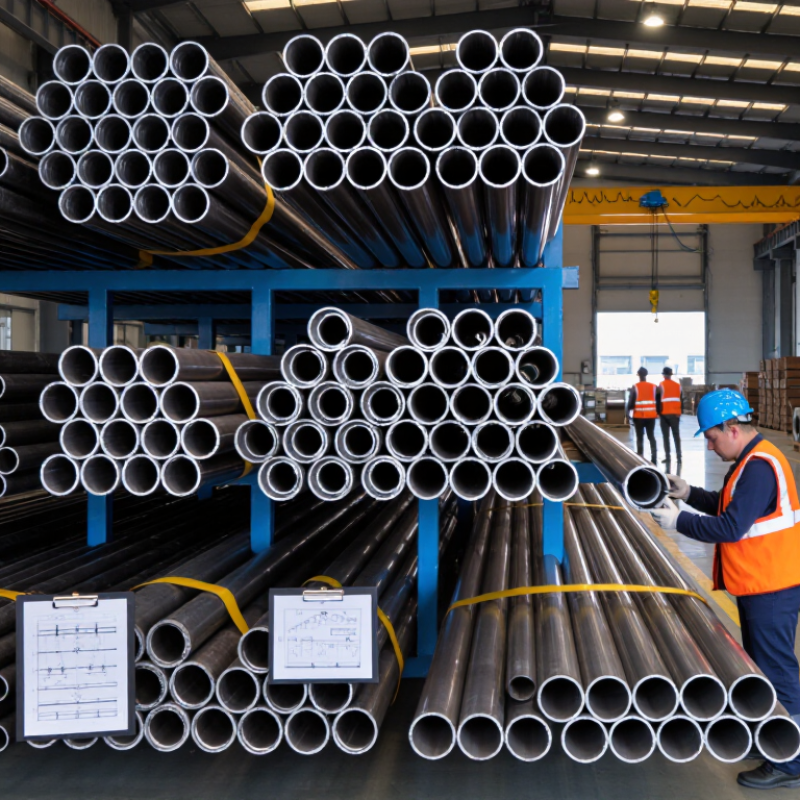
Understanding Welded Steel Pipe Types and Manufacturing Methods
10 Tips for Buying Welded Steel Pipe
Understanding welded steel pipe begins with its forming method. ERW pipe uses electrical resistance to heat and join steel strip edges. It suits many water, structural, and low-pressure applications. LSAW pipe forms a straight seam with submerged arc welding. Its wide plates support large diameters and demanding loads. Spiral welded pipe uses helically formed strip. It can produce long, large-diameter sections efficiently.
Material choice matters as much as pipe type. Carbon steel offers strength and practical cost control, while stainless steel improves corrosion resistance. Check the steel grade, wall thickness, outside diameter, and permitted tolerances. A pipe that looks heavy may still have an unsuitable chemistry. That mistake is easy to make. Ask for mill certificates, heat numbers, and documented inspection results.
Manufacturing quality depends on edge preparation, welding heat, alignment, and post-weld inspection. Reliable suppliers commonly use visual checks, ultrasonic testing, radiography, or hydrostatic testing, depending on the specification. Confirm the required standard before comparing prices. Standards define testing, dimensions, and acceptance limits differently. During a previous project, I focused too heavily on surface appearance and overlooked ovality. The pipes installed correctly, but cutting required extra adjustment. Inspect weld continuity, end squareness, coating condition, and storage damage. Also consider transport length, connection method, and site handling equipment. A technically correct pipe can still become a poor purchase when its delivery form does not match the installation plan.
Defining Application Requirements and Pipe Specifications
Defining the service comes before comparing prices. State the fluid, operating pressure, temperature range, flow rate, and design life. A chilled-water line needs different protection from a hot, chloride-bearing process line. Record startup surges and vacuum conditions too. They are easy to miss.
Specify nominal diameter, outside diameter, wall thickness, length, end preparation, and allowable tolerances. For welded pipe, define seam type, weld procedure, heat treatment, and inspection level. Do not guess.
Material selection should follow the actual exposure. The AMPP IMPACT study estimated global corrosion costs at 2.5 trillion dollars annually, or about 3.4% of global GDP. That figure makes corrosion allowance, lining, coating, and cathodic protection practical design questions. They are not optional extras.
Ask for chemistry limits, hardness requirements, and weldability data. Then match the purchase specification with the applicable standard, such as ASME B31.3, ASTM requirements, or ISO 3183. The standard alone is not a complete application definition.
Require mill test certificates, heat numbers, dimensional records, weld inspection results, and pressure-test documentation. Confirm whether testing is hydrostatic, ultrasonic, radiographic, or a defined combination. The World Steel Association reported 1.89 billion tonnes of crude steel production in 2023. Supply is broad, but consistency still depends on traceability and process control.
Field inspectors often find mismatched certificates or unclear coating limits. I would leave room for review. A cheap pipe can become an expensive replacement when service assumptions remain incomplete.
Evaluating Material Quality, Standards, and Weld Integrity
Buying welded steel pipe starts with material evidence, not a polished surface. Ask for the heat number, mill test certificate, chemical analysis, yield strength, tensile strength, and elongation. Shortcuts cost later.
Confirm the specified grade matches the temperature, pressure, fluid, and fabrication method. A certificate should match markings on each pipe or bundle.
Check outside diameter, wall thickness, length, ovality, and straightness with calibrated tools. I have seen acceptable-looking pipe fail a simple thickness check. Surface rust may be removable; deep pits are not.
Weld integrity deserves separate scrutiny. Request the welding procedure, qualification records, filler-metal details, and operator qualifications. Review whether the seam is longitudinal or spiral, and whether heat input was controlled. Inspect for undercut, overlap, cracks, porosity, and uneven reinforcement. Small flaws matter.
For critical service, request documented nondestructive testing, including ultrasonic, radiographic, or magnetic particle examination. Verify sampling rates, acceptance criteria, and test reports. Hydrostatic testing can reveal leaks, but it does not replace weld inspection. That distinction is easy to miss.
Use the standard named in the purchase specification, including its edition and supplementary requirements. Confirm traceability from raw coil to finished pipe. Packaging should protect bevels and markings during transport.
A supplier who avoids records is not reassuring. Leave room for doubt. Recheck critical dimensions independently before installation.
Comparing Suppliers, Prices, Delivery Terms, and Certifications
10 Tips for Buying Welded Steel Pipe
Comparing suppliers starts with production experience, not polished websites. Ask about mill capacity, welding methods, quality staff, and recent export records. Request samples of mill test certificates, inspection reports, and traceability documents. Check whether each certificate matches the stated steel grade, diameter, wall thickness, and heat number. Do not accept “certified” without identifying the issuing laboratory or standard. Verify tolerances, surface condition, weld quality, and testing requirements before requesting prices. A clear specification prevents costly revisions. I once overlooked packaging details, and moisture damaged pipe ends during storage.
Compare quotations line by line. Include material, testing, coating, cutting, packing, inland transport, and documentation charges. The lowest price may exclude important controls. Ask suppliers to state production lead time, loading date, estimated transit, and delivery location. Clarify whether the offer uses agreed delivery terms and who carries insurance, customs work, and unloading risks. Confirm payment stages and the process for shortages or damaged bundles. Request a pre-shipment inspection, with photographs of markings, bundles, and protective caps. Check production updates against the promised schedule. Delays happen. Vague answers are the warning. Finally, review the supplier’s corrective-action records and customer references. A reliable partner explains defects openly and shows how similar problems were prevented.
10 Tips for Buying Welded Steel Pipe
Use the same steel grade, standard, certification level, and delivery terms when comparing supplier quotations. The chart shows minimum specified yield and tensile strengths for commonly referenced welded-pipe grades.
Purchasing note: A lower price is not directly comparable if the quotation uses a different grade or standard. Confirm material certificates, dimensional inspection, hydrostatic or nondestructive testing requirements, production lead time, Incoterms, and delivery costs before selecting a supplier.
Reference basis: minimum specified mechanical properties commonly listed in ASTM A53 Grade B and API 5L PSL1 grades X42, X52, and X60. Actual requirements depend on the applicable edition, product specification, pipe size, wall thickness, and purchase order.
Inspecting Welded Steel Pipe Before Acceptance and Installation
10 Tips for Buying Welded Steel Pipe
Inspecting Welded Steel Pipe Before Acceptance and Installation
Before accepting welded steel pipe, compare every bundle with the purchase documents. Check the grade, outside diameter, wall thickness, length, and quantity. Review the mill certificate and confirm heat numbers match the markings. This simple traceability check prevents costly confusion later.
Walk around each pipe under clear lighting. Look for dents, flattened ends, deep scratches, rust scale, and damaged coatings. Pay close attention to the weld seam. It should appear continuous, even, and free from visible cracks or undercutting. Measure several points, not just one. Pipes can vary more than expected.
Use calibrated tools for dimensional checks. A straightedge helps reveal bending, while a wall-thickness gauge identifies local thinning. For critical service, request suitable non-destructive testing records. Hydrostatic test results also deserve careful review. Do not rely on paperwork alone. A clean surface can hide a serious defect.
Protect accepted pipes during storage. Keep them above wet ground, use supports, and cover them without trapping moisture. Before installation, clean the ends and inspect bevels, threads, or couplings. I have seen good pipe damaged by careless lifting. That mistake is avoidable. Still, inspection records are sometimes incomplete, so leave space for correction and rechecking.