Humidity affects more than comfort. It can influence product storage, indoor air quality, greenhouse control, and sensitive equipment. From a damp basement to a climate-controlled cabinet, the right humidity sensors help turn changing moisture levels into useful readings. Yet choosing a sensor is not simply a matter of finding the highest accuracy figure. Small differences in range, response time, and operating temperature can shape performance in real conditions. That matters. A sensor near a cold window may behave differently from one mounted inside a warm equipment enclosure. A low-cost model may suit basic monitoring, while a process requiring stable control may need stronger calibration support and documented accuracy. Not always an easy trade-off.
A practical choice starts with the environment and the decision the reading must support. Define the expected relative humidity range, temperature range, and acceptable measurement error. Then check how the sensor connects to your system, whether through an analog signal, digital interface, or wireless link. Review calibration guidance, maintenance needs, and the effects of condensation, dust, or airflow. Placement deserves attention too; a sensor blocked by a shelf or placed beside a heat source may report conditions that do not represent the whole space. Datasheets are useful, but they cannot predict every installation. Comparing specifications with real operating conditions gives you a more reliable shortlist. It may still take testing to confirm the best fit. That uncertainty is worth acknowledging.
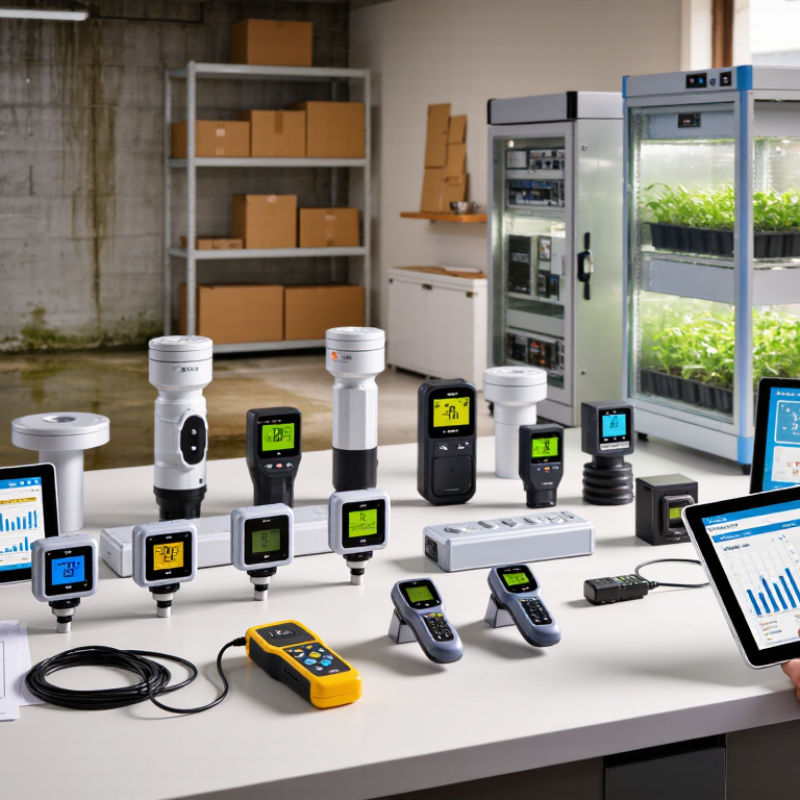
Humidity sensors estimate water vapor in air, but different designs use different physical effects. Capacitive sensors measure changes in electrical capacitance as moisture interacts with a sensing film. They are common in monitoring equipment because they can cover a broad humidity range. Resistive sensors track changes in electrical resistance. Their readings may shift with contamination or aging. Thermal sensors compare heat transfer through dry and humid air, making them useful in specialized applications.
Relative humidity depends on both moisture and temperature. A sensor near a sunny window may report a different value from one in a shaded corner. Check the stated accuracy, operating range, response time, and calibration needs. Accuracy figures can describe ideal test conditions, not every room. Condensation, dust, and rapid temperature changes can also affect readings. A small offset is easy to overlook, yet it may matter when controlling storage conditions.
Tips: Place the sensor away from vents, heaters, and damp surfaces. Allow it time to adjust after installation. Compare its readings with a trusted reference occasionally; no device stays perfect forever. If values seem odd, check placement before replacing the sensor.

Before comparing humidity sensor specifications, define the job it must do. A greenhouse monitoring leaf-zone conditions has different needs from a museum protecting paper or a duct controlling ventilation. Record the expected humidity range, temperature range, exposure to condensation, response time, and required accuracy. Include the mounting point: a sensor beside a cold exterior wall may read differently from one near a supply vent. Small placement errors matter.
ASHRAE Standard 55-2023 evaluates thermal comfort through six factors, including humidity, air temperature, air speed, and clothing. That is a useful reminder: humidity rarely works alone. For example, a room-monitoring system may need stable readings around occupied conditions, while a drying process may need reliable measurements at higher temperatures. Check the sensor’s stated accuracy across your actual temperature and humidity range, not just at room temperature. Also review recovery time after condensation. NIST Special Publication 250-83 describes humidity calibration services and measurement uncertainty; use traceable calibration when readings guide critical decisions. A specification can look excellent on paper. The installation may not. Drafts, dust, and infrequent calibration can quietly undermine it, so document these conditions before selecting a sensor.
| Application | Typical Measurement Range | Practical Accuracy Target | Typical Operating Conditions | Key Sensor Requirements | Important Selection Considerations |
|---|---|---|---|---|---|
| Residential and commercial HVAC | 20–80% RH | ±3% RH is often adequate for general control | Approximately 0–50°C; indoor air with moderate dust levels | Capacitive RH sensing, stable readings, straightforward integration with a controller | Match the sensor’s temperature range and output to the control system. Place it away from supply-air jets, windows, and direct sunlight. |
| Museums, archives, and collections storage | Typically 30–70% RH, depending on the collection and conservation plan | Often ±2% RH or better, with good long-term stability | Usually controlled indoor temperatures; continuous monitoring may be required | Low drift, repeatability, calibration support, and reliable data logging | Setpoints and allowable changes should be determined by conservators and material requirements; one RH target is not suitable for every collection. |
| Greenhouses and controlled-environment agriculture | 30–95% RH | ±3% RH is commonly useful; tighter control may be needed for specific crops | Often 5–40°C, with frequent irrigation, mist, and condensation risk | Protected sensing element, condensation awareness, and resistance to chemical exposure | Use a radiation shield or suitable probe location. Avoid direct wetting, and check compatibility with fertilizers, sulfur compounds, and cleaning agents. |
| Outdoor weather and building monitoring | 0–100% RH | ±3% RH or better across the intended range | May include sub-zero temperatures, rain, wind, solar heating, and rapid temperature changes | Wide temperature rating, weather-resistant enclosure, and protection from liquid water | Use a ventilated radiation shield. Confirm that the sensor can recover from condensation and that the enclosure does not trap heat or moisture. |
| Drying rooms and material processing | Choose for the process; some applications need reliable readings below 20% RH | Set from the drying endpoint and process tolerance | Can involve elevated temperatures, dust, solvents, or rapidly changing moisture levels | Appropriate high-temperature probe, suitable protective filter, and a measurement range that covers low humidity | Check temperature compensation and chemical compatibility. For very dry processes, dew-point measurement may be more useful than RH alone. |
| Pharmaceutical and medical storage | Common monitoring ranges include 20–80% RH; limits depend on the stored product | Often ±2–3% RH, as defined by the monitoring plan | Controlled rooms, cabinets, or transport environments; excursions may need documentation | Traceable calibration, repeatable measurements, alarm support, and secure data records | Use the product label and applicable quality procedures to set limits. Define calibration intervals and alarm-response procedures before deployment. |
| Electronics manufacturing and component storage | Typically 10–70% RH, with some processes requiring narrower limits | ±2–3% RH, depending on process control needs | Clean indoor spaces; electrostatic-control areas may have specific humidity targets | Stable readings, rapid enough response for room monitoring, and compatibility with the facility monitoring system | Follow component handling and facility standards. Avoid locating the sensor near humidifiers, doors, or localized heat sources. |
Note: The ranges and accuracy targets above are typical planning examples, not universal specifications. Confirm the required RH and temperature range, accuracy, response time, calibration method, and exposure limits for the specific application and sensor model.
A humidity sensor is useful only when its readings suit the conditions you need to monitor. Check accuracy across the expected range, not just at room conditions. A sensor rated within ±2% RH may still perform differently near very dry or damp extremes. Compare its stated tolerance with your application, and allow for uncertainty instead of treating every displayed number as exact.
Range matters in greenhouses, storage rooms, and other spaces with changing moisture levels. Choose a sensor whose operating range covers both normal conditions and likely peaks. Response time affects how quickly readings reflect a real change. A slow sensor may miss a brief humidity spike after a door opens or a humidifier starts. Stability is equally important: readings that drift over weeks can lead to unnecessary adjustments. I once focused too much on a quick response figure; stable readings turned out to matter more for routine monitoring. That assumption was incomplete.
Tips: Compare sensors under the same temperature and humidity conditions, and note how long each takes to settle. Check readings against a trusted reference periodically. Keep a simple log of location, date, and readings; placement near a vent can skew results. A neat datasheet cannot replace checking performance in your actual setup.
How to Choose the Best Humidity Sensors
Evaluating Calibration, Maintenance, and Environmental Compatibility
A sensor’s accuracy rating is only useful if its calibration stays dependable over time. Check how often recalibration is recommended and whether the device supports comparison with a traceable reference. In practice, a simple check against a calibrated instrument can reveal drift before readings affect a process. Small details matter. Keep records of dates, results, and adjustments; otherwise, a gradual change may be hard to spot.
Maintenance needs vary with the sensor’s surroundings. Dust, oil mist, and condensation can slow response or distort readings. Ask whether the sensing element can be cleaned, and follow the maker’s instructions rather than improvising with solvents. Also consider access: a sensor mounted above a warm duct may be awkward to inspect safely. That is easy to overlook. A low-maintenance model can still require regular verification.
Match the sensor to the actual environment, not just the expected humidity range. Temperature swings, airflow, and brief exposure to condensation may affect performance differently. Check the specified operating limits and response time, then compare them with conditions at the installation point. A laboratory rating may not predict behavior beside a cold window or near a humidifier. No specification covers every site. When conditions are uncertain, log readings during a representative week before choosing a permanent location.
How to Choose the Best Humidity Sensors
Selecting and Testing the Best Sensor for Your Application
Choose a sensor for the air it will actually measure, not just its catalogue range. A greenhouse, a storage cabinet, and a ventilation duct have different temperature swings, airflow, and condensation risks. Check the stated accuracy across your operating range, response time, output format, and resistance to contamination. A sensor that reads well at room temperature may drift in a warm, damp enclosure. Small details matter.
Set a target before comparing readings. The U.S. Environmental Protection Agency advises keeping indoor humidity ideally between 30% and 50% relative humidity, and below 60% where possible. That is useful context for buildings, not a universal setpoint for every process. Test candidate sensors beside a calibrated reference in a stable chamber at several humidity levels, including the range your application uses most. Allow readings to settle, record temperature, and repeat the check after exposure to high humidity. NIST’s humidity calibration services provide a route to traceable measurements. A neat datasheet can still mislead. Field conditions are messier, and one calibration check cannot reveal every installation problem. Recheck after mounting; a cold wall or blocked airflow can skew results.
Typical relative humidity accuracy ranges by sensor type
Lower tolerance indicates greater accuracy. These ranges are indicative, not guaranteed specifications: performance depends on the specific model, operating conditions, and calibration. Check the sensor datasheet and test it at the humidity and temperature levels expected in your application.
As a specialist in environmental and flow sensor technology, ScioSense enables companies to use the planet’s resources more sustainably, helping to create a healthier future for all.