10 Essential Tips for Choosing High Temperature Pressure Sensors

Choosing the right high temperature pressure sensors is crucial in various industries. These sensors are essential for monitoring and control in extreme environments. Their accuracy and reliability can directly impact safety, efficiency, and product quality.

When selecting high temperature pressure sensors, consider key factors. The sensor's range, material compatibility, and response time are important. Different applications may require different specifications, making the selection process challenging.

In some instances, you might face imperfect options. A sensor that performs well in one scenario may not fit another perfectly. It’s vital to balance performance with cost. Reflect on real-world applications and challenges. Every choice has trade-offs that need careful consideration. Understanding these elements will lead to better decision-making.
10 Essential Tips for Choosing High Temperature Pressure Sensors

Understanding the Importance of High Temperature Pressure Sensors in Industry

High temperature pressure sensors play a crucial role in various industries, especially in oil and gas, aerospace, and chemical manufacturing. According to a recent report, around 30% of industrial processes involve environments exceeding 200°C. This temperature can significantly affect measurement accuracy. Hence, choosing the right sensor is vital for reliability and safety.

In harsh conditions, inaccurate pressure readings can lead to catastrophic failures. The need for precise data is underscored by studies indicating that 70% of equipment failures result from improper monitoring. Sensors designed for high temperature must withstand extreme thermal stress while delivering consistent performance. Using subpar sensors risks not just machinery but also employee safety.

Moreover, companies are often unaware of how sensor failure impacts operational costs. Downtime caused by faulty sensors can be financially devastating. Reports indicate that lost production adds an average of $2 million per incident. This highlights the necessity for thorough research and careful selection when acquiring high temperature pressure sensors.
Key Specifications to Evaluate When Selecting Pressure Sensors

Choosing the right high-temperature pressure sensors is crucial. When evaluating potential sensors, you should check their temperature range. Ensure it meets your system’s requirements. Many sensors can handle extreme temperatures, but not all perform reliably. Consider the specific conditions where they will be used.

Another vital specification is the pressure range. You need to assess whether the sensor can accurately measure the pressures relevant to your application. Some sensors may show inaccurate readings under high pressure. This misinformation can lead to critical errors. It’s also important to look at the sensor’s material. Different materials have different resistance to high temperature and corrosive environments.

Integration capabilities are often overlooked. How easily can the sensor be integrated into your existing systems? Compatibility matters. You might regret a choice that seems perfect at first but fails to connect properly. Lastly, evaluate the response time. Delays in pressure readings can impact system performance. In high-temperatures, this could be worse. Keep these details in mind as you weigh your options. The right choice requires careful consideration and reflection.

10 Essential Tips for Choosing High Temperature Pressure Sensors

This chart represents key specifications to evaluate when selecting pressure sensors, including temperature range, pressure range, accuracy, output type, and response time.

Temperature Range Considerations for High Temperature Applications

10 Essential Tips for Choosing High Temperature Pressure Sensors

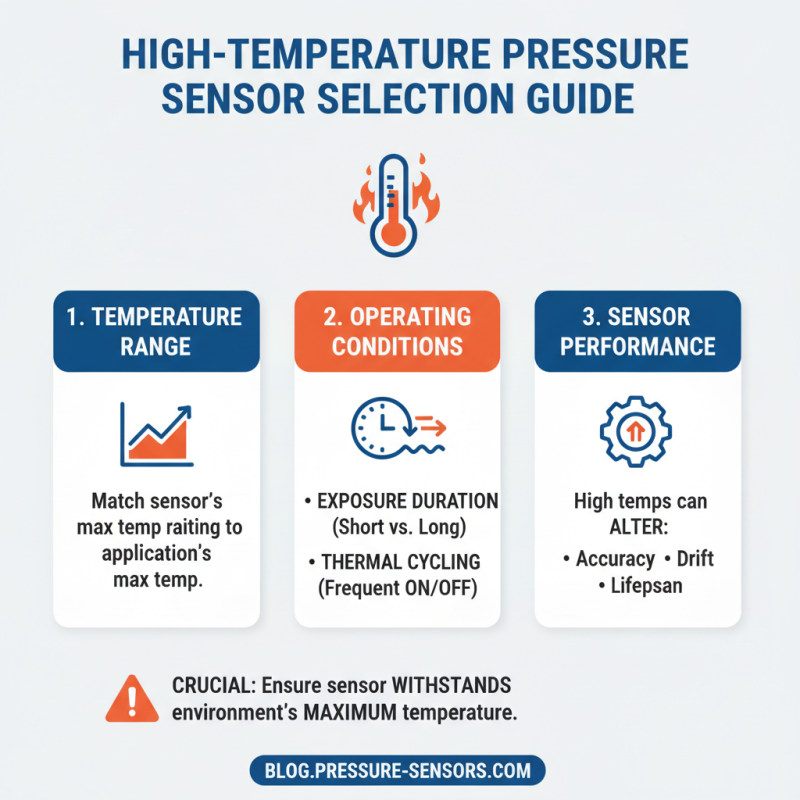
When selecting high temperature pressure sensors, it's crucial to understand the temperature range needed for your application. High temperatures can alter sensor performance. Make sure the sensor can withstand the maximum temperature in your environment. Consider the specific conditions, such as exposure duration and thermal cycling.

One helpful tip is to check the sensor's material. Materials must resist extreme heat without degrading. Look at the thermal properties of metals and ceramics. Some materials may struggle under constant exposure. Thermocouples or specialized ceramics could be viable alternatives.

Calibration is another important factor. Sensors must be calibrated to ensure accuracy at high temperatures. This may involve adjustments to compensate for temperature drift over time. Regular calibration checks keep data reliable. Keep this in mind when evaluating your options. Choose sensors that allow for easy recalibration, if necessary.

Material Compatibility: Ensuring Sensor Durability at Elevated Temperatures

10 Essential Tips for Choosing High Temperature Pressure Sensors

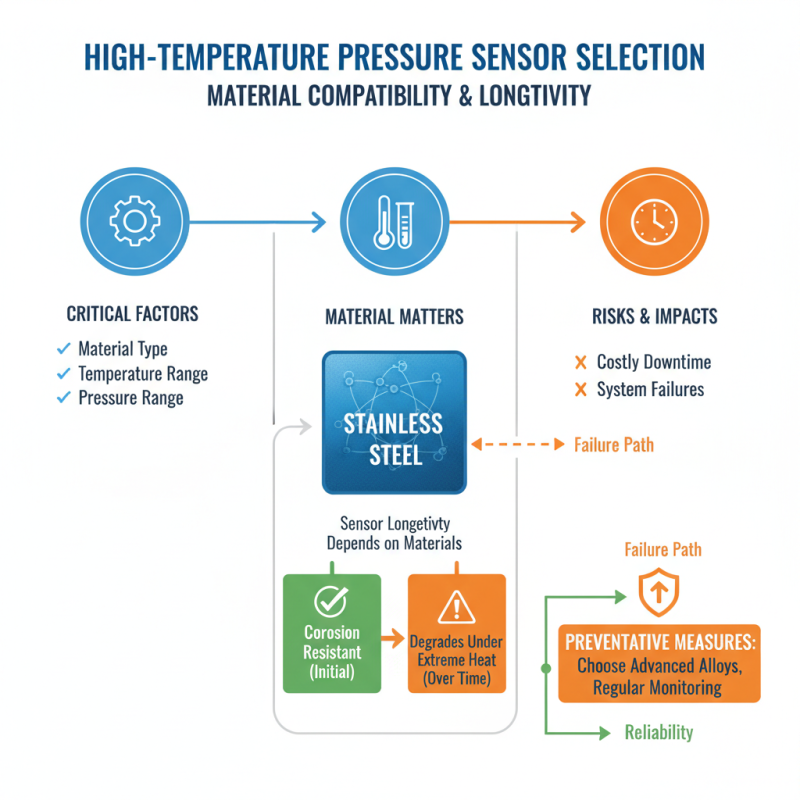
Selecting high-temperature pressure sensors requires careful consideration, especially regarding material compatibility. The sensor’s longevity largely depends on the materials used. For example, stainless steel is often preferred due to its corrosion resistance. Yet, even stainless steel can degrade over time in extreme heat. A failure could lead to costly downtime or failures in critical systems.

According to recent industry reports, nearly 30% of sensor failures result from material incompatibility. Many sensors operate effectively up to 500°C, but exposure to certain chemicals can compromise their integrity. Thermoplastic materials may break down when subjected to thermal stress. Thus, understanding the environment in which the sensor will operate is crucial.

Additionally, polymers may lose their mechanical properties at elevated temperatures. This can lead to inaccurate readings. Real-world cases show failures in applications where the heat exceeds design limits. It's essential to evaluate the max temperature ratings and potential exposure to corrosive substances. Every application is unique; testing under actual conditions provides the best insights into long-term performance.

Calibration and Accuracy: Critical Factors for Reliable Sensor Performance

When selecting high temperature pressure sensors, calibration and accuracy play critical roles. Sensors must be calibrated correctly to ensure they provide reliable data. According to industry reports, improperly calibrated sensors can lead to measurement errors exceeding 10%. This margin can significantly impact processes in sectors like aerospace and petrochemicals.

Tip 1: Always verify calibration standards. Use traceable references to ensure your sensor's performance aligns with industry norms. A precise calibration increases trust in the data gathered.

Accuracy extends beyond calibration. Environmental factors can affect sensor readings. Temperature drift, for instance, can alter pressure readings. Reliable sensors should maintain consistent accuracy across their operational range. An outdated sensor may mislead you, causing costly errors.

Tip 2: Regularly check sensor performance. Ensure that periodic maintenance and recalibration are part of your routine.

Choosing the right sensor means understanding these factors deeply. Evaluate the environment where the sensor will operate. Extreme conditions can compromise their reliability. The right choice can minimize risks and enhance operational efficiency.