Digital Sensors vs Analog Sensors Best Differences Explained?

In today's rapidly advancing technology landscape, the debate between analog sensors and digital sensors is crucial. Understanding their differences helps industries choose the right tools for capturing data accurately. Analog sensors provide continuous data, allowing for real-time observations. They are often simpler and can function in various environments. However, they may struggle with noise and can be less precise.

On the other hand, digital sensors convert physical phenomena into discrete signals. This process results in higher precision and easier data management. They are often more effective in complex systems, such as those found in smart devices. Yet, digital sensors may require more energy and processing power.

Both types of sensors play vital roles in modern applications. Their unique features offer advantages and challenges that need thorough evaluation. Making the right choice requires an understanding of specific needs and contexts. Exploring these differences can lead to improved solutions in various fields, from healthcare to manufacturing.
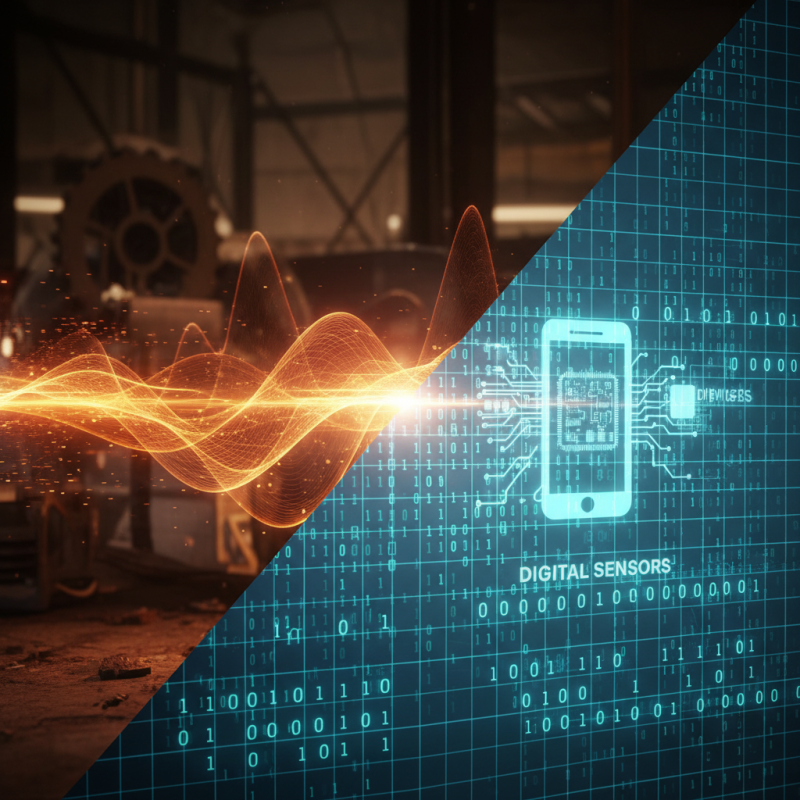
Digital Sensors vs Analog Sensors Best Differences Explained?

Understanding Digital Sensors and Analog Sensors

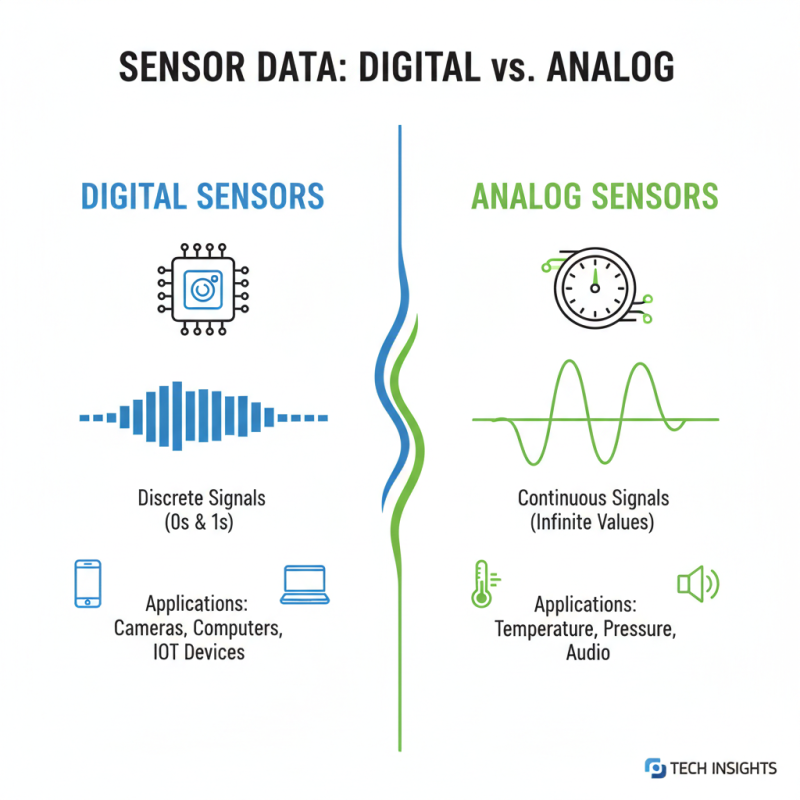
Digital sensors and analog sensors play crucial roles in modern technology. Understanding their key differences helps in choosing the right one for specific applications. Digital sensors provide binary output, representing on or off states. This simplifies data processing and integration with digital systems. For instance, a temperature sensor can give a clear '0' or '1' based on predefined thresholds.

On the other hand, analog sensors produce a continuous signal proportional to the measured variable. This allows for fine detail in measurements. For example, an analog thermometer offers a smooth temperature reading, capturing even slight changes. However, the drawback lies in signal degradation over long distances. Digital sensors may struggle with environmental noise, but they can relay information without much distortion.

Both types have their advantages and disadvantages. The choice depends on the application needs. Analog systems might seem simpler, yet they can be prone to errors. Digital sensors, while precise, require careful calibration. Balancing these factors is essential. In many cases, users may find themselves caught between simplicity and precision, leading to reflections on their choices.

Digital Sensors vs Analog Sensors: Performance Comparison

Key Functional Differences Between Digital and Analog Sensors

Digital Sensors vs Analog Sensors Best Differences Explained?

Digital sensors and analog sensors serve different purposes in data collection. Digital sensors deliver data in discrete signals while analog sensors provide continuous signals. This fundamental difference shapes their application in various fields.

Digital sensors are precise. They convert physical quantities into binary values. This ensures accurate readings. For instance, a digital thermometer displays temperature in numbers. In contrast, an analog thermometer shows temperature with a needle. The needle can be easier to read in some scenarios, but it may blur at critical values.

When choosing between them, consider your needs. Digital sensors are great for accuracy and data processing. However, analog sensors can be more intuitive to use. They often offer real-time feedback in a simple format.

**Tips:** Always evaluate the environment. Harsh conditions may affect analog sensors. They can drift over time, leading to inaccuracies. Perform regular calibrations. For digital sensors, ensure proper coding for data analysis. This step often gets overlooked. Understand system requirements before making a decision.

Advantages of Digital Sensors Over Analog Sensors

Digital sensors are gaining traction in various industries due to their significant advantages over analog sensors. One primary benefit is accuracy. Digital sensors often provide more reliable data. Reports show that they can reduce measurement error by up to 50%. This level of precision is crucial in applications such as healthcare and aerospace.

Response time also stands out. Digital sensors typically process data faster. Their ability to convert signals quickly allows for real-time monitoring. This is vital in environments like manufacturing, where delays can lead to costly downtimes. Moreover, they are less susceptible to noise, enhancing data integrity.

Tip: When choosing sensors, consider long-term maintenance costs. Digital sensors tend to require less upkeep.

Another advantage is scalability. Digital systems allow for easy integration with other technologies. This leads to a more connected environment, ideal for smart cities. Analog sensors, on the other hand, may face challenges in adapting to new advancements. Industry analyses suggest a trend toward digital solutions, highlighting their growing importance.

Tip: Always evaluate your specific needs. The right sensor can boost efficiency and productivity.

Digital Sensors vs Analog Sensors Best Differences Explained

Feature Digital Sensors Analog Sensors
Signal Type Discrete (Binary) Continuous
Output Precise (0s and 1s) Voltage/Current levels
Noise Resistance High Low
Complexity More Complex Simplicity
Calibration Needs Less Frequent More Frequent
Cost Generally Higher Generally Lower
Applications Digital devices, IoT Basic measurement systems

Common Applications for Digital and Analog Sensors

Digital sensors and analog sensors are critical in various industries. Each type has distinct applications. Digital sensors convert physical signals into discrete binary values. These can range from simple temperature readouts to complex data in industrial automation.

In contrast, analog sensors provide continuous output. They detect physical parameters like temperature or pressure and relay that information in real time. For instance, an analog temperature sensor may provide a steady voltage output that varies depending on the heat sensed. According to a recent market research report, the analog sensor market was valued at approximately $64 billion in 2022, reflecting its essential role in manufacturing and automotive sectors.

Digital sensors, on the other hand, are favored in environments requiring precision. They are widely used in smart home devices, providing reliable data with less interference. The industry anticipates a significant shift towards digital sensors, with projections estimating their market will grow by about 20% annually until 2028. However, the transition isn't seamless. Many industries still rely heavily on analog sensors. Challenges such as cost and integration complexity hinder complete adoption of digital technology in older systems.

Challenges and Limitations of Digital and Analog Sensors

Digital and analog sensors are essential in modern technology, but they face various challenges and limitations. Digital sensors are precise and reliable, yet they often require complex processing. This can lead to delays in response time. In applications where real-time data is critical, this might be a significant drawback. Additionally, the need for higher power consumption can increase operational costs.

On the other hand, analog sensors are simpler and provide continuous data. They excel in straightforward measurements. However, they suffer from issues such as noise interference and signal degradation over long distances. For instance, a temperature reading may fluctuate due to electromagnetic interference. While these sensors can operate effectively in many circumstances, their limitations in data precision can lead to inaccuracies.

Both types of sensors require careful consideration for specific applications. It’s vital to assess the environment and requirements. Each sensor type has trade-offs that must be acknowledged. Implementing the wrong sensor can lead to performance issues. Identifying the precise needs of a project can often reveal these challenges and help inform better decisions. This reflection can lead to more informed choices and improved sensor performance.