
Choosing the right Air Conditioner Contactor affects cooling performance, electrical safety, and long-term equipment reliability. This small switching device controls power to the compressor, condenser fan, or other high-load components. A poor match may cause buzzing, overheating, welded contacts, or repeated breaker trips.
This guide explains how to evaluate contactor voltage, current rating, poles, coil specifications, and enclosure quality. Start with the air conditioner’s nameplate, wiring diagram, and existing contactor. Do not rely on appearance alone. Two contactors can look identical while using different coil voltages or contact capacities. That mistake is common.
Reliable selection requires practical judgment. A contactor should handle the motor’s operating load and its starting demands. Check the rated-load amperage, voltage, frequency, and duty classification. Confirm whether the control circuit uses 24V AC, 120V AC, or another voltage. A licensed HVAC technician can verify these details with a multimeter and manufacturer documentation.
Small details matter.
For example, a pitted contact surface may indicate excessive cycling, loose wiring, or an undersized component. Replacing only the visible part might not solve the real problem. This is where careful inspection becomes more valuable than a quick purchase. The following sections compare common specifications, explain compatibility concerns, and outline safer replacement practices. Some older systems have incomplete labels, so professional testing remains essential. A dependable Air Conditioner Contactor is not simply the cheapest option; it is the one correctly matched to the system and installed according to recognized electrical and manufacturer requirements.
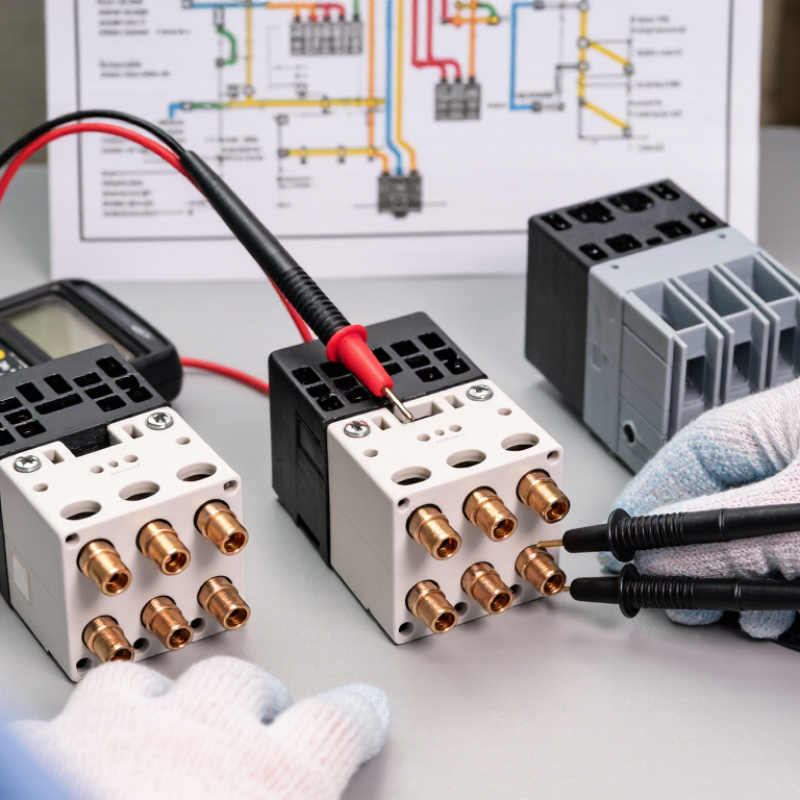
Choosing an air conditioner contactor starts with the power arrangement. A single-phase unit normally needs a two-pole contactor. It switches both live conductors together. A three-phase unit requires three poles. Each phase must open and close simultaneously. Using two poles on a three-phase compressor leaves one phase energized, creating a serious service hazard and possible motor damage.
Check the equipment nameplate before selecting the contactor. Compare rated voltage, running current, locked-rotor current, coil voltage, and frequency. The contactor’s operational rating should match the compressor and fan load, not only the circuit breaker. IEC 60947-4-1 provides requirements for electromechanical contactors. The International Energy Agency reports that global space-cooling electricity demand could more than triple by 2050. Reliable switching will matter more as cooling equipment use expands. Still, a larger contactor is not automatically better. Oversizing can increase cost and may create poor terminal connections.
Tips: Count the supply conductors first. Confirm the pole count visually. Then verify the coil marking. Select a contactor with suitable utilization ratings and an adequate short-circuit rating. Leave room for doubt. A worn terminal, weak connection, or incorrect coil voltage can defeat an otherwise correct selection. Ask a qualified technician to verify the installation against local electrical requirements.

Choosing an air conditioner contactor starts with the motor’s current data, not its physical size. The U.S. Department of Energy’s 2022 Industrial Motor Systems Market Assessment reports that motor-driven systems consume about 68% of industrial electricity. Correct switching capacity therefore matters for efficiency, heat control, and service life.
Read the compressor nameplate carefully.
AC-3 ratings add another important check. IEC 60947-4-1 defines AC-3 for squirrel-cage motor starting and switching during normal operation. Select a contactor whose AC-3 current and motor-power rating meet or exceed the application requirement. A higher AC-1 rating alone may mislead you. In field inspections, a frequent mistake is matching only the RLA. That shortcut can fail during repeated starts, low-voltage conditions, or high ambient temperatures. Compare RLA, LRA, AC-3 values, coil voltage, and the manufacturer’s coordination data. Leave a practical margin, but avoid choosing blindly oversized equipment. Bigger is not automatically safer.
Choosing the right air conditioner contactor starts with voltage confirmation. The control coil and line terminals use different voltage ranges. Many residential and light commercial systems use a 24 V coil, while line power may range from 208 V to 600 V.
Check the equipment nameplate and wiring diagram before touching the contactor. Then measure the control voltage with a properly rated multimeter. A reading near 24 V should match a 24 V coil. Do not assume the coil voltage from the system size alone. Some equipment uses 120 V or other control voltages. It happens.
The line side requires equal care. Confirm that the contactor’s voltage rating covers the measured supply, whether it is 208, 230, 460, or 600 V. Check the number of poles, continuous current rating, and motor load rating. A three-phase compressor usually needs a three-pole contactor, while a single-phase circuit may use two poles. Also inspect terminal condition, wire size, and signs of heat damage.
A practical detail matters here. Turn off power, lock out the disconnect, and verify zero voltage before replacement. I have seen technicians match a contactor by appearance and miss the coil marking. That shortcut can cause buzzing, welded contacts, or compressor failure. Recheck the coil label after installation. Small markings are easy to misread.
Choosing an air conditioner contactor involves more than matching voltage, coil type, and motor current. Fault protection deserves equal attention. The key figure is the short-circuit current rating, or SCCR. It indicates the fault current an equipment assembly can withstand safely under specified conditions. Keep this distinction clear. A breaker’s interrupting rating is not automatically the contactor’s SCCR.
Begin with the available fault current at the installation point. This value may come from utility data, transformer information, or a qualified electrical professional. Compare it with the contactor’s marked SCCR and the complete panel’s SCCR. For example, a 5 kA rating is inadequate where 10 kA may be available. The SCCR must meet or exceed the calculated fault current. Select suitable branch-circuit protection, too. Its type and size can affect the documented combination rating. Check product markings and installation instructions, not only a catalog table.
In field work, I have seen selections based only on compressor running amps. That shortcut feels practical, but it misses a severe fault event. Verify voltage, horsepower, overload coordination, enclosure conditions, and conductor size with equal care. Record the available fault current and the evidence supporting your selection. If the value is unknown, do not guess. Ask a qualified professional to evaluate it. I have also learned that old drawings can be wrong. Recheck the calculation after a transformer or service upgrade.
| Selection Dimension | Typical Evaluation Data | Recommended Selection Rule | Example or Verification Method |
|---|---|---|---|
| Available fault current | The prospective short-circuit current available at the equipment supply terminals, expressed in RMS symmetrical amperes. | Determine this value before selecting the contactor or finalizing the equipment rating. | Use the electrical design calculation, utility data, transformer information, or a qualified field assessment. Do not assume that the branch-circuit rating equals the available fault current. |
| Required equipment SCCR | The short-circuit current rating assigned to the complete air-conditioning equipment or control panel. | Select an equipment SCCR that is equal to or greater than the available fault current at the installation point. | If the available fault current is 14 kA RMS, an equipment SCCR of at least 14 kA is required. A 10 kA SCCR would not be sufficient. |
| Contactor short-circuit suitability | The contactor's marked short-circuit rating, or its rating when used with specified overcurrent protective devices. | Confirm that the contactor is used within the manufacturer's listed combination and protective-device conditions. | A contactor's general utilization rating alone does not automatically establish the SCCR of the complete air-conditioning unit. |
| Overcurrent protective device | Fuse or circuit-breaker type, maximum permitted rating, interrupting rating, and current-limiting characteristics. | Use a protective device that is permitted by the equipment documentation and has an interrupting rating suitable for the available fault current. | For a 22 kA available fault current, a protective device with a 10 kA interrupting rating is inadequate, even if its ampere rating is correct. |
| Fault-current coordination | The tested or documented combination of contactor, overload relay, fuses or circuit breaker, and enclosure. | Use only combinations supported by applicable product documentation or an evaluated assembly procedure. | Replacing the specified protective device with a different type or rating can change the verified SCCR and may invalidate the combination. |
| Voltage and system configuration | System voltage, phase, frequency, grounded or ungrounded arrangement, and connection method. | Verify that the contactor and protective combination is rated for the actual electrical system. | A contactor suitable for a three-phase motor circuit may not be suitable for a single-phase compressor circuit without checking its marked ratings. |
| Load category and duty | Compressor or fan motor load, utilization category, locked-rotor current, operating current, and switching frequency. | Choose a contactor with an appropriate motor or compressor duty rating and sufficient electrical endurance. | Check rated operational current and motor-duty data rather than selecting only by the contactor's resistive-load current. |
| Branch-circuit protection | Maximum overcurrent protection, minimum circuit ampacity, and equipment nameplate requirements. | Follow the equipment nameplate and the applicable electrical installation rules for conductor and protective-device sizing. | The maximum overcurrent protective device is not a substitute for checking conductor ampacity, contactor ratings, or equipment SCCR. |
| Temperature and enclosure conditions | Ambient temperature, enclosure temperature, humidity, ventilation, and installation environment. | Confirm that the contactor's coil, terminals, insulation system, and overload device remain within their permitted conditions. | High enclosure temperature can affect coil life, terminal temperature, and overload operation even when the SCCR is adequate. |
| Final acceptance check | Nameplate data, marked SCCR, protective-device information, wiring diagram, and installation documentation. | Record the available fault current and verify every relevant rating before energizing the equipment. | The final equipment SCCR must not be lower than the available fault current where the equipment is installed. |
Choosing an air conditioner contactor starts with verification, not price. Check for UL 508 or IEC 60947-4-1 certification that matches the installation. The marking should identify the manufacturer, ratings, certification body, and applicable utilization category. For compressor circuits, review AC-3, AC-8a, or AC-8b ratings carefully. The correct category depends on the motor and refrigerant compressor design.
The IEA’s The Future of Cooling report projects that global cooling energy demand could more than triple by 2050. That growth increases the importance of reliable switching components. A contactor must match system voltage, compressor horsepower, locked-rotor current, and operating frequency. Inspectors should also confirm short-circuit current rating and coordination with the upstream protective device. A contactor rated only for resistive loads may fail during compressor starting.
A practical mistake appears often: selecting by ampere rating alone. It looks reasonable. It is incomplete. Field checks should compare the product certificate with the installation manual, not just the catalog page. UL 508 requirements support industrial control equipment evaluation, while IEC 60947-4-1 defines low-voltage contactor and motor-starter requirements. Local electrical rules may still require additional testing or enclosure protection. The U.S. Energy Information Administration reports that air conditioning represents about 17% of residential electricity use in the United States. Small rating errors can therefore create repeated heating, welded contacts, or nuisance shutdowns. Recheck the data.
As a specialist in environmental and flow sensor technology, ScioSense enables companies to use the planet’s resources more sustainably, helping to create a healthier future for all.