Choosing the best Tyre Pyrolysis Machine requires more than comparing prices, reactor sizes, or attractive production claims. The right choice begins with your actual feedstock. Whole tyres, shredded tyres, and mixed rubber behave differently inside the reactor. Moisture, steel content, and contamination can affect heating time and product consistency. A reliable machine should offer clear operating data, controlled temperature zones, safety systems, and traceable test results.
Dr. S. K. Sharma, a researcher associated with waste-to-energy and tyre recycling studies, offers a useful principle: “A machine is only as reliable as its feedstock, controls, and testing.” That sentence deserves attention. Ask how the system handles uneven tyre sizes. Check the condenser design, gas recycling process, carbon residue removal, and steel separation method. Examine maintenance access, spare-part availability, operator training, and warranty conditions. These details matter when a hot reactor runs for many hours.
A lower purchase price may look attractive. It may also conceal weak insulation, limited automation, or expensive downtime. No machine is perfect. I would not trust impressive photographs alone. Request an independently witnessed trial using your own tyre material. Review output quality, energy consumption, emissions controls, and workplace safeguards. Confirm that installation and operation can meet applicable environmental, fire, and occupational requirements in your location. The best Tyre Pyrolysis Machine is not necessarily the largest one. It is the system that performs consistently, safely, and transparently under real operating conditions. Some decisions remain uncertain. That is why careful testing should guide the final investment.
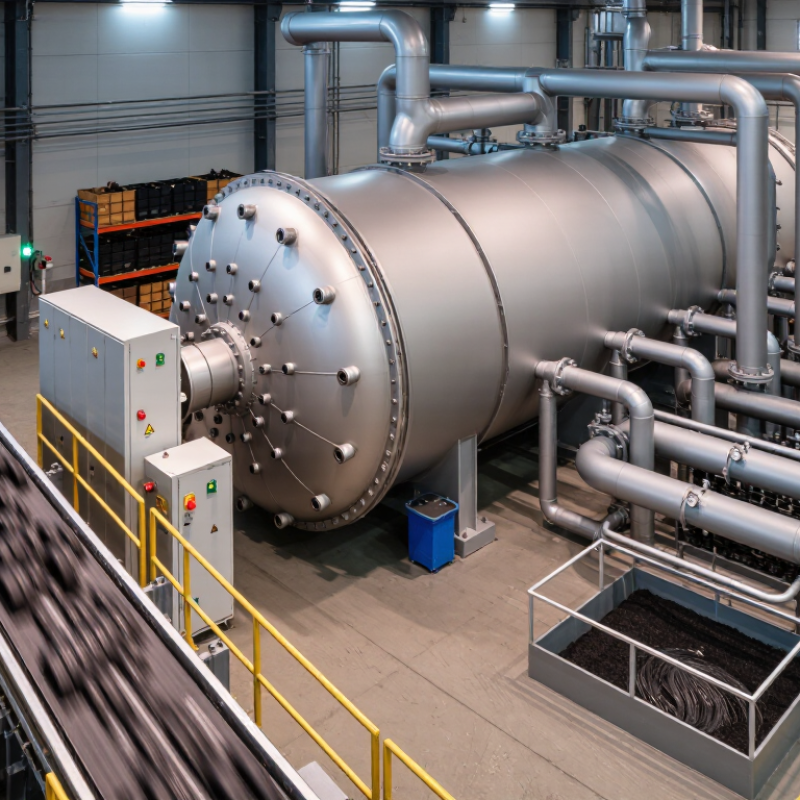
Start by defining what you need to process each day. A small workshop may require two to five tonnes daily, while a recycling facility may need much more. Do not choose capacity from sales figures alone. Measure your available tyre supply, storage space, labor, and working hours. A machine rated for ten tonnes may produce less when tyres contain moisture, steel, or dirt.
Your product goals matter just as much. Decide whether you need tyre-derived oil, recovered carbon material, or steel as your main output. Ask suppliers for test data using tyres similar to yours. Check heating control, feeding systems, cooling performance, gas handling, and emission-management equipment. These details affect safety, maintenance, and operating costs. In practice, actual output can vary. A neat spreadsheet may hide difficult cleaning work.
How to Choose the Best Tyre Pyrolysis Machine?
Comparing different tyre pyrolysis machine designs matters more than chasing a high output claim. Batch reactors suit smaller operations because they need simpler feeding systems and lower initial investment. However, each cycle requires cooling, unloading, and manual inspection. Continuous designs can process feedstock steadily, but they require stronger automation, accurate temperature control, and more trained operators. The best choice depends on tyre volume, available labor, and site conditions.
Technology differences appear inside the reactor. Indirect heating reduces direct flame contact and supports more stable thermal control. A well-designed condenser separates oil from non-condensable gas more effectively. Gas cleaning equipment also matters, especially when the system operates for many hours. Look for pressure gauges, emergency shutdowns, reliable thermocouples, and accessible inspection points. A large chamber is not automatically better. Weak welds or poor insulation can create expensive problems. Advertised oil yields may also vary with tyre composition, moisture, and operating temperature.
Tips: Request test data from comparable tyre feedstock. Check whether the design includes documented maintenance intervals and safe residue removal. Ask how operators control temperature changes during startup and shutdown. Examine the carbon black handling system closely; dust can spread across floors and equipment. Do not ignore electricity use. A machine with lower capacity may sometimes provide better control and fewer interruptions. Still, performance claims should be verified under real site conditions, because laboratory figures can look unusually clean.
| Machine Design | Typical Operating Mode | Typical Feed Capacity | Typical Residence Time | Typical Reaction Temperature | Main Advantages | Main Limitations | Best-Suited Application |
|---|---|---|---|---|---|---|---|
| Batch Fixed-Bed Reactor | Intermittent loading, heating, cooling, and unloading | Approximately 5–20 tonnes per batch | 8–16 hours per cycle, depending on feed size and heating rate | Approximately 400–500°C | Simple layout; comparatively low initial investment; suitable for small-scale operations; easy to inspect and maintain | Lower productivity; more manual handling; repeated heating and cooling can reduce energy efficiency; production is not continuous | Small plants, pilot projects, variable feedstock, and markets with limited daily tyre supply |
| Semi-Continuous Reactor | Multiple reactors or staged operation with alternating loading and discharge | Approximately 10–30 tonnes per day | Typically 6–12 hours in the reaction zone | Approximately 400–500°C | Better utilization of heating and condensation equipment than a single batch unit; more regular output; moderate capital requirement | More complex controls and material handling; still requires periodic interruption or reactor switching | Medium-sized facilities requiring a balance between investment, flexibility, and operating continuity |
| Continuous Rotary Kiln | Continuous feeding and continuous discharge through a slowly rotating cylindrical reactor | Approximately 20–100 tonnes per day, depending on reactor dimensions and feed preparation | Usually 30–120 minutes in the heated section | Approximately 400–550°C | High throughput; continuous production; good tolerance for shredded tyres and rubber-rich feed; easier integration with automatic feeding and carbon discharge | Higher capital and maintenance requirements; sealing, refractory lining, and temperature uniformity require careful engineering | Commercial plants with stable feedstock supply and a need for consistent daily production |
| Continuous Screw or Auger Reactor | A screw conveys prepared tyre material through a heated, oxygen-limited chamber | Approximately 5–50 tonnes per day, depending on screw diameter and feed properties | Generally several minutes to less than 1 hour | Approximately 450–600°C | Compact footprint; accurate solids conveying; rapid heat transfer when feed is properly sized; well suited to automated operation | Sensitive to feed size, moisture, and metal contamination; screw wear can be significant; may require extensive pretreatment | Facilities using consistently shredded or granulated tyre feed and seeking a compact continuous system |
| Vacuum Pyrolysis Reactor | Thermal decomposition under reduced pressure and limited oxygen exposure | Commonly small to medium scale; capacity varies substantially by reactor design | Often shorter than conventional batch operation, depending on pressure and feed size | Approximately 350–500°C | Reduced oxygen contact; potentially improved control of vapour residence time; may help limit secondary cracking reactions | Requires vacuum pumps, reliable seals, and additional process control; higher technical complexity and maintenance needs | Projects prioritizing controlled vapour processing, research, or specialized product-quality targets |
| Catalytic Pyrolysis System | Thermal decomposition combined with a catalyst in the reactor or downstream vapour phase | Capacity depends on the base reactor; commonly small to medium scale for controlled operation | Usually shorter vapour residence time than non-catalytic systems | Often approximately 350–500°C, depending on catalyst type and process objective | Can alter vapour composition and promote lighter hydrocarbon fractions; may improve control over selected product characteristics | Catalyst deactivation, regeneration, contamination, and replacement add operating complexity and cost; results are feedstock-specific | Facilities with technical staff, consistent feedstock, and a defined need for modified liquid or gas properties |
The global waste tyre stream is enormous. The World Business Council for Sustainable Development estimated about 1.5 billion end-of-life tyres annually. That volume demands stable, not merely fast, processing.
A 2021 review in Renewable and Sustainable Energy Reviews reported typical liquid yields of roughly 35–50% by mass. Results vary with tyre composition, temperature, and residence time. Ask suppliers for measured test data using your actual tyre mix. Brochures can look impressive.
Examine the reactor shell, weld quality, insulation, and corrosion allowance. Request material certificates, weld maps, and pressure-test records. Carbon steel can suit many designs, while hotter zones may require heat-resistant alloys.
Check the feeding system carefully. It should handle whole tyres, cut tyres, and steel wire without repeated blockages. Product lines also need reliable condensers, oil storage, char discharge, and gas cleaning. A small inspection door matters. Maintenance is often underestimated.
Safety systems deserve equal attention. Select oxygen monitoring, inert-gas purging, pressure relief, flame arrestors, grounding, and automatic shutdown interlocks. NFPA 69 provides recognized guidance for explosion prevention systems, while ISO 45001 supports structured occupational safety management.
Confirm that the design meets local pressure, emissions, electrical, and fire requirements. Ask for alarm setpoints and emergency procedures, not vague assurances. Independent commissioning is wise. Even experienced operators can miss a leaking flange during a busy shift.
Build a testing plan around pressure, temperature, gas composition, and emissions, then record every deviation. A perfect spreadsheet is still not proof of dependable operation.
Machine selection should begin with a mass and energy balance, not the advertised reactor size. ETRMA reported about 3.9 million tonnes of end-of-life tyres generated annually in Europe. This shows the scale of available feedstock, but not its quality. Steel content, moisture, rubber type, and tyre size can change results significantly. Measure the actual batch before comparing suppliers. A 10-tonne daily machine may consume 600–1,200 kWh per tonne, depending on heating design, insulation, and gas recycling. Confirm this figure with an independently witnessed test.
Typical studies report approximately 35–45% pyrolysis oil, 30–40% recovered carbon material, 10–15% steel, and 10–15% non-condensable gas by mass. These ranges are useful, but they are not promises. Product quality also affects selling prices and treatment costs. Record electricity, fuel, labor, cooling water, maintenance, residue handling, and downtime separately. The U.S. EPA’s scrap tyre management data highlights the importance of transportation and processing costs, which are often underestimated. A simple operating-cost formula is total monthly expense divided by saleable tonnes. Keep rejected oil and off-spec carbon in the calculation.
I would also test the machine during cold starts and unstable feed conditions. Laboratory figures can look impressive. Real plants are less obedient. A conservative model, supported by supplier data, operating logs, and third-party analysis, is safer than a perfect spreadsheet.
Choosing a tyre pyrolysis machine starts with the supplier, not the catalogue. The WBCSD Tire Industry Project estimates that about 1.5 billion tyres reach end of life globally each year. That volume demands proven engineering, not attractive promises. Ask for operating references, production logs, maintenance records, and recent customer visits. A working reactor should show stable heating, controlled pressure, and consistent product output. Photos are not enough.
Compliance must be verified before any deposit is paid. Request equipment drawings, emissions-control specifications, safety certificates, and waste-handling guidance. Confirm that the proposed process fits local environmental, fire, construction, and occupational-safety requirements. The Basel Convention’s technical guidance stresses controlled management of waste tyres and pollution risks. Local approval remains essential. A certificate from another country may have little value.
Installation is often underestimated. Confirm who handles foundations, electrical connections, commissioning, operator training, and emergency procedures. The supplier should provide a clear timeline and spare-parts list.
After-sales support needs measurable terms: response time, remote diagnostics, technician availability, and warranty coverage. The European Environment Agency has repeatedly linked effective waste-treatment performance with proper operation and monitoring, not equipment alone. That point is easy to overlook.
Ask difficult questions. Then record the answers. A cheaper machine may become expensive when training, downtime, or compliance changes are ignored. No supplier is flawless, and promised capacity can fall under real feedstock conditions. Run a witnessed test with representative tyres before final acceptance.
As a specialist in environmental and flow sensor technology, ScioSense enables companies to use the planet’s resources more sustainably, helping to create a healthier future for all.