How to Choose the Best EV Power Station?

Choosing the right Ev Power Station starts with your driving routine, not the biggest number on a product page. A commuter who can recharge overnight may need less capacity than a household facing frequent outages or long trips. Check the station’s usable energy, measured in kilowatt-hours, and its continuous output, measured in watts. These figures describe different things. One tells you how much energy is stored; the other indicates how quickly it can be delivered. Easy to confuse.

Next, confirm compatibility with your vehicle and charging equipment. Review the car’s manual, connector type, and supported charging rate before buying. Some portable stations need an additional EV charger or adapter, which can change the total cost. Look for clear specifications, tested safety protections, a practical warranty, and support from the manufacturer. These details matter more than polished photos.

Think about where the station will sit, too. A heavy unit may be awkward to move across a garage, while a smaller model may not cover your needs during an outage. Temperature can affect battery performance, so check the manufacturer’s operating guidance. Also compare charging time, available outlets, and whether the unit can be charged from a suitable home circuit or solar panels. Not every feature earns its price. Estimates can be imperfect, because vehicle efficiency, weather, and driving speed all affect range. A careful comparison helps narrow the options, but leave room for your own habits and constraints.
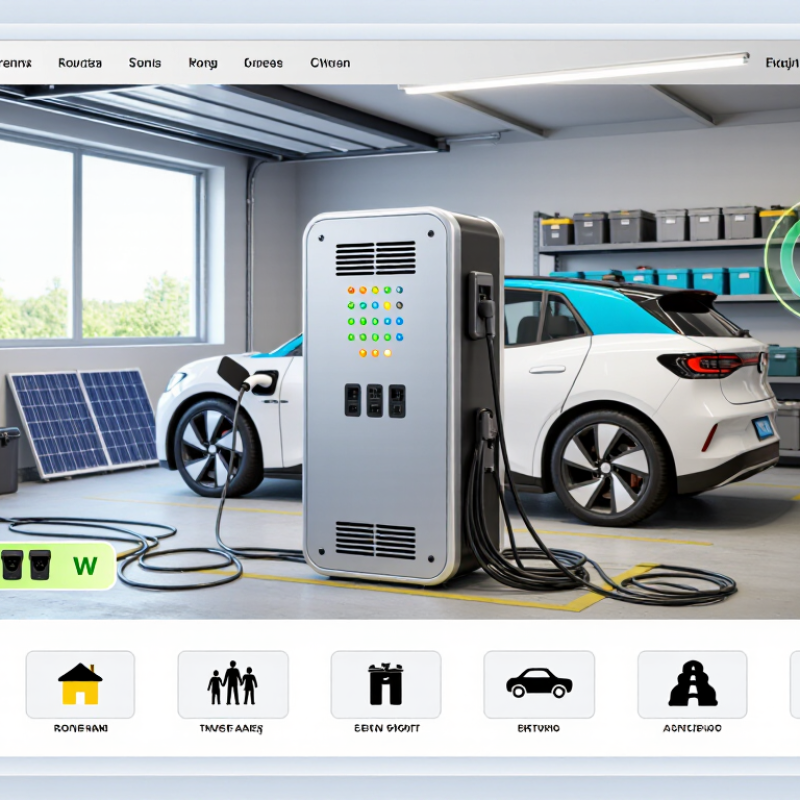
How to Choose the Best EV Power Station?

Assess Your EV Charging Needs and Typical Use Cases

Choosing an EV power station starts with your actual driving, not the largest capacity number on a product label. Estimate your typical daily distance and the energy your car uses per mile. Then check how much energy you need between reliable opportunities to recharge. A short commute and home charging create different needs from frequent road trips or overnight stays away from outlets.

Think about where and when you will use the station. For camping, consider its weight, storage space, and whether its output is compatible with your vehicle’s charging equipment. For emergency backup, estimate how much driving range you want to preserve, and remember that powering household devices also uses stored energy. Check the station’s usable capacity, output limits, and charging connections against your vehicle’s requirements. Specs matter.

Leave room for real-world losses. Cold weather, conversion inefficiencies, and other loads can reduce the energy available for driving. A stated capacity does not guarantee a specific number of miles. One easy mistake is buying for an unlikely worst-case trip while overlooking everyday portability. Write down a normal week and one demanding use case, then compare options against both. The estimate may still be imperfect; that is useful to notice before spending.

Compare Power Output, Battery Capacity, and Charging Speed

Choosing an EV power station means checking three different limits: power output, battery capacity, and charging speed. Watts are rate. Kilowatt-hours are stored energy. The U.S. Department of Energy’s Alternative Fuels Data Center gives Level 2 charging power as roughly 3.3–19.2 kW, but the car’s onboard charger and the station’s output can both limit the actual rate. Check connector, voltage, and continuous output—not just a brief peak rating.

Capacity determines how much energy is available after conversion losses and any reserve the unit keeps. For illustration, if 80% of a 1 kWh battery reaches a vehicle using 0.30 kWh per mile, that adds about 2.7 miles. This is a rough scenario, not a promise; temperature, vehicle efficiency, and charging losses change the result. A larger battery may help during an outage, but it can still charge slowly if its output is modest.

Charging speed depends on the whole setup. The IEA’s Global EV Outlook 2024 reported that public charging points grew 40% worldwide in 2023, while fast chargers grew 55%. That expansion shows why power ratings matter, but a home power station is not automatically a fast charger. I’d double-check the usable capacity and sustained output before buying; advertised peak figures can be easy to overread. A small unit may be useful for emergencies, yet disappointing for adding meaningful driving range.

Check Vehicle Compatibility, Connectors, and Safety Features

A practical choice starts with the vehicle’s charging manual, not the outlet photo. Match the station’s connector to the car’s inlet, and confirm whether an adapter is approved for that use. For AC charging, the vehicle’s onboard charger sets the maximum charging rate; a higher-rated station will not make the car charge faster. DC charging has different connector and power requirements. Check the exact plug standard, such as Type 1, Type 2, or CCS, for your vehicle and region. IEA’s Global EV Outlook 2024 reports more than four million public charging points worldwide at the end of 2023. It also records 55% growth in fast-charger stock that year.

More stations do not guarantee a match. Check the unit’s rated output, voltage range, and whether it supports your vehicle’s charging mode. Then inspect safety information: look for overcurrent, overtemperature, and ground-fault protection, plus clear instructions for outdoor use. Standards such as IEC 61851 and UL 2594 can help identify equipment designed around recognized EV-charging safety requirements. Small print matters. I still find connector charts easy to misread, especially when a plug looks familiar but supports a different charging mode. Before buying, compare the station label with the vehicle manual, and ask a qualified electrician to assess any fixed installation.

Evaluate Portability, Durability, and Power-Source Options

An EV power station is useful only when its size and output fit your actual needs. Check usable capacity, continuous AC output, and compatibility with your vehicle’s charging equipment. A large capacity figure can look reassuring, but it does not guarantee fast charging. Many portable units suit emergency top-ups or small accessories better than restoring substantial driving range. Check your vehicle manual and the station’s specifications before buying. Keep expectations modest.

Portability matters when you lift the unit into a trunk or carry it across a campsite. Compare weight, handle shape, wheel quality, and packed dimensions, not just capacity. A unit weighing 25 kilograms may roll easily but feel awkward on stairs. I may be overvaluing weight, yet a compact handle helps little when the case is bulky. Picture the route from storage to charging spot.

For outdoor use, look for a sturdy casing, covered ports, clear temperature limits, and a published water-resistance rating. A rating does not mean the unit can stay in heavy rain. Check warranty terms and available service, too. Wall charging is predictable; solar can help away from outlets, but depends on sunlight and panel setup. Vehicle charging may be slow. Choose inputs you can realistically use. A folded panel is not magic.

Compare Total Cost, Warranty, and Long-Term Support

An EV power station’s purchase price is only part of its cost. Add installation, compatible cables, routine inspections, and possible battery replacement. Compare systems with similar usable capacity and charging output; otherwise, a cheaper unit may look better than it is. Estimate your weekly charging needs using actual driving distance, not the largest number on the product sheet. Real use can differ.

Warranty details deserve a careful read. Check how long coverage lasts, what battery capacity must remain, and whether labor, shipping, and diagnostic fees are included. A long warranty may offer little value if repairs require costly shipping or unavailable parts. Ask how support handles faults and how quickly replacement parts are typically available. Keep receipts and service records. Small print matters.

Tips: Make a simple five-year cost table. Include purchase, installation, and likely service expenses. Save the warranty terms before buying, and note the support contact method. If the numbers are uncertain, mark them as estimates rather than pretending they are precise. No spreadsheet catches every delay.

How to Choose the Best EV Power Station? - Compare Total Cost, Warranty, and Long-Term Support

Charging option Typical charging speed Indicative upfront cost Warranty to look for Potential long-term costs Long-term support considerations Best suited for
Level 1 portable charging About 2–5 miles of range per hour, depending on the vehicle and circuit. About $0–$500 if compatible equipment and a suitable outlet are already available; outlet or circuit work costs extra. Often 1–3 years for portable charging equipment; check coverage for the cable, control unit, and connectors. Usually low equipment and maintenance costs. A dedicated outlet may require an electrician. Confirm that replacement cables and parts are available and that the equipment meets applicable safety requirements. Drivers with short daily trips, overnight parking, and no need for faster charging.
Residential Level 2, basic Commonly about 10–30 miles of range per hour; actual speed depends on charger output, vehicle limits, and electrical supply. Approximately $800–$3,000 installed in many straightforward U.S. residential projects. Panel upgrades or long cable runs can increase the cost. Commonly 2–3 years, though terms differ. Check whether labor, shipping, and replacement parts are included. Installation changes, repairs outside the warranty, and electricity. A dedicated circuit is generally required. Look for clear troubleshooting procedures, accessible replacement parts, and support that remains available after purchase. Homeowners seeking faster overnight charging without advanced network features.
Residential Level 2, connected Typically similar to other Level 2 equipment; connected features do not necessarily increase charging speed. Approximately $900–$3,500 installed for many standard projects; electrical upgrades may add substantially to the bill. Often 2–5 years. Verify warranty coverage for communications components as well as charging hardware. Potential subscription or network fees, connectivity replacement, and electrical work. Some models offer core charging without a subscription. Check the duration of app and software support, whether basic charging works if internet service ends, and how account data can be transferred. Drivers who want scheduling, energy monitoring, or utility and home-energy integrations.
Commercial Level 2 charging Generally about 10–30 miles of range per hour per vehicle, subject to vehicle and site capacity. Equipment and installation costs vary widely by site, number of ports, trenching, networking, and electrical capacity. Obtain a site-specific quote. Commercial warranties commonly range from about 2–5 years; service plans may be separate. Network fees, payment processing, preventive maintenance, repairs, and possible electrical upgrades. Review service response times, network uptime terms, replacement-part availability, software updates, and data-export options. Workplaces, multifamily properties, and destinations where vehicles are parked for several hours.
DC fast charging Often adds roughly 100–200+ miles in 20–30 minutes under favorable conditions; vehicle capability, battery state, and temperature affect results. Installed projects can cost from tens of thousands to several hundred thousand dollars or more. Utility service, construction, and grid upgrades are major cost factors. Equipment warranties commonly span about 2–5 years, with terms varying by component and service agreement. Demand charges, network fees, maintenance, cooling-system repairs, and utility upgrades can make operating costs substantial. Prioritize documented repair response times, technician coverage, spare-parts access, uptime reporting, and ongoing software and security updates. Commercial sites serving drivers who need rapid charging and have sufficient electrical capacity.

Cost note: These are broad U.S. planning estimates, not quotes. Actual costs depend on local labor and permitting, electrical capacity, installation complexity, utility rates, and service terms. Compare total cost over your intended ownership period, including installation, subscriptions, maintenance, and any required electrical upgrades. Electricity and vehicle costs are not included.