How to Choose the Best Capacitance Sensors for Your Needs?
Choosing the best capacitance sensors for your needs can be a challenging task. As technology advances, these sensors play a crucial role in various industries. According to Dr. Emily Chen, an expert in sensor technology, "Selecting the right capacitance sensor can dramatically enhance the accuracy of your application." Her experience highlights the importance of understanding these devices.
Capacitance sensors are versatile and applicable in many fields, including manufacturing and robotics. They detect changes in capacitance to measure distance, pressure, or even fluid levels. Understanding how these sensors work is key. Every application has unique requirements, and a one-size-fits-all approach may not yield the best results.
Consider the specifications carefully. Different capacitance sensors offer various ranges, sensitivities, and environmental resistances. It’s not just about picking a sensor; it's about finding the perfect match for your specific needs. Think critically about your application and the potential drawbacks of a sensor that appears perfect on paper but may not perform well in real-world conditions.
Understanding Capacitance Sensors and Their Applications
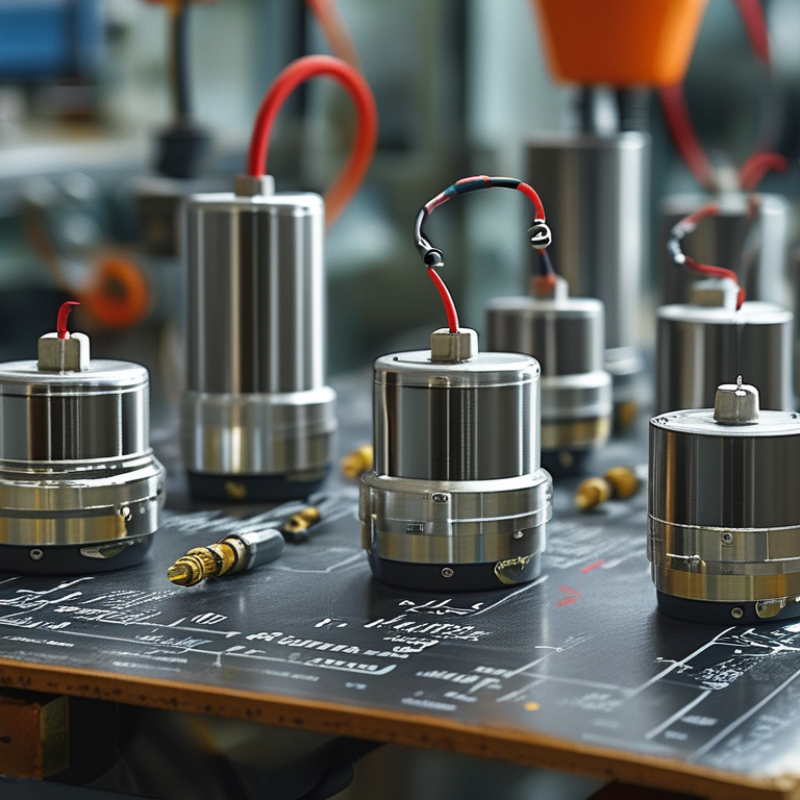
Capacitance sensors play a vital role in various applications. They work by detecting changes in capacitance due to the presence of an object. These sensors are commonly found in automotive systems, industrial automation, and consumer electronics. Understanding how they function can aid in selecting the right type for your needs.
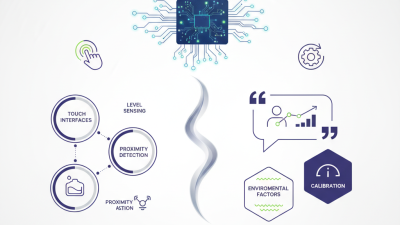
These sensors can be categorized into contact and non-contact types. Contact capacitance sensors need physical touch to operate, while non-contact sensors can detect objects without any physical interaction. For instance, non-contact sensors are ideal for level sensing in liquids. On the other hand, contact sensors are often used in touchscreen devices. Each type has its own strengths and weaknesses, which need careful evaluation.
Consider the environment where the sensor will be deployed. Factors like temperature, humidity, and potential exposure to contaminants can affect performance. It's essential to reflect on these aspects when selecting a sensor. Not all applications require the most advanced technology. Sometimes, a simpler solution can yield satisfactory results. Balancing complexity and necessity is important in achieving effective outcomes.
Identifying Your Specific Measurement Needs and Requirements
Choosing the best capacitance sensors requires a clear understanding of your specific measurement needs. These sensors can measure proximity, liquid levels, and various other applications. It’s crucial to determine what you want to measure, as this guides your choice of sensor type. Consider the required range and sensitivity. For example, a high sensitivity sensor may be necessary for small objects, while a broader range may be suitable for varying materials.
Tip: Assess the environmental conditions where the sensor will be used. Factors like humidity and temperature can affect performance. If you're in a harsh environment, you may need sensors with better protection ratings.
Moreover, think about the output type you need. Some applications require digital outputs, while others work with analog signals. Understanding connectivity is also essential. Sensors may need to communicate with existing systems, so compatibility matters.
Tip: Don’t overlook installation and maintenance. Some sensors may be easier to install and less prone to failure. This can save time and resources in the long run. Reflect on how often you will need to calibrate or service the sensors to ensure reliable performance.
Evaluating Sensor Types and Their Features for Your Application
When selecting capacitance sensors, understanding their unique features is crucial. There are several types available, each suited for different applications. For instance, non-contact sensors can measure levels of liquids and solids without direct contact. This feature is vital in food processing, where contamination risks must be minimized. A report from MarketsandMarkets estimates the non-contact sensor market to grow by 12% annually, highlighting the rising demand for safer solutions.
Different capacitance sensors offer varying sensitivities and measurement ranges. Some are specifically designed for high precision in laboratory environments, while others excel in rugged industrial settings. Research indicates that sensors with a wider capacitance range often contribute to enhanced system performance. For instance, a sensor with a range of 1 pF to 100 nF may be better for versatile applications than one with a narrower range. However, more advanced features can lead to increased complexity, posing a challenge for integration into existing systems.
Choosing the right sensor also requires understanding environmental factors. Sensors in dusty or humid conditions may need additional protection. Sensor housing materials greatly influence durability and functionality. According to industry experts, a poorly chosen sensor can lead to significant downtime and increased costs. Careful evaluation of application requirements is essential to avoid such pitfalls.
Comparing Cost and Performance Across Available Capacitance Sensors
When selecting capacitance sensors, cost and performance are crucial factors to consider. Capacitance sensors vary widely in design and application. The price can range from budget-friendly options to high-end models, influencing the decision-making process. Understanding the price-to-performance ratio helps in choosing the right sensor. However, it's essential to note that higher cost does not always equate to better performance.
Performance factors such as sensitivity, stability, and response time play vital roles as well. Sensors with high sensitivity can detect small changes, making them suitable for delicate tasks. On the other hand, low-cost sensors may struggle with accuracy in high-vibration environments. This gap raises a question: Is it worth saving costs now, only to face costly recalibration or replacement later?
Moreover, the specific application should guide the choice. A sensor for an industrial environment needs durability and resistance to interference. In contrast, a sensor intended for lab use might prioritize precision over ruggedness. Balancing cost with performance requires careful thought and analysis. It's essential to reflect on the long-term implications of the choice you make today.
Reviewing Installation and Maintenance Considerations for Sensors
Installing capacitance sensors requires careful planning and attention. The sensor’s location can significantly impact performance. You should place it in a stable environment free from excessive vibrations or humidity. These factors can distort readings and reduce sensor lifespan. Additionally, ensure the sensor is securely mounted to prevent movement.
Maintenance is equally essential for optimal function. Regularly check for dirt or debris around the sensor. Such buildup can interfere with measurements. Cleaning should be gentle to avoid damaging the sensor. Calibration may also be needed over time to ensure accuracy. Testing under different conditions can help identify any discrepancies in performance.
Sometimes, even with proper installation, issues may arise. For example, fluctuating readings could indicate environmental interference. This needs further examination. Understanding these potential challenges can inform better decisions in selecting and using capacitance sensors effectively.
How to Choose the Best Capacitance Sensors for Your Needs? - Reviewing Installation and Maintenance Considerations for Sensors
| Sensor Type |
Measurement Range |
Accuracy |
Installation Complexity |
Maintenance Frequency |
| Standard Capacitive Sensor |
0-10 pF |
±1% |
Low |
Annual |
| High-Temperature Sensor |
0-100 pF |
±2% |
Medium |
Semi-Annual |
| Submersible Capacitive Sensor |
0-50 pF |
±0.5% |
High |
Quarterly |
| Industrial Capacitive Sensor |
0-20 pF |
±1.5% |
Medium |
Monthly |