Choosing a reliable Galvanized Wire Manufacturer starts with understanding the work the wire must perform. Fencing, construction, and agricultural applications place different demands on wire diameter, tensile strength, and corrosion resistance. A supplier should explain these options clearly, rather than offering one grade for every project. Ask how the zinc coating is measured and how production consistency is checked. Specific answers matter.
Samples reveal details a brochure may miss. Inspect the surface under good light for bare spots, uneven coating, or excessive buildup. Look closely. Check whether the wire unwinds smoothly and arrives in secure, clearly labeled coils. These small observations can flag handling or quality concerns before a large order is placed. Request product specifications and relevant inspection records, then compare them with your requirements. If a supplier cannot explain a measurement or document, ask again. That hesitation is useful information.
Reliable manufacturers also communicate practical limits, including available diameters, tolerances, lead times, and packaging choices. Clear records for batches can make later questions easier to resolve. Certifications may help, but their scope and relevance should be verified; a logo alone proves little. Compare sample quality, technical support, consistency, and total delivered cost, not price in isolation. No checklist removes every risk. Supplier selection still involves judgment, and one good sample cannot guarantee every future shipment. A careful review, backed by specific questions and written requirements, gives buyers a stronger basis for choosing a dependable manufacturing partner.
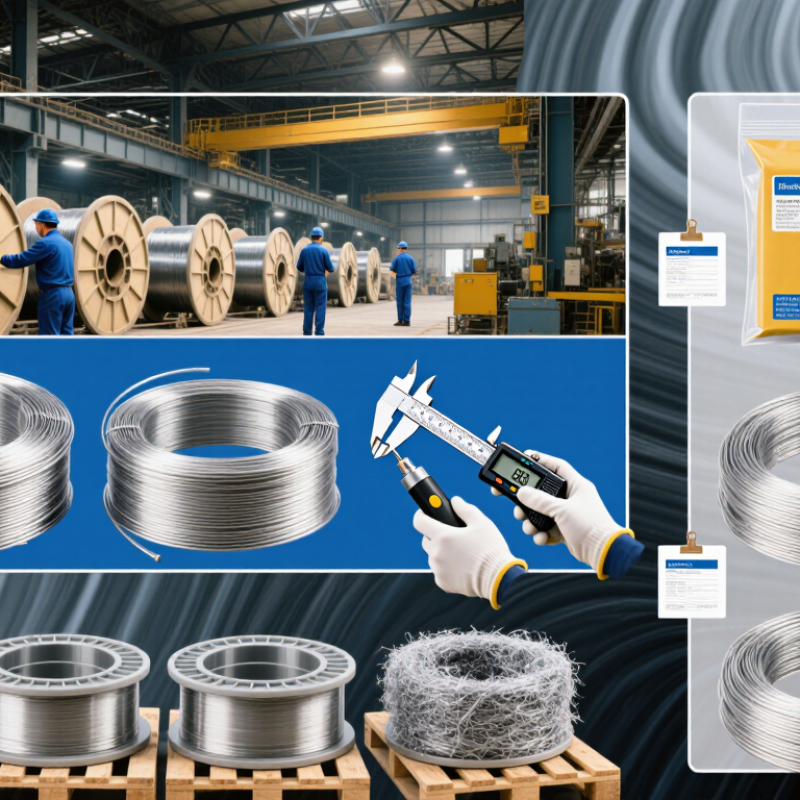
Before requesting quotations, define the wire diameter and its tolerance in millimeters. A nominal size alone can hide meaningful variation. For mesh, fencing, or binding work, even a small diameter difference may affect fit and handling. Ask how the manufacturer measures diameter, and whether measurements are taken at several points along the coil. Small differences matter. Specify tensile strength in MPa and state the range your application requires. Wire that is too soft may deform during installation; wire that is too strong can be difficult to bend or form. The right value depends on the finished product, not just the purchase price.
Zinc coating needs the same precision. State the required coating mass, commonly expressed in grams per square meter, and clarify whether it applies to the wire surface or a defined test sample. Ask for the test method and a report linked to the production batch. A bright surface is not proof of an even coating. Check how the supplier handles sampling, because one reading may miss thin spots along a coil. In real procurement, specifications sometimes need revision after a trial run. That is worth admitting early. A short production sample can reveal whether the wire feeds smoothly, holds its shape, and suits the actual equipment.
Define wire diameter, tensile-strength range, and zinc-coating requirements in your specification. The chart shows the calculated surface area per kilogram for round steel wire at common diameters, using a steel density of 7,850 kg/m³. It excludes the zinc coating.
When requesting a quote: State the diameter and its tolerance, tensile strength in MPa, and zinc-coating mass in g/m² or the applicable standard and coating class. Confirm the manufacturer’s inspection methods and test documentation for each requirement.
A reliable galvanized wire manufacturer should explain how its product meets ASTM A641/A641M. This standard covers zinc-coated carbon steel wire, including requirements for dimensions, mechanical properties, and coating. Exact requirements depend on the wire’s grade and ordered specifications. Ask which edition the supplier follows and request a certificate tied to your production lot.
A certificate is useful, but it needs to match the material you receive. Check that its lot number, wire diameter, coating class, and test results align with your order. Where specified, review reported tensile strength, zinc coating mass, and coating adherence results. Small details matter. Compare the paperwork with the coil labels and inspect the wire for bare spots, uneven coating, or damage. If a value is unclear, ask the manufacturer to explain its test method rather than relying on a general claim of compliance.
Tips: Request a sample certificate before placing a large order. Confirm how the manufacturer maintains traceability from testing to shipment. A polished document can still contain a mismatch, so verify the details carefully.
A reliable galvanized wire supplier should be able to match its coating data to your written specification. Compare the stated coating class and zinc mass in g/m², not just a description such as “heavy galvanized.” Class names and test methods can differ between standards, so confirm which standard and edition the quotation follows. Small detail, big difference.
Check whether the required mass applies to the wire’s total coated surface and whether the supplier reports a minimum or an average. Ask for a recent test report tied to the production lot, including the method used and the measured result. A tidy certificate is useful, but it does not replace clear traceability. If the report gives only a class label, request the corresponding mass range in g/m² and verify it against your specification.
Coating mass matters because it affects corrosion protection, but it should be considered alongside wire diameter, intended exposure, and forming needs. A coating that meets the mass requirement may still show uneven coverage or damage after drawing and handling. Inspect sample coils for bare spots, rough patches, or flaking, and ask how testing is performed on finished wire. This check is not perfect; sampling can miss local defects. Record the agreed standard, minimum coating mass, test method, and lot documentation in the purchase order before production.
A reliable galvanized wire manufacturer should provide test records tied to the production lot, not just a generic quality certificate. Check the wire grade, nominal diameter, coating class, test date, and inspection method. These details let you compare the paperwork with the coil labels and purchase specification. Keep the records close.
Tensile results should show the measured strength and the required range, with units stated clearly. Look for sample identification and equipment calibration details; a number without context is hard to verify. Coating-adhesion records should describe the test method and any flaking or cracking observed after bending or handling. A clean result matters, but so does knowing how it was obtained. Ask for the acceptance criteria before comparing suppliers.
Dimensional reports should include wire diameter readings, sample frequency, and the permitted tolerance. Several readings across a coil can reveal variation that one measurement misses. Check whether the measurement instrument and date are recorded. Small gaps in older files are not always proof of poor production, but unexplained gaps deserve questions. When results seem unusually perfect, request the original lot-level data and clarify how samples were selected. A clear answer is useful. So is a candid one.
A reliable galvanized wire manufacturer should be able to explain how its ISO 9001 quality system works on the production floor. Ask how operators check wire diameter, zinc coating, and tensile strength, and how out-of-range results are handled. A certificate alone does not prove every coil meets your requirements. Paperwork matters.
Request a sample inspection record and follow one lot number from raw material through galvanizing, testing, and packing. The record should identify the production date, measured coating weight, test results, and coil numbers. Check that the same identifiers appear on labels and shipping documents. Traceability is only useful when the details match.
Delivery capacity deserves evidence, not a confident promise. Ask for recent on-time delivery figures, typical lead times, and an explanation of how the supplier handles maintenance or demand peaks. Compare stated capacity with your order size and requested shipping schedule. A small trial order can reveal practical issues, though it cannot predict every busy season. Some buyers focus heavily on certificates and overlook packing or dispatch delays; I would check both.
This supplier assessment framework uses verifiable documents and operating records rather than supplier-specific performance claims. Enter a score from 0 to 5 for each criterion; weighted points are calculated as score ÷ 5 × weight.
| Assessment Area | What to Verify | Evidence to Request or Review | Weight | Score (0–5) | Weighted Points |
|---|---|---|---|---|---|
| ISO 9001 certification | Whether the certificate is current and its scope and site cover the relevant wire-manufacturing activities. | Certificate details, issuing certification body, covered site and scope; verify validity with the certification body or its accreditation directory where available. | 15% | ____ | ____ |
| Documented quality controls | How the manufacturer controls incoming wire rod, production settings, inspection, nonconforming product and corrective action. | Documented procedures or process maps, inspection records, nonconformance examples with corrective-action follow-up, and relevant internal-audit findings. | 10% | ____ | ____ |
| Process and product checks | Whether inspection methods address the agreed product specification, such as wire diameter, coating requirements, tensile properties and finish where applicable. | Inspection plan, measurement records, equipment calibration records, and sample reports showing the test method, acceptance criteria and results. | 10% | ____ | ____ |
| Lot traceability | Whether finished coils or bundles can be linked to production and incoming material records. | A sample traceability exercise linking a finished-product identification code to production date or line, relevant raw-material lot, inspection results and shipment records. | 15% | ____ | ____ |
| Test and shipment documentation | Whether documents identify the supplied product and lot clearly and match the purchase specification. | Sample certificate of analysis or test report, packing list and product labels; check that the documents state applicable dimensions, coating or mechanical results, lot identification and inspection basis as agreed. | 10% | ____ | ____ |
| Production and delivery capacity | Whether available equipment, labor and planned production can support the requested specification, quantity and delivery schedule. | Capacity statement by product type, current production schedule, lead-time assumptions, planned maintenance constraints and a written delivery plan for the requested order. | 15% | ____ | ____ |
| Delivery performance records | Whether quoted delivery commitments are supported by historical performance and clearly defined dispatch dates. | Recent, anonymized order records showing promised and actual dispatch dates, late-delivery frequency and how delivery dates are defined. | 10% | ____ | ____ |
| Continuity and risk planning | How the manufacturer handles equipment downtime, material shortages, quality holds and other disruptions. | Documented contingency or recovery arrangements, escalation contacts, alternative process or supply options where applicable, and examples of customer communication during disruptions. | 5% | ____ | ____ |
| Packaging and dispatch readiness | Whether packaging and identification are suitable for the agreed transport, handling and storage conditions. | Packaging specification or photographs, label details, corrosion-protection measures where specified, and confirmation of loading and dispatch arrangements. | 10% | ____ | ____ |
| Total weighted score | 100% | — | ____ | ||
Scoring guide: 0 = no evidence provided; 1 = major gaps; 2 = partial or inconsistent evidence; 3 = requirements generally demonstrated; 4 = strong, consistent evidence; 5 = verified, well-controlled evidence with effective records. Confirm product-specific acceptance criteria and delivery terms in the purchase specification before placing an order.
As a specialist in environmental and flow sensor technology, ScioSense enables companies to use the planet’s resources more sustainably, helping to create a healthier future for all.