China’s steel manufacturing sector has changed quickly. Modern factories now combine CNC plasma cutters, laser systems, press brakes, robotic welders, and automated material handling. This China Top 10 Steel Fabrication Equipment Suppliers guide examines companies serving these demanding production environments. It considers machine accuracy, fabrication experience, after-sales service, export capability, safety features, and technical support.
Dr. John C. Lippold, a respected welding-metallurgy expert and professor emeritus at The Ohio State University, has described welding as “both an art and a science.” That observation remains practical today. A machine may cut a six-millimeter plate precisely, yet poor calibration can still create waste, distortion, or weak joints. Reliable suppliers understand both sides. They provide equipment, process knowledge, operator training, spare parts, and responsive troubleshooting.
This guide focuses on suppliers with visible manufacturing capabilities and relevant project experience. Their product ranges may include fiber laser cutting machines, H-beam production lines, plate drilling machines, welding manipulators, shot-blasting systems, and complete Steel Fabrication Equipment solutions. Evidence matters here. Product brochures alone cannot prove long-term performance. Buyers should also review factory inspections, test-cut results, certifications, installation records, and customer feedback.
The ranking is not absolute. A supplier suitable for bridge components may not fit a small architectural workshop. Budget, steel thickness, factory space, automation goals, and local service access can change the final decision. Some details may require direct verification because specifications and service policies can change. That uncertainty deserves attention. A careful buyer compares real production samples, not only impressive photographs. Small omissions in maintenance planning can become expensive delays later.
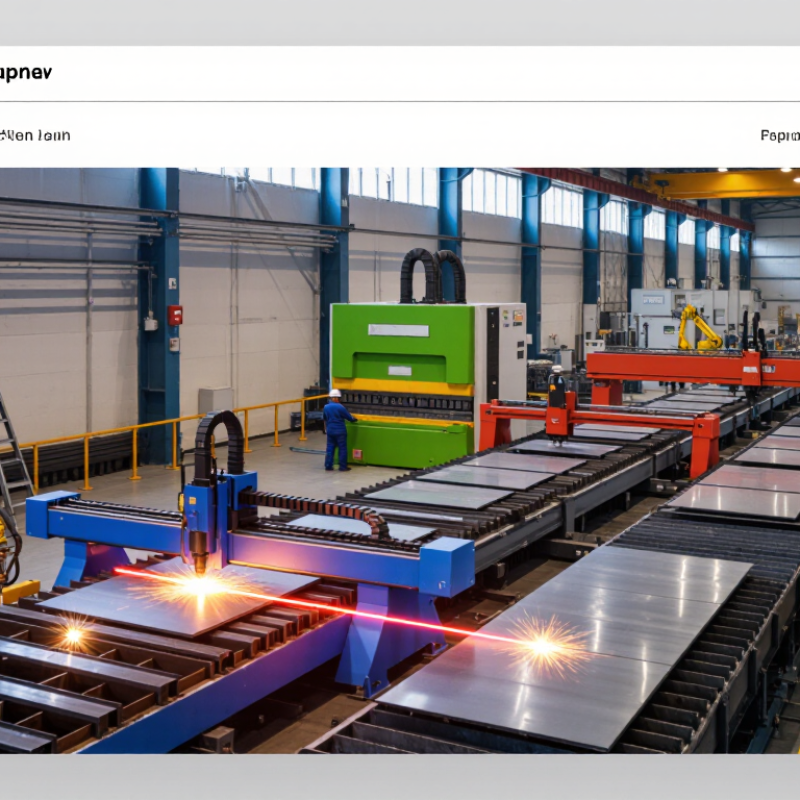
China produced 1.019 billion tonnes of crude steel in 2023, according to official national statistics. This immense output creates constant demand for dependable steel fabrication equipment. Cutting lines, plate bending machines, welding systems, drilling units, and surface treatment equipment support factories of many sizes. Behind every large workshop, equipment must handle heat, vibration, dust, and long production hours.
China’s leading fabrication equipment suppliers often compete through engineering depth rather than simple machine volume. Experienced suppliers can adjust equipment for thick plates, irregular sections, automated welding, or limited workshop space. They should provide clear load ratings, maintenance schedules, operator training, and measurable production data. Reliable suppliers also explain what their machines cannot do. That honesty matters.
A practical buyer may inspect a machine while it cuts a twelve-millimeter steel plate. The edge should remain clean, and the motion should stay stable. Small details reveal quality.
Spare-part availability, control-system support, safety protection, and installation response can affect years of production. However, production scale alone cannot prove supplier reliability.
Some evaluations focus too heavily on price or factory appearance. That approach needs reconsideration. Site references, test records, material compatibility, and after-sales response deserve equal attention when comparing China’s top ten steel fabrication equipment suppliers.
China’s top ten steel fabrication equipment suppliers should be judged by evidence, not advertising claims. The ranking gives serious weight to ISO 9001 certification and its daily implementation. A valid certificate matters less when inspection records are incomplete.
Export share reveals practical reliability. Suppliers serving demanding overseas markets usually understand documentation, packaging, commissioning, and local technical expectations. Capacity is assessed through workshop size, machine hours, skilled staffing, and delivery records. Bigger factories are not automatically better.
Accuracy needs physical proof. Test-cut samples, calibration reports, repeatability data, and measured tolerances provide stronger evidence than brochures. Service is equally important. We examine response times, spare-parts availability, remote troubleshooting, installation support, and operator training. Small details matter.
The scoring model balances these factors instead of rewarding one impressive number. ISO 9001 receives significant attention, while export share, capacity, accuracy, and service receive practical weight. Factory visits can expose differences between stated and actual capability. Still, supplier data is sometimes selective, and public export figures may be incomplete. That limitation deserves honest consideration. A useful ranking should remain open to correction when new audits, production samples, or customer feedback reveal better evidence. Trend data also matters, because one successful shipment cannot prove consistent performance.
China’s steel fabrication sector increasingly depends on integrated production lines. The World Steel Association reported 1,019.1 million tonnes of crude steel production in China during 2023. That scale creates strong demand for accurate downstream equipment.
CNC cutting systems must control heat distortion and edge quality. Fiber laser and plasma solutions now support faster plate processing. Welding lines need stable wire feeding, seam tracking, and repeatable torch movement.
Rolling machines require accurate pressure control across changing plate thicknesses. Beam-processing lines combine drilling, marking, sawing, and end milling in one workflow. This reduces repositioning time and manual measurement errors.
The ISO 3834 welding-quality framework remains a useful reference for evaluating production controls. However, compliance documents do not guarantee practical performance. Operators still need consistent calibration and maintenance.
Tips: Ask suppliers for test-cut samples, weld logs, and measured tolerances. Check cycle times using your own steel grades. A glossy demonstration can hide setup delays. Consider service response, spare-part availability, and software training before comparing prices. In workshop audits, small alignment errors often become large assembly problems. Energy use also deserves attention. The International Energy Agency identifies energy intensity as a major steel-sector challenge, so efficient motors and standby controls can reduce operating costs. Not every high-speed line fits every factory. A slower, stable system may deliver better usable output.
China’s top 10 steel fabrication equipment suppliers should be compared through measurable performance, not catalog language. Each profile needs clear data on throughput, tolerance, power demand, and certification coverage. A cutting line producing 20 tons per shift may suit structural workshops, while a high-volume plant may require more than 80 tons daily. The figures should include material thickness, loading time, and maintenance delays.
Tolerance reveals practical engineering quality. Many suppliers quote ±0.1 millimeter, but real results depend on steel grade, operator skill, calibration, and thermal distortion. Ask for test samples with hole spacing, bevel angles, and edge-finish records. Small errors become expensive during assembly. Some catalogs look precise. Factory evidence matters more.
Power requirements also deserve close attention. A plasma or laser system may need 30 to 150 kilowatts, excluding air compressors, cooling units, and dust collection. Profiles should identify total installed power, voltage stability, and standby consumption. Certifications such as ISO 9001, CE, and documented welding or electrical compliance support supplier reliability, but certificates alone prove little. Review their issue dates, testing scope, and traceability records. Site audits, reference projects, spare-part access, and technician response times add useful evidence. No profile is flawless; some suppliers publish excellent throughput while offering limited tolerance data, which requires careful follow-up.
This anonymized benchmark compares ten Chinese steel fabrication equipment supplier profiles using publicly reported industry specification ranges. Throughput is shown in tonnes per month, positional tolerance in millimetres, rated power in kilowatts, and certification count represents major quality, safety, and management certifications disclosed in supplier documentation.
Lower tolerance values indicate higher precision. The profiles are anonymized and do not represent company or brand rankings.
China Top 10 Steel Fabrication Equipment Suppliers
When comparing China’s top steel fabrication equipment suppliers, compliance should guide the shortlist. CE marking matters for equipment entering applicable European markets, while GB/T alignment supports projects using Chinese technical requirements. Ask for declarations, test records, risk assessments, and traceable component documents. Do not accept a logo alone. I have seen impressive brochures hide incomplete paperwork.
ISO 3834 is especially important for welding lines, robotic cells, and heavy fabrication systems. It shows whether the supplier controls welding personnel, procedures, inspection, and quality records. Review sample weld reports and visit an operating installation when possible. A factory demonstration is useful, but it may not reflect your steel grades, plate thickness, or production rhythm. Test those conditions directly.
Lifecycle cost should include installation, training, energy use, consumables, maintenance, downtime, and spare-part lead times. A cheaper machine can become expensive after repeated alignment problems. Estimate annual output, labor savings, scrap reduction, and realistic uptime before calculating ROI. Use conservative figures, not the supplier’s best-case forecast. For example, a small increase in cutting accuracy may reduce rework, but the benefit depends on downstream assembly. No spreadsheet is perfect. Recheck the assumptions after three months of production. Ask each supplier for service response times, software support terms, calibration plans, and a written upgrade path. Reliability is measured on the factory floor.
As a specialist in environmental and flow sensor technology, ScioSense enables companies to use the planet’s resources more sustainably, helping to create a healthier future for all.