China Best Barometer Sensors Manufacturers Suppliers?
Choosing the best barometer sensors manufacturers and suppliers in China requires more than comparing prices or catalogue specifications. Buyers must examine measurement range, accuracy, temperature compensation, response time, packaging, and long-term stability. These details matter in weather stations, HVAC systems, drones, industrial equipment, and marine instruments.
Dr. Thomas W. Schlatter, an atmospheric scientist and specialist in pressure measurement, has explained, “Pressure is the weight of the atmosphere above a location.” This simple statement clarifies why barometer sensors need careful calibration. A small pressure error can affect altitude calculations, weather records, and automated control decisions. Reliable suppliers should provide traceable calibration data, clear test procedures, and technical support after delivery.
China’s sensor market includes MEMS producers, complete instrument makers, and factories focused on OEM projects. Their capabilities are not identical. Some offer strong customization but limited documentation. Others provide polished datasheets but weaker field support. That difference deserves attention.
A practical evaluation should include sample testing, communication quality, production capacity, and failure analysis. Ask how suppliers manage sensor drift, moisture exposure, vibration, and temperature changes. Request independent test results when possible. Factory photographs alone prove little.
The “best” supplier depends on the application. A low-cost indoor module may suit a consumer device. It may fail in a high-altitude or industrial environment. This is where buyers can misjudge the market. Careful comparison, repeated testing, and honest technical dialogue remain essential when selecting dependable barometer sensors from China.
What Are Barometer Sensors and How Do They Work?
A barometer sensor measures atmospheric pressure, usually in pascals or hectopascals. Pressure changes as air becomes heavier or lighter above the sensor. At sea level, standard pressure is about 1013 hPa, but weather and altitude constantly alter this value.
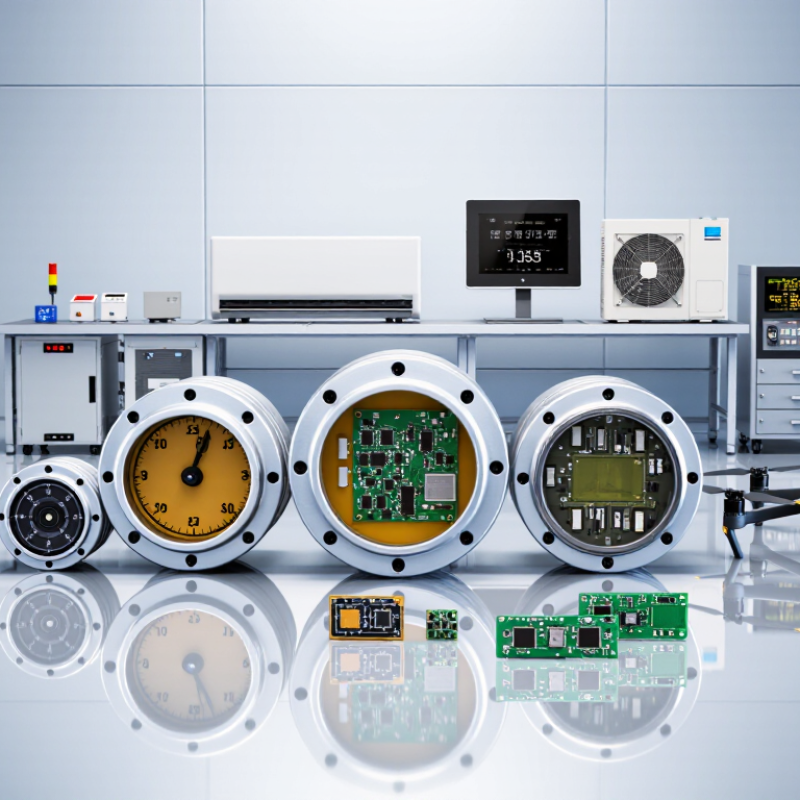
Most modern devices use MEMS technology. A tiny silicon diaphragm bends when air pressure changes. That movement alters electrical capacitance or resistance. Internal circuits convert the change into a digital reading. Software can then estimate elevation through a pressure-to-altitude formula. The result is useful in weather stations, drones, fitness devices, and indoor navigation systems.
In practical testing, temperature strongly affects accuracy. Good sensors include compensation data across a specified temperature range. A technician should also check response time, pressure range, resolution, long-term drift, and calibration conditions. Dust, moisture, and rapid airflow can disturb measurements. A protective vent helps, but it cannot correct every installation mistake. Readings are not perfectly stable.
For reliable results, compare the sensor with a traceable reference instrument. Allow enough warm-up time before recording data. Mounting position matters less than airflow control, though sealed enclosures may create pressure errors. Altitude calculations also depend on a local reference pressure, which is often updated from weather data. That assumption can fail during fast weather changes. Suppliers should provide clear test records, technical limits, and sample data rather than relying only on attractive accuracy claims.
Main Types of Barometer Sensors Made in China
China’s barometer sensor industry mainly produces MEMS piezoresistive, capacitive, and resonant sensors. MEMS piezoresistive models are common in weather stations, drones, and portable instruments. They offer compact packages and fast pressure response. Capacitive designs usually provide lower power consumption and stable readings. Resonant sensors can deliver excellent resolution, but their calibration requirements are stricter.
According to Yole Group’s 2023 Status of the MEMS Industry report, the global MEMS market reached roughly US$15 billion in 2022. Pressure sensing remains an important application area within this sector. MarketsandMarkets’ 2024 pressure sensor report also forecasts high-single-digit annual growth through 2028. These figures do not represent barometer sensors alone. Still, they show why Chinese factories continue investing in wafer-level packaging, automated calibration, and digital interfaces.
When evaluating Chinese suppliers, check absolute-pressure accuracy across temperature changes. A sensor may read correctly at 25°C but drift beside a warm battery. Look for I2C or SPI output, documented compensation methods, and calibration records from multiple production batches. Practical testing matters more than a polished datasheet. Request samples and compare readings against a traceable reference instrument. Some low-cost units perform well indoors but respond slowly outdoors. That weakness deserves attention. No sensor is perfect, and even experienced engineers can underestimate moisture, vibration, or assembly stress.
Key Capabilities of Chinese Sensor Manufacturers
China Best Barometer Sensors Manufacturers Suppliers?
Chinese barometer sensor manufacturers now offer more than basic pressure measurement. Many develop MEMS sensing elements, temperature compensation, signal conditioning, and compact digital interfaces. These capabilities support weather stations, industrial controls, drones, and portable instruments.
Experienced suppliers usually provide pressure ranges, accuracy data, response time, and long-term drift results. Ask for calibration records and traceable test methods. Housing materials also matter. Stainless steel, engineered plastics, and protective coatings perform differently in humid environments. Some factories support custom connectors, firmware settings, and small-batch production. That flexibility can shorten development time.
Tips: Request sample units from the same production line. Compare readings across cold, warm, and rapidly changing conditions. Check communication stability, not only advertised accuracy. A clear inspection plan prevents expensive surprises.
Manufacturing depth is not identical across every supplier. One factory may excel at MEMS integration, while another performs better in rugged assembly. Factory visits, process audits, and video evidence can reveal practical details. Look for controlled calibration rooms, incoming material checks, and documented final testing. No supplier is perfect. A first sample may need adjustment after real-world testing, especially when airflow, vibration, or condensation affects readings. Good communication matters as much as the sensor specification.
How to Evaluate Barometer Sensor Suppliers
Evaluating barometer sensor suppliers requires more than comparing pressure ranges and unit prices. Check accuracy across temperature, humidity, vibration, and long-term drift. A sensor rated at ±1 hPa may perform differently after repeated thermal cycling. Ask for calibration records, uncertainty budgets, and sample test data. NIST Technical Note 1297 explains why uncertainty must include repeatability, resolution, and environmental effects. Those details reveal engineering maturity.
Field validation matters. Request several production samples, not one carefully selected unit. Test them against a traceable reference at low, normal, and high pressure. Review response time, hysteresis, power consumption, communication stability, and failure rates. ISO/IEC 17025 supports confidence in competent calibration laboratories. Also verify batch traceability and change-control procedures. A perfect datasheet is not enough.
Tips: Compare at least three suppliers using the same test profile. Ask whether quoted accuracy includes temperature compensation. Review five-year drift data, if available. MarketsandMarkets estimated the MEMS market at USD 14.9 billion in 2023 and projected USD 20.7 billion by 2028. This growth increases supplier choices, but it may also encourage rushed production. Treat unusually low prices carefully. In practice, connector quality and firmware documentation can matter as much as pressure accuracy. I would also inspect rejected samples, when suppliers permit it. That step is often overlooked.
China Best Barometer Sensors Manufacturers Suppliers? - How to Evaluate Barometer Sensor Suppliers
Recommended procurement weighting for comparing barometer sensor suppliers
Accuracy and long-term stability receive the highest weight because they directly affect pressure measurement quality. Buyers should also verify calibration traceability, operating-temperature performance, quality-system certification, delivery capability, and technical support before selecting a supplier. These percentages are a transparent buyer-defined evaluation model, not a ranking of any company or brand.
Quality Standards, Customization, and Purchasing Factors
Choosing China’s best barometer sensor manufacturer requires more than comparing unit prices. Pressure accuracy, temperature drift, hysteresis, response time, and long-term stability should appear in the technical specification. IEC 60770 provides performance guidance for industrial pressure transmitters, while ISO/IEC 17025 supports reliable calibration laboratory competence. A supplier should provide calibration records, traceability information, and inspection data for each production batch.
Customization often determines field performance. Buyers may need a specific pressure range, threaded connection, output signal, housing material, or weather-resistant enclosure. For outdoor equipment, ask for evidence of ingress protection and temperature testing. According to the MarketsandMarkets Pressure Sensors report, the global pressure sensor market is projected to grow from about USD 14.1 billion in 2023 to USD 20.9 billion by 2028. Growth can increase supplier choices, but it may also hide uneven quality.
Look beyond samples. Review process controls, failure analysis, incoming-material checks, and calibration intervals. The ISO Survey 2022 reported more than 1.2 million ISO 9001 certificates worldwide, yet certification alone does not prove sensor accuracy. That point is easy to miss. Request a sample test under your actual pressure and temperature conditions. Check packaging, minimum order quantities, replacement policy, and delivery consistency. A cheap sensor may pass a bench test but drift after installation. Purchasing teams should leave room for independent verification, because datasheets are useful, not infallible.