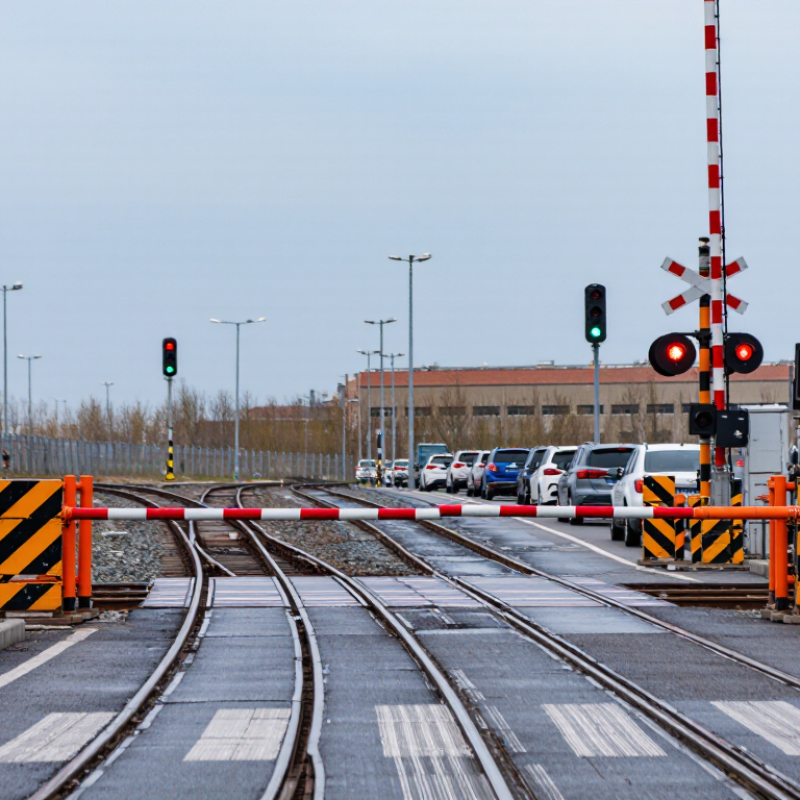
Choosing a reliable China Rail Crossing Signal manufacturer requires more than comparing prices or product photos. It demands practical knowledge of railway operations, environmental exposure, and long-term maintenance. A dependable supplier should understand warning times, train detection, flashing-light performance, audible alarms, barrier integration, and emergency inspection procedures.
Rail safety researcher Ian Savage has expressed a useful principle: “Safety improves when risk is measured, visible, and continuously challenged.” This idea reflects the real purpose of every Rail Crossing Signal. It must communicate danger clearly before a train reaches the crossing. It must also perform during rain, dust, vibration, snow, and unstable power conditions.
A professional manufacturer should provide tested components, consistent assembly, traceable quality control, and technical documentation. Field experience matters. A signal that performs well in a factory may respond differently beside a busy industrial road. Small details count, including lens brightness, cabinet sealing, cable protection, and the clarity of maintenance instructions.
There is no perfect system.
That limitation deserves honest attention. Even advanced equipment cannot replace correct installation, routine inspection, and responsible road-user behavior. Buyers should therefore review certification evidence, production capability, response times, spare-parts support, and project references before making a decision.
China has a strong manufacturing base for railway equipment. However, quality varies between suppliers. The best partner combines engineering discipline with transparent communication. From initial design to after-sales service, every stage should support safer crossings, clearer warnings, and dependable operation.
Railway crossing signals warn road users before a train reaches the crossing. Red lights, audible alarms, and barriers create clear, timed instructions. The controller receives train detection data and activates the warning sequence. At a quiet rural crossing, this may include flashing lights and a bell. Busy urban crossings often add full barriers, pedestrian gates, and traffic interfaces.
Common signal systems include active crossings, passive signs, half-barrier layouts, and four-quadrant barrier systems. Track circuits, axle counters, and radar can detect approaching trains. Each method has practical limits. Track circuits may require careful rail conditions. Radar can face interference from weather or nearby traffic. Field testing matters more than a perfect brochure.
SIL 4 is a safety integrity target, not a product label. It requires risk assessment, traceable design, independent verification, fault detection, and controlled maintenance. A fail-safe signal should display danger when power, communication, or detection becomes uncertain. Redundant channels can reduce hidden failures, while diagnostic logs help engineers investigate unusual events. Proof testing must follow documented intervals, with trained staff checking lamps, barriers, batteries, cables, and emergency operation. A small timing error can matter. Yet even strong designs deserve review, because assumptions about driver behavior and local conditions may prove incomplete.
Reliable rail crossing protection begins with the right detection technology. Track circuits monitor electrical continuity through the rails. When a train occupies the section, the circuit changes state and supports timely warning activation. They work well in established layouts, but poor insulation, moisture, and rail contamination can affect performance. Practical installation experience matters here.
Axle counters offer another dependable method. Sensors record each axle entering and leaving a defined section. The system compares both counts before confirming that the track is clear. This approach suits complex routes and insulated rail joints may not be required.
However, sensor alignment, cable protection, and reset procedures demand careful engineering. Small installation errors can create serious maintenance concerns.
A stable 50 Hz power system supports the crossing equipment continuously. Proper voltage regulation, surge protection, grounding, and backup power help protect controllers and warning devices. Technicians should test supply quality under normal and fault conditions. Documentation must include wiring records, inspection results, and maintenance intervals. No design is perfect. Field conditions often reveal assumptions missed during planning, so suppliers should review operating data and improve the system after commissioning. Reliable manufacturing depends on traceable testing, skilled inspection, and honest technical support throughout the equipment’s service life.
A reliable rail crossing signal begins with safety engineering, not a bright lamp or strong enclosure. EN 50126 guides the complete RAMS process, including reliability, availability, maintainability, and safety targets. It requires clear requirements, hazard analysis, verification, and lifecycle control. Engineers should connect each requirement to a test record.
EN 50128 addresses software used in safety-related railway control systems. It emphasizes disciplined development, configuration management, independent reviews, and suitable verification methods. EN 50129 focuses on the approval evidence for safety-related electronic systems. This evidence may include architecture reviews, failure analysis, validation results, and controlled technical files. Small details matter. A missed wiring fault can delay a crossing warning.
Chinese TB/T codes add local railway requirements for environmental resistance, electromagnetic compatibility, operational performance, and inspection procedures. A capable manufacturer or supplier should understand where these codes complement European standards and where their requirements differ. Field experience is valuable here. Dust, rain, vibration, temperature changes, and unstable power can expose weaknesses that laboratory tests miss.
No system is perfect. A thoughtful supplier should admit design limits and record corrective actions. Traceable components, repeatable factory tests, and documented maintenance procedures support dependable operation. Technicians also need clear alarm meanings, accessible terminals, and practical diagnostic tools. Safety depends on the entire lifecycle, not certification paperwork alone.
This chart presents the primary scope of each standards family used in railway signalling safety assurance. A value of 1 indicates that the subject is within the standard's primary scope; 0 indicates that it is not the standard's main focus. Applicable Chinese TB/T requirements vary according to the crossing type, signalling architecture, and railway authority.
EN 50126 addresses railway RAMS lifecycle processes, EN 50128 addresses safety-related railway software, EN 50129 addresses safety-related electronic systems and their safety cases, and Chinese TB/T codes provide China-specific railway technical requirements.
When evaluating a rail crossing signal supplier, IP65 protection should be verified, not assumed. This rating indicates protection against dust and water jets. Ask for test reports linked to the exact signal model. A product photograph proves very little.
Check the enclosure seals, cable glands, and connector covers. These parts face dust, rain, vibration, and temperature changes beside the track. Suppliers should explain how they test ingress protection after assembly. MTBF data also needs careful review. A large number can mislead when the test conditions remain unclear. Request the calculation method, operating temperature, duty cycle, and sample size. Field records are useful evidence, especially failure data from comparable rail environments. Short documents are not enough. Certification should identify the applicable standard, issuing laboratory, product model, and validity period. Review EMC, electrical safety, environmental, and railway-related test results where relevant. Factory acceptance testing should cover light output, switching response, insulation, alarm functions, and communication interfaces. Witness testing can reveal practical weaknesses. One overlooked connector may delay maintenance. Supplier quality systems, calibration records, traceability, and corrective-action reports also show operational maturity. No supplier is perfect; unclear MTBF assumptions or incomplete test records deserve direct questions before approval.
| No. | Evaluation Dimension | Technical Requirement or Data Point | Verification Method and Required Evidence | Relevant Standard or Reference | Evaluation Status |
|---|---|---|---|---|---|
| A. Enclosure Protection and Environmental Performance | |||||
| 1 | Ingress protection | IP65: first characteristic numeral 6 indicates a dust-tight enclosure; second characteristic numeral 5 indicates protection against water jets from any direction. | Review the product test report. The tested enclosure configuration, cable glands, doors, connectors, and mounting condition shall match the offered rail-crossing signal equipment. | IEC 60529 | Mandatory |
| 2 | Outdoor temperature capability | Declare the operating and storage temperature ranges for the complete assembly. The final range shall be aligned with the project’s trackside environmental specification. | Check environmental test records, component ratings, heater or ventilation design, and derating calculations. Do not accept a temperature range based only on individual components. | IEC 60068 series; IEC 62498-3 / EN 50125-3, where applicable | Mandatory |
| 3 | Humidity and condensation | Equipment shall maintain safe operation after damp-heat exposure and condensation conditions appropriate to outdoor railway installation. | Review cyclic damp-heat test results, insulation-resistance records, drainage design, conformal-coating information, and enclosure sealing details. | IEC 60068-2-30; IEC 60068-2-78 | Project Specific |
| 4 | Mechanical robustness | Enclosure, mounting brackets, lenses, terminals, and internal assemblies shall withstand transportation, vibration, and shock conditions defined for the installation. | Request vibration and shock test reports for the complete product. Verify test fixtures, frequency range, acceleration, duration, and functional checks before and after testing. | IEC 60068-2-6; IEC 60068-2-27; EN 50125-3, where applicable | Mandatory |
| B. Reliability and MTBF Data | |||||
| 5 | MTBF declaration | MTBF shall be stated in hours together with the operating profile, ambient temperature, duty cycle, confidence level, failure definition, and system boundary. | Require a signed reliability calculation or field-reliability analysis. A standalone MTBF number without assumptions, calculation method, or product configuration is not sufficient evidence. | IEC 61709; IEC 60300-3-1; supplier reliability methodology | Mandatory |
| 6 | MTBF calculation basis | Identify whether the value is calculated from component failure-rate data, accelerated testing, warranty returns, or operational field data. These methods shall not be presented as equivalent. | Review the bill of materials revision, component quality assumptions, temperature derating, stress factors, data sources, and calculation revision history. | IEC 61709; recognized component reliability databases | Mandatory |
| 7 | Reliability target and warranty support | Set the project MTBF target, useful-life expectation, preventive-maintenance interval, and warranty period in the contract. No universal railway MTBF threshold applies to every crossing signal application. | Compare the supplier’s declared values with the purchaser’s RAMS requirements. Require corrective-action data for repeated failures and a defined warranty-return process. | EN 50126-1 / EN 50126-2; project RAMS specification | Project Specific |
| 8 | Failure reporting and traceability | Each unit should have a serial number, manufacturing date, hardware revision, software or firmware revision, and traceable test record. | Audit sample labels, production records, nonconformance reports, repair history, and change-control records. | EN 50126; ISO 9001 quality-management practices | Mandatory |
| C. Product Testing and Factory Quality Control | |||||
| 9 | Design verification testing | Testing should cover electrical safety, insulation, dielectric strength, environmental endurance, vibration, shock, EMC, optical performance, and functional behavior. | Request a design-verification plan, test matrix, acceptance criteria, calibrated-equipment list, raw data, deviations, and final test report. | IEC 60068 series; IEC 62236 series; applicable railway project standards | Mandatory |
| 10 | EMC emissions and immunity | Equipment shall control conducted and radiated emissions and remain functional under relevant electrostatic, radiated-radio-frequency, electrical-fast-transient, surge, and conducted-disturbance tests. | Review EMC test reports from an accredited laboratory or qualified test facility. Confirm port configuration, cable lengths, operating modes, and performance criteria. | EN 50121-4; IEC 62236-4; IEC 61000-4 series | Mandatory |
| 11 | Routine production testing | Every finished unit should receive documented checks for wiring, polarity, insulation, dielectric strength where applicable, current consumption, light output, communication, alarm functions, and IP-related assembly quality. | Review the end-of-line test procedure, test limits, calibrated instruments, operator records, automatic test logs, and sample retention policy. | Approved inspection and test plan; ISO 9001 quality controls | Mandatory |
| 12 | Optical and operational performance | Verify luminous intensity, color, viewing angle, visibility, flash or sequencing behavior, response time, and operation under the specified supply-voltage range. | Require photometric test data, functional test records, measurement uncertainty, LED or lamp derating information, and acceptance limits defined by the project. | Project signal specification; applicable railway signaling requirements | Mandatory |
| D. Certification, Safety, and Documentation | |||||
| 13 | Quality-management certification | A current ISO 9001 certificate should cover the manufacturing site and the relevant scope of design, production, testing, or servicing. | Verify certificate validity, certification scope, issuing body, site address, surveillance status, and expiry date directly through the certification body where possible. | ISO 9001 | Mandatory |
| 14 | Railway RAMS evidence | For safety-related or safety-influencing functions, define reliability, availability, maintainability, and safety requirements. The required safety integrity level shall be determined by the application hazard analysis. | Request a safety plan, hazard log, failure-mode analysis, safety case or safety assessment evidence, and independent assessment when required by the project. | EN 50126; EN 50129, where applicable | Application Dependent |
| 15 | Software and firmware control | Any embedded software, firmware, configuration tool, or communication protocol shall have version control, change control, verification records, and rollback provisions. | Review software quality records, release notes, configuration-management procedure, test coverage evidence, and cybersecurity responsibilities. | EN 50128, where applicable | Application Dependent |
| 16 | Declaration and certification scope | Certificates and declarations shall identify the exact product family, model, hardware revision, applicable standards, test limitations, and production site. | Reject generic certificates that do not identify the supplied configuration or that cover only unrelated products. | Applicable national regulations and project requirements | Mandatory |
| 17 | Technical documentation package | Provide datasheets, installation instructions, wiring diagrams, interface definitions, maintenance instructions, spare-parts list, environmental limits, and troubleshooting procedures. | Check document revision, language, approval status, consistency with the delivered hardware, and availability of controlled electronic copies. | Contract technical documentation requirements | Mandatory |
| E. Supplier Evaluation and Delivery Control | |||||
| 18 | Factory acceptance test | Define inspection points, sampling rules, functional acceptance limits, IP-related visual checks, labeling checks, and document review before shipment. | Use an approved factory acceptance test procedure with purchaser witness or remote inspection options and signed release records. | Approved inspection and test plan | Mandatory |
| 19 | Change notification | The supplier shall notify the purchaser before changes to critical components, enclosure design, optical parts, firmware, manufacturing location, or test method. | Review engineering-change procedures, notification periods, requalification rules, and configuration-baseline records. | ISO 9001; contract change-control requirements | Mandatory |
| 20 | Nonconformity and corrective action | Nonconforming products shall be identified, segregated, dispositioned, and investigated. Repeated failures should trigger root-cause analysis and corrective-action verification. | Audit nonconformance reports, 8D or equivalent corrective-action records, defect Pareto data, and effectiveness checks. | ISO 9001 corrective-action practices | Mandatory |

Selecting a rail crossing signal manufacturer in China requires more than comparing unit prices. Procurement teams should review test records, component traceability, installation drawings, and regional compliance documents. Ask how the supplier handles a failed lamp, damaged cabinet, or communication loss at 2 a.m. Response time matters. During deployment, experienced engineers should verify wiring, warning times, sightlines, grounding, and local traffic interfaces. Small site errors can create expensive delays. Keep spare modules near remote crossings, not inside a distant warehouse. Often missed.
Lifecycle cost begins after commissioning. Maintenance plans should define 24/7 contact routes, escalation levels, inspection intervals, and replacement targets. Remote diagnostics can reduce travel, but field technicians still need practical training and safe access procedures. OEM support should include firmware control, compatibility guidance, repair documentation, and predictable spare-part availability. Ask for a clear warranty process. More importantly, ask what happens when the original project team changes. Reliable suppliers preserve records and provide controlled updates throughout the equipment’s service life. However, no maintenance promise is perfect. Weather, vandalism, and aging infrastructure can defeat a neat spreadsheet. Budget for uncertainty. Review actual service data each year, then adjust stock levels, training, and replacement forecasts. That habit may reveal uncomfortable gaps.
As a specialist in environmental and flow sensor technology, ScioSense enables companies to use the planet’s resources more sustainably, helping to create a healthier future for all.