7 Best Reinforcing Steel Bars for Global Buyers?
Choosing the right reinforcing steel bars is not a simple price comparison. Global buyers must examine strength, ductility, weldability, corrosion resistance, and delivery reliability. A bar that looks excellent under warehouse lights may still fail a documentation check or perform poorly in a seismic structure.
Professor David Darwin, a respected reinforced-concrete researcher, has emphasized, “Reinforcement is effective only when it develops reliable strength through bond and anchorage.” That principle matters on every project. Rib geometry, steel chemistry, and concrete compatibility influence how forces move through a finished beam or column.
This guide examines seven Reinforcing Steel Bars suited to different international purchasing needs. It considers common grades, including ASTM, BS, and EN specifications. It also reviews mill certificates, heat numbers, yield strength, elongation, bend-test results, and dimensional tolerances. These details may seem administrative. They are not.
Look beyond the quotation.
A container arriving late can stop a construction crew. Inconsistent bar diameters can complicate cutting schedules. Excessive surface rust may raise concerns, although light oxidation is not always structural damage. Buyers should request independent inspection when supplier records appear incomplete. That extra step costs money, but weak verification can cost far more.
No single bar is perfect for every market. Climate, structural design, fabrication methods, local standards, and shipping distance all change the decision. Even experienced buyers can overlook small details. Therefore, the recommendations below should support professional review, not replace it. Reliable sourcing begins with measurable evidence, careful questions, and a willingness to reconsider attractive offers.
Reinforcing Steel Bars: Purpose, Structure, and Essential Properties
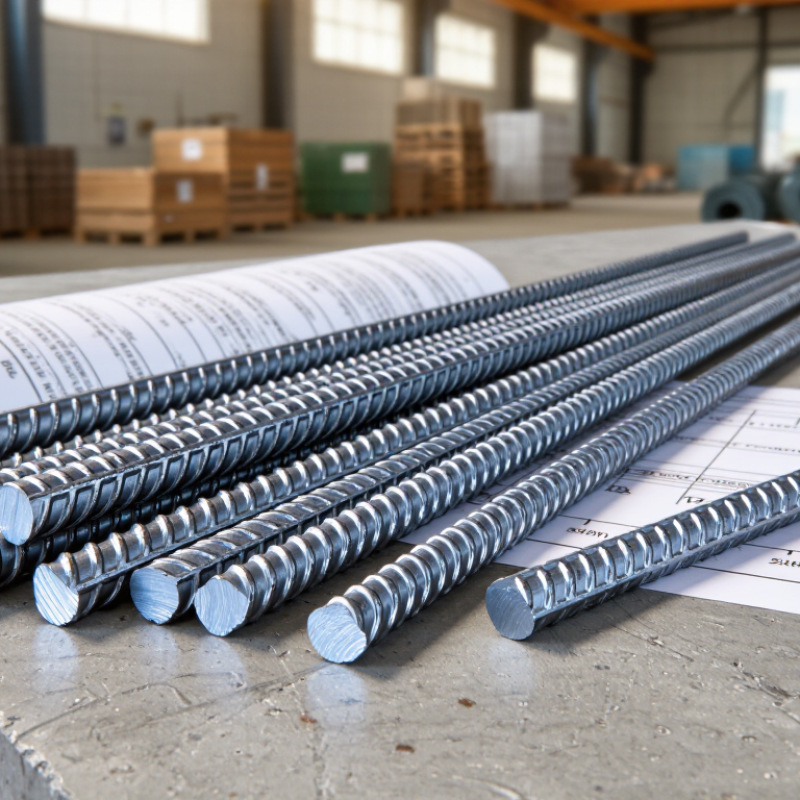
Reinforcing steel bars strengthen concrete against tension, cracking, and bending. Concrete carries compression well, but steel performs better under tensile stress. The seven practical choices include plain round bars, deformed carbon-steel bars, weldable low-alloy bars, stainless-steel bars, epoxy-coated bars, galvanized bars, and corrosion-resistant weathering bars. Deformations create mechanical interlock with concrete. Bar ribs also improve load transfer along the embedded length.
The World Steel Association’s World Steel in Figures 2024 reports 1.892 billion tonnes of crude steel production in 2023. This scale supports broad availability, but quality still depends on traceability and testing.
ASTM A615 covers common carbon-steel reinforcement, while ASTM A706 adds controlled chemistry for welding and improved ductility. ISO 6935-2 also specifies ribbed reinforcing steel requirements. Essential properties include yield strength, tensile strength, elongation, bend performance, rib geometry, weldability, and corrosion resistance. Higher strength is not automatically better. Congestion may increase.
Tips: Match the bar grade to structural drawings, exposure conditions, and local codes. Ask for mill certificates, heat numbers, tensile results, and bend-test records. Check diameter with calibrated tools. Inspect rust, damaged coatings, and rib consistency before placement. A small inspection gap can become a costly repair. For coastal or de-icing environments, stainless or galvanized reinforcement may outperform untreated steel, although initial cost remains higher. Engineers should compare whole-life value, not only purchase price. Even experienced buyers can overtrust certificates; independent verification is sometimes necessary.
Strength, Grade, Size, Coating, and Standard Comparison
7 Best Reinforcing Steel Bars for Global Buyers
Choosing the best reinforcing bar depends on strength, grade, size, coating, and standard. There is no universal winner. Carbon steel deformed bars suit general concrete frames and offer reliable bond strength. Weldable low-alloy bars perform better when fabrication or seismic detailing matters. High-strength bars reduce congestion, but engineers must verify ductility and anchorage. Microalloyed bars can provide useful strength without excessive carbon content. These options often appear in diameters from 8 to 40 millimeters, although project drawings control the final selection.
Epoxy-coated bars help resist chloride exposure near roads, ports, and marine structures. Galvanized bars offer durable corrosion protection, but bending can damage the coating. Stainless steel bars provide excellent resistance in severe environments, yet their higher cost needs careful lifecycle analysis. Plain round bars remain practical for ties, dowels, and secondary reinforcement, but they usually provide less concrete grip. Small details matter. A damaged coating can become a hidden weakness.
Grade markings require close comparison. ASTM A615 and ASTM A706 commonly use yield strengths near 420 or 550 MPa. EN 10080 and ISO 6935-2 use different designation systems and testing requirements. BS 4449 and JIS G3112 may also appear in international specifications. Buyers should match mill certificates, chemical limits, elongation, bend tests, rib geometry, and traceability. I have seen purchases judged by yield strength alone. That is risky. A bar may meet the grade but fail practical handling, welding, or local approval requirements. Always confirm the governing project standard before ordering.
Global Purchasing Factors: Certification, Suppliers, Pricing, and Delivery
7 Best Reinforcing Steel Bars for Global Buyers?
Global buyers commonly compare carbon steel deformed bars, weldable rebar, epoxy-coated bars, galvanized bars, stainless steel bars, low-alloy bars, and seismic-grade rebar. The best choice depends on exposure, structural design, and local building codes. Certification must match the destination market. Check standards such as ASTM A615, BS 4449, or EN 10080 before placing an order. Ask for mill test certificates, heat numbers, chemical analysis, yield strength, elongation, and bend-test results. Traceability matters. Ask for evidence.
Supplier assessment should go beyond a low quotation. Review production capacity, export experience, inspection procedures, and previous delivery records. An independent inspection can verify bar diameter, rib pattern, bundle weight, and marking before shipment. I have seen purchasing teams accept unclear certificates to save time. That shortcut can create expensive disputes later. A reliable supplier should answer technical questions clearly and provide consistent documents.
Compare pricing on a landed-cost basis. Include steel market changes, cutting fees, packaging, inland transport, ocean freight, insurance, duties, and payment terms. Delivery planning needs equal attention. Confirm production lead time, rolling schedules, port congestion risks, and document release procedures. Require weather-resistant bundle tags and accurate packing lists. Small errors can delay customs clearance. Build a realistic buffer, not an optimistic promise. Supplier performance should be reviewed after delivery, because one successful shipment does not prove long-term reliability.


