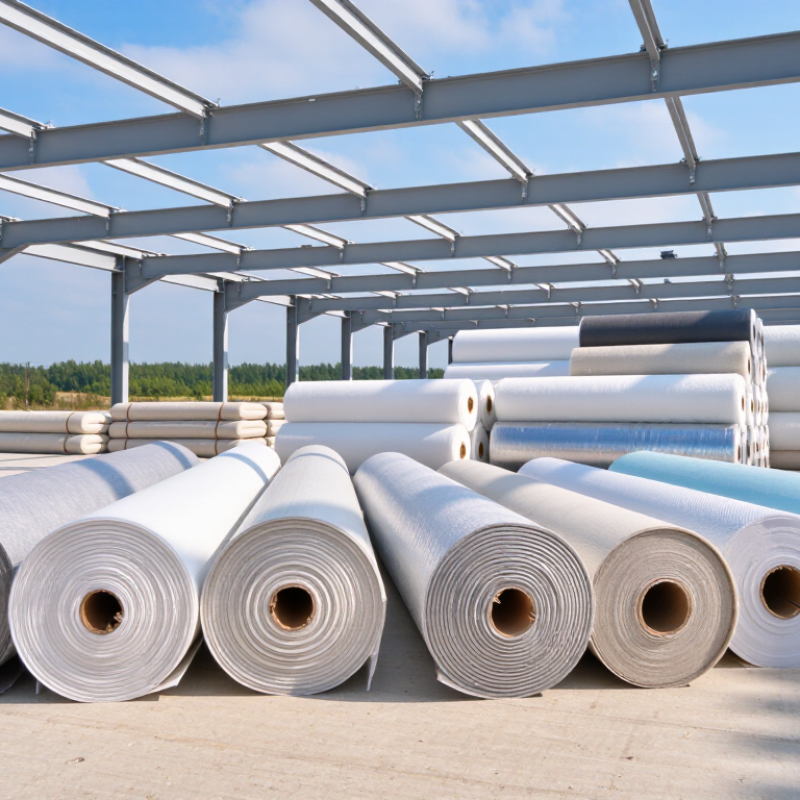
Choosing the right Insulation Membrane has become a practical priority for global construction buyers. Energy costs, climate risks, and stricter building codes now influence material decisions. The United Nations Environment Programme’s 2023 Global Status Report for Buildings and Construction states that buildings produced about 37% of global energy and process-related emissions in 2022. That figure makes thermal performance more than a design preference.
A reliable membrane must do several jobs at once. It should limit heat transfer, control vapor movement, resist water intrusion, and remain stable during installation. Some products also support airtightness, acoustic comfort, or fire-performance strategies. The International Energy Agency’s Energy Efficiency 2023 report highlights building efficiency as a major route for reducing energy demand. However, laboratory ratings do not always predict jobsite results. Seams, penetrations, compression, and poor storage can weaken an excellent product.
This guide reviews 10 Best Insulation Membranes for Global Buyers through measurable and practical criteria. These include thermal resistance, vapor permeability, tensile strength, weather exposure, fire classification, certification, and regional availability. Standards such as ASTM C518, ASTM E96, EN 13162, and EN 13984 may help buyers compare products, but equivalent standards are not always directly interchangeable. That distinction matters.
Real projects are less tidy.
A membrane that performs well in a dry warehouse may struggle on a humid coastal site. Buyers should request current technical data sheets, independent test evidence, installation guidance, and declared service-life information. Supplier claims deserve careful checking. This is not a perfect ranking; product suitability depends on climate, assembly design, local codes, and installer experience. The strongest choice is usually the one that performs consistently in the complete building system, not merely the one with the highest advertised rating.
Insulation membranes are thin building layers that manage heat, air, and moisture. They do not replace bulk insulation. Instead, they support its performance by limiting unwanted movement through walls, roofs, and floors. Heat moves. Moisture matters. A reflective membrane can reduce radiant heat transfer when it faces an air space. An air barrier can stop drafts that carry heat away. A vapor-control layer can slow indoor moisture from entering colder parts of an assembly, where condensation may form.
The right membrane depends on climate, wall design, indoor humidity, and installation quality. Permeability ratings deserve careful attention. A highly resistant layer may work well in one assembly but trap moisture in another. Field inspections often reveal loose seams, punctures around pipes, and poorly sealed edges. Small gaps can undermine expensive materials. Details decide. Buyers should request tested performance data, installation instructions, and compatibility information before selecting a product. Fire behavior and local building requirements also need professional review. I would not judge a membrane by thickness alone; a thin, carefully installed layer can outperform a heavier one with open joints. Still, product claims are not enough. Real performance depends on the complete assembly, and every project contains conditions that drawings may overlook.
Typical water-vapor permeance ranges for common membrane categories. Lower perm values indicate stronger resistance to vapor diffusion, while higher values allow assemblies to dry more readily.
Values are representative ranges in U.S. perms based on commonly published material classifications and ASTM E96 testing practice. Actual performance varies by thickness, coating, temperature, humidity, installation quality, and product specification. Vapor permeance alone does not measure thermal resistance or liquid-water protection.
10 Best Insulation Membranes for Global Buyers?
Global buyers should compare insulation membranes by performance, not attractive specifications. Thermal resistance matters, but it can change after compression, moisture exposure, or poor installation. Check declared R-value, thickness tolerance, and long-term dimensional stability. A strong membrane should also manage water vapor without trapping moisture inside the wall assembly.
Climate changes the decision. A humid coastal project needs reliable water resistance and vapor control. A cold warehouse may require better airtightness and freeze-thaw durability. Review tensile strength, puncture resistance, UV exposure limits, and service temperature. Fire performance is equally important, but classifications differ between regions. Confirm test methods, certificates, and technical documents before comparing prices.
Tips: Request full laboratory reports, not only marketing sheets. Compare results under similar test conditions. Inspect sample edges, seams, and fastening points. Small installation gaps can defeat excellent material performance. Also check local building rules, recycling options, warranty terms, and replacement availability. A high R-value may mislead. Real buildings are rarely perfect. No checklist is flawless, so document assumptions and test critical details with qualified local professionals.
| Rank | Membrane Type | Primary Function | Typical Insulation Application | Typical Vapour Permeance | Air-Barrier Potential | Water Resistance | Typical UV Exposure Capability | Typical Service Temperature Range | Main Advantages | Important Limitations | Common Reference Standards |
|---|---|---|---|---|---|---|---|---|---|---|---|
| 1 | Variable-permeance polyamide membrane | Smart vapour control | Interior side of framed walls and roof assemblies in mixed or heating-dominated climates | Approximately 0.3–10 US perms, depending on relative humidity | High when all laps, edges, and penetrations are sealed | Water-resistant, but generally not intended as a primary exterior weather barrier | Usually limited; commonly covered within approximately 30–90 days | Approximately −40°C to +80°C, product dependent | Can reduce winter vapour diffusion while allowing increased drying toward the interior under humid conditions | Requires careful detailing; performance depends strongly on installation and climate analysis | ASTM E96; ISO 12572; EN 1931; relevant air-leakage test methods |
| 2 | High-permeance synthetic weather-resistive membrane | Wind and rain protection | Outside of mineral wool, wood-fibre, cellulose, or framed wall insulation | Typically greater than 10 US perms; some products exceed 50 perms | High when taped or sealed as a continuous system | Designed to resist wind-driven rain while allowing outward vapour drying | Commonly 90–180 days, subject to the product’s tested exposure rating | Approximately −40°C to +100°C | Supports outward drying, lightweight installation, and improved temporary weather protection | High vapour permeability may be unsuitable where exterior condensation control requires a low-permeance layer | EN 13859-1; ASTM E2178; ASTM E331; ISO 12572 |
| 3 | Fixed low-permeance polyethylene sheet | Vapour barrier | Warm-side vapour control layer in cold-climate walls, ceilings, and floors | Usually ≤0.1 US perms for typical heavy-gauge sheets | High only when joints, service penetrations, perimeter edges, and fasteners are sealed | Good resistance to liquid water; seams require compatible tapes or sealants | Generally short-term exposure only; prolonged sunlight can degrade unprotected polyethylene | Approximately −40°C to +80°C | Low cost, low vapour transmission, broad availability, and simple cutting | Can trap construction moisture or create condensation risk if placed incorrectly in mixed climates | ASTM E96; ISO 12572; ASTM E2178; local vapour-barrier classifications |
| 4 | Reinforced polyethylene vapour-barrier membrane | Robust vapour and air control | Large wall, ceiling, floor, and temporary enclosure areas where tear resistance is important | Typically ≤0.1 US perms | High when seams and penetrations are properly sealed | Good liquid-water resistance; reinforced versions generally tolerate handling better than plain film | Usually limited to short or controlled construction exposure | Approximately −40°C to +80°C | Higher puncture and tear resistance than unreinforced film; useful for difficult installation conditions | Still has the drying limitations of a fixed low-permeance vapour barrier | ASTM E96; ISO 12572; ASTM D882; ASTM D1709 |
| 5 | Self-adhered modified-bitumen sheet | Waterproofing and air control | Exterior wall transitions, below-grade interfaces, sills, parapets, and roof insulation details | Commonly ≤0.1 US perms | Very high when substrates are prepared correctly and laps are fully bonded | Excellent resistance to bulk water and wind-driven rain when continuously installed | Often temporary exposure only; mineral-surfaced variants may offer longer exposure | Approximately −30°C to +90°C, depending on formulation | Strong adhesion, effective flashing integration, and reliable continuity around many transitions | Heavy, relatively low-permeance, temperature-sensitive during installation, and substrate preparation is critical | ASTM E96; ASTM C836; ASTM E2178; ASTM E331 |
| 6 | Self-adhered butyl or synthetic-rubber membrane | Flexible air and water sealing | Window and door interfaces, penetrations, wall transitions, and insulation continuity details | Approximately 0.1–1.0 US perms, depending on thickness and reinforcement | Very high when continuously adhered and properly rolled at laps | Very good resistance to liquid water and rain penetration | Often 90–180 days; verify the tested exposure period for the specific system | Approximately −40°C to +80°C | Flexible, conformable, and effective for irregular interfaces and movement-prone details | Adhesion can be affected by dust, moisture, low temperature, plasticizers, or incompatible substrates | ASTM E96; ASTM E2178; ASTM E331; AAMA 711 where applicable |
| 7 | Thermoplastic polyolefin sheet | Roofing and exterior waterproofing | Low-slope roofs, protected membrane roofs, and assemblies with rigid insulation boards | Typically ≤0.1–0.2 US perms | High when seams are heat-welded and perimeter details are continuous | Excellent when seams, penetrations, and drainage details are correctly installed | Designed for long-term exterior exposure; formulation and reinforcement affect durability | Approximately −40°C to +100°C | Heat-weldable seams, reflective options, good weathering, and compatibility with many roof insulation systems | Requires specialized welding equipment and trained installers; puncture resistance varies by reinforcement | EN 13956; ASTM D6878; ASTM E96; ASTM E108 or regional fire tests |
| 8 | Ethylene-propylene-diene monomer sheet | Durable roofing membrane | Low-slope roofs and waterproofed assemblies using mineral wool, polyisocyanurate, or other rigid insulation | Typically ≤0.1–0.2 US perms | High when seams are securely bonded or taped and perimeter details are complete | Excellent resistance to rain, ponding water, ozone, and weathering | Designed for long-term exterior exposure | Approximately −45°C to +120°C | Very good flexibility, weather resistance, and resistance to ozone and ultraviolet radiation | Seams are generally bonded or taped rather than heat-welded; compatibility with oils and certain materials must be checked | EN 13956; ASTM D4637; ASTM E96; ASTM E108 or regional fire tests |
| 9 | Liquid-applied acrylic or elastomeric air-barrier coating | Seamless air and rain control | Exterior sheathing, masonry, concrete, and complex wall surfaces behind continuous insulation | Approximately 1–10 US perms, formulation dependent | High when applied at the specified dry-film thickness and connected to adjacent components | Good to excellent; performance depends on coating continuity and substrate movement | Some formulations tolerate extended exposure; others require prompt covering | Approximately −30°C to +80°C | Creates a continuous layer over irregular substrates and reduces the number of taped sheet joints | Requires strict control of coverage, curing conditions, substrate moisture, and application thickness | ASTM E2178; ASTM E2357; ASTM E331; ASTM E96 |
| 10 | Cementitious waterproofing membrane | Mineral-substrate waterproofing | Basements, concrete walls, masonry, foundations, wet rooms, and below-grade insulation interfaces | Approximately 1–10 US perms, depending on cement, polymer, thickness, and test method | Low to moderate by itself; joints and cracks require dedicated treatment | Good resistance to hydrostatic moisture when correctly applied; crack-bridging varies considerably | Generally suitable for protected or below-grade exposure; direct UV exposure is usually not the primary use | Approximately −20°C to +70°C | Compatible with concrete and masonry, non-combustible mineral base, and suitable for many below-grade applications | Rigid formulations may not accommodate movement or cracking; curing and substrate preparation are essential | EN 14891; EN 1504-2; ASTM C836 or applicable regional waterproofing standards |

The 10 best insulation membranes depend on the building application, climate, and installation quality. The IEA reports that buildings used about 30% of global final energy in 2022. Better envelope design remains practical, not cosmetic.
For pitched roofs, breathable roof underlays and wind barriers protect insulation from rain and drafts. Flat roofs benefit from self-adhered waterproof membranes and reinforced liquid-applied systems. External walls often need airtight membranes, vapor-control sheets, or smart vapor retarders that adjust permeability. Internal walls can use acoustic membranes, while basements require capillary-resistant waterproof layers. Radiant foil membranes suit hot roofs, but they need an air gap to work properly. Timber buildings may perform better with vapor-open, capillary-active membranes. Service cavities can use flexible vapor-control membranes around cables and pipes. Facade systems often require UV-resistant breather membranes. HVAC enclosures may need foil-faced insulation jackets. These are ten strong choices, but none is universally best.
UNEP and the GlobalABC reported that buildings represented roughly 34% of global energy demand in 2022. Site experience shows that laps, penetrations, and poor tapes often weaken a good specification. I would not select a membrane from its headline R-value alone. Check vapor permeability, fire classification, tensile strength, exposure limits, and local moisture conditions. Product data sheets can look precise. Real walls are less obedient. Independent testing, trained installers, and documented inspections make the difference. (IEA, Buildings 2023; UNEP/GlobalABC, Global Status Report for Buildings and Construction 2023)
10 Best Insulation Membranes for Global Buyers?
Membrane selection starts with climate, not catalog rankings. In cold regions, vapor control can limit condensation inside walls. In hot, humid zones, the assembly may need to dry inward or outward. Coastal projects also demand resistance to salt air, wind-driven rain, and ultraviolet exposure. A membrane that performs well in a dry mountain climate may trap moisture in a tropical wall.
Material behavior matters. Polymer films can provide consistent air control, while reinforced sheets often resist tearing during transport and installation. Breathable membranes may help walls release moisture, but their permeability must match the insulation and interior vapor layer. Check declared water resistance, vapor permeance, tensile strength, temperature range, and fire performance. Laboratory data helps. It does not replace a wall-specific calculation.
Installation quality often decides the result. The surface should be clean, dry, and free from sharp edges. Overlaps need correct widths, and compatible tapes or sealants must cover every joint. Around windows, pipes, and fasteners, small gaps can become large leakage paths. Site crews should inspect corners before cladding hides them. That step is often skipped.
I have seen good materials fail through poor detailing. This is the uncomfortable lesson. Global buyers should review local weather records, building rules, substrate conditions, and installer training before choosing among the ten best options. A practical sample wall test may reveal more than a polished brochure.
Global buyers should assess insulation membranes against regional standards, not attractive claims alone. EN 13859 covers flexible underlays for roofs and walls, while ASTM methods measure air permeance, water resistance, and vapor performance. The correct membrane depends on climate, wall design, and installation quality. A vapor-open layer may support drying in cold conditions, but it can create problems in humid assemblies.
Performance is only one part of sustainability. The International Energy Agency reports that buildings consume about 30% of global final energy. Durable membranes can reduce heating and cooling demand when installed within a complete envelope system. Buyers should request an Environmental Product Declaration under ISO 14025. They should also review recycled content, manufacturing energy, transport distance, and end-of-life options. One number is not enough. The UNEP Global Status Report for Buildings and Construction continues to highlight embodied carbon as a growing concern, especially as operational emissions decline.
Site experience matters. Check roll dimensions, tear resistance, joint tapes, and storage conditions before purchasing. Ask for tested data at the temperatures used on site. A membrane that performs well in a laboratory may fail after careless overlaps or punctures. This is often overlooked. I would also compare service life against replacement risk, not only purchase price. Product declarations can contain assumptions, so buyers should read the system boundaries carefully. No scorecard is perfect, but transparent evidence makes a safer decision.
As a specialist in environmental and flow sensor technology, ScioSense enables companies to use the planet’s resources more sustainably, helping to create a healthier future for all.