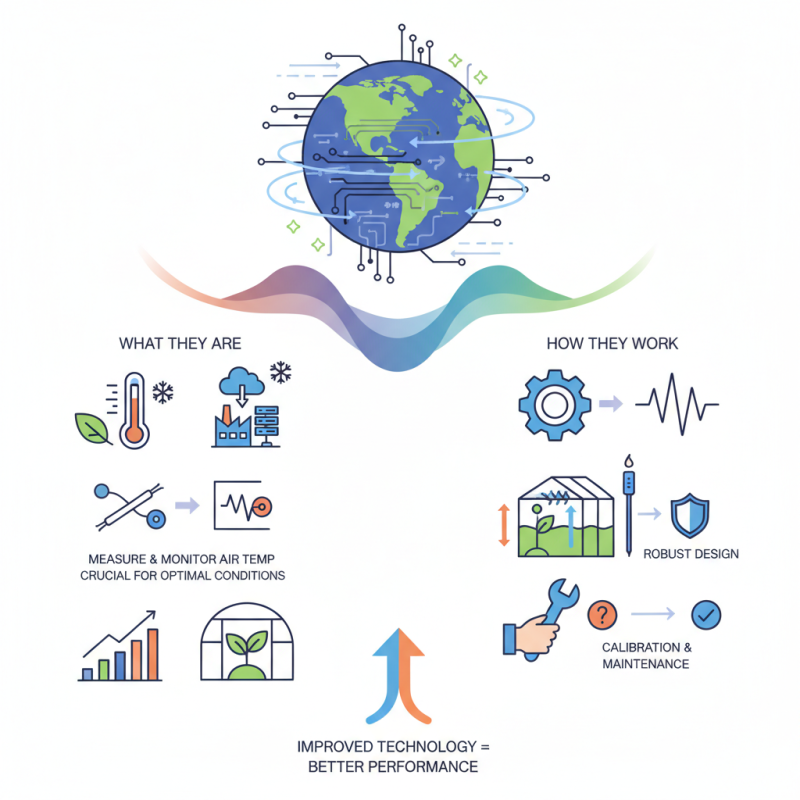
Air temperature sensors play a crucial role in various industries, from agriculture to climate control. These devices measure and monitor the temperature of the air, providing essential data for maintaining optimal conditions. According to Dr. Emily Carter, a leading expert in environmental technology, "Air temperature sensors are vital for understanding our climate and improving energy efficiency."
These sensors utilize advanced technology to detect slight changes in temperature. They often employ thermocouples or thermistors for accurate readings. A robust design ensures reliability, even in harsh conditions. This is especially important in scenarios like greenhouse monitoring, where temperature fluctuations can impact crop health. Yet, the calibration of these sensors can be challenging. Proper maintenance is crucial for delivering precise data over time.
There are notable challenges in ensuring their accuracy and reliability. Variations in placement and environmental conditions can lead to misleading readings. This needs careful consideration during installation. Understanding air temperature sensors involves recognizing their vital role, potential pitfalls, and ongoing maintenance requirements. Enhancements in sensor technology continue to improve performance and reliability, addressing past concerns.
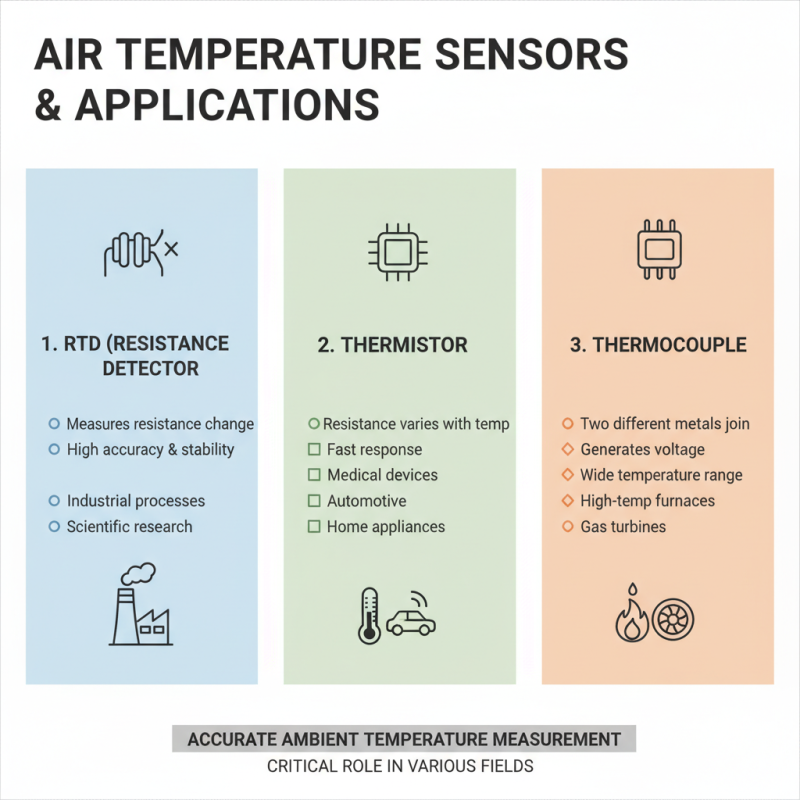
Air temperature sensors play a crucial role in various applications, from climate control to industrial processes. These devices measure the ambient temperature of the surrounding air. They employ several technologies, including thermistors, thermocouples, and infrared sensors. Each type has its unique method for gauging temperature changes with precision.
Thermistors are sensitive and widely used in HVAC systems. They change resistance with temperature fluctuations, providing accurate readings. Thermocouples contain two different metals; they generate a voltage when exposed to temperature differences. Infrared sensors detect thermal radiation, making them suitable for non-contact measurements. Each sensor type has its advantages and drawbacks, leading to a reflection on which to use based on specific needs.
Selecting the right air temperature sensor requires careful consideration. Sensitivity, response time, and range are essential factors. Not all sensors perform equally well in every situation. Sometimes, using a more sensitive sensor can lead to noise in the readings. Understanding these trade-offs can enhance decision-making for projects that rely on accurate temperature monitoring.

Air temperature sensors play a critical role in various applications. These sensors measure the ambient air temperature accurately. There are several types commonly used today. Each type has specific features and uses.
Thermocouples are one popular choice. They work by providing a voltage signal that correlates with temperature. This makes them suitable for industrial environments. Then, we have thermistors, which are sensitive to small temperature changes. Their accuracy is valuable in HVAC systems. Resistance temperature detectors (RTDs) also provide precise measurements, often in laboratory settings.
For outdoor weather stations, infrared sensors are ideal. They measure surface temperatures without direct contact. While effective, they might struggle in extreme conditions. Reflective surfaces can lead to inaccurate readings. Each type of sensor has its strengths and weaknesses. It's essential to choose one that fits the intended application best. Understanding the nuances of these devices can help in selecting the right tool for the job.
Air temperature sensors are crucial in various applications, from HVAC systems to meteorology. They operate based on the principle of thermal expansion or resistance changes in materials. For example, thermocouples generate voltage in response to temperature variations. This voltage is then converted into temperature reading.
Another common type is thermistors, which change resistance with temperature shifts. These sensors can offer high sensitivity and precision. However, their accuracy can be affected by environmental factors such as humidity and air pressure. Measuring air temperature also involves considering the placement of the sensor. An improperly positioned sensor can yield inaccurate readings.
When using air temperature sensors, ongoing calibration and maintenance are vital. Without regular checks, a sensor may produce misleading data. This can lead to poor decision-making in critical applications. Understanding the principles behind these sensors helps in achieving reliable performance. Knowledge of their limitations is equally important for effective utilization.
| Sensor Type | Measurement Range (°C) | Accuracy (%) | Response Time (s) | Typical Applications |
|---|---|---|---|---|
| Thermocouple | -200 to 1350 | ±1.5 | < 1 | Industrial processes, HVAC systems |
| RTD (Resistance Temperature Detector) | -200 to 850 | ±0.1 | < 2 | Laboratory, HVAC, food processing |
| Thermistor | -55 to 125 | ±0.5 | < 0.5 | Consumer electronics, automotive |
| Infrared Sensor | -50 to 150 | ±2.0 | < 0.1 | Non-contact applications, weather stations |
Air temperature sensors play a crucial role in various industries, from HVAC systems to meteorology. However, several factors can significantly affect their accuracy. One critical aspect is the sensor type, with thermocouples, thermistors, and infrared sensors offering different levels of precision. According to a report by the International Society of Automation, the accuracy of thermistors can range from ±0.2°C to ±0.5°C, making them suitable for many applications.
Another influencing factor is the sensor's location. Placing sensors near heat sources or in direct sunlight can lead to misleading readings. For example, the American Society of Heating, Refrigerating and Air-Conditioning Engineers (ASHRAE) suggests maintaining a minimum distance from heat-emitting equipment to prevent these inaccuracies. Calibration is also essential; outdated sensors may require recalibration. Studies show that sensors past their calibration date can exhibit errors up to 10%, compromising performance.
Environmental conditions impact air temperature sensor readings as well. Humidity and pressure variations can introduce errors, particularly in regions with extreme weather. The National Oceanic and Atmospheric Administration (NOAA) highlights that temperature readings can deviate by 1.5°C in high-humidity environments. Thus, understanding these factors is vital for improving sensor performance and ensuring reliable data.
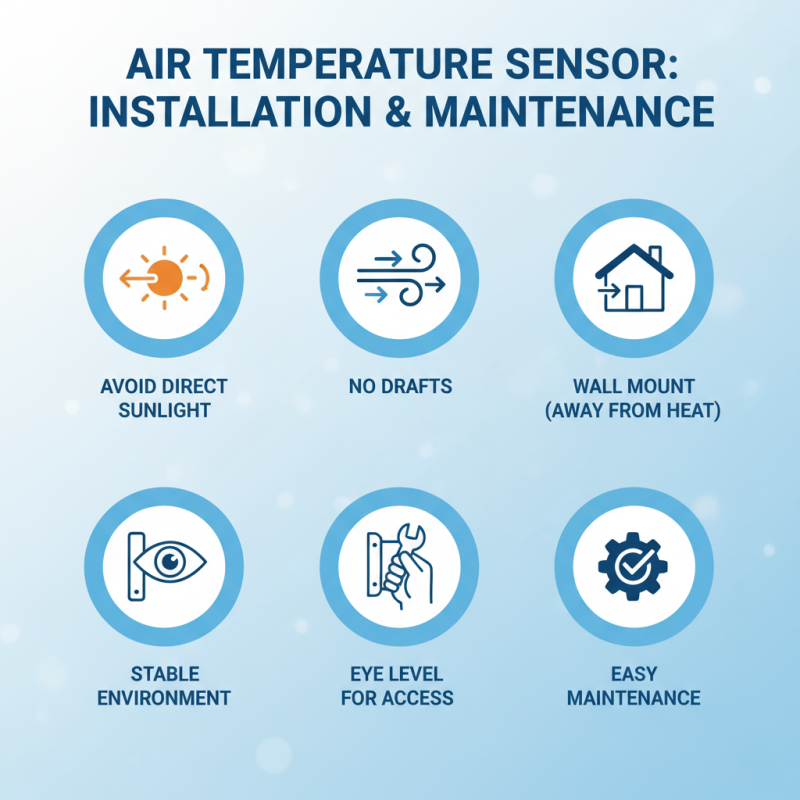
Installing air temperature sensors requires careful planning. Choose a location that avoids direct sunlight and drafts. A stable environment is essential for accurate readings. Wall mounting is common, but ensure it’s away from heat sources. Each sensor should be at eye level for easy access during maintenance.
Regular maintenance is crucial for longevity. Dust and debris can affect performance. Clean the sensors gently with a soft cloth. Check connections monthly to ensure they are secure. If readings fluctuate unexpectedly, inspect for damage or misalignment. These steps help maintain reliable readings in various conditions.
Consider the environment when planning installations. Sensor placement in a poorly ventilated area may lead to inaccuracies. Calibration should be performed annually, ensuring the data remains precise. Adjusting for seasonal temperature differences is also beneficial. Accurate functioning relies on proper setup and ongoing care.
As a specialist in environmental and flow sensor technology, ScioSense enables companies to use the planet’s resources more sustainably, helping to create a healthier future for all.