7 Best Capacitance Sensors for Industrial Use?
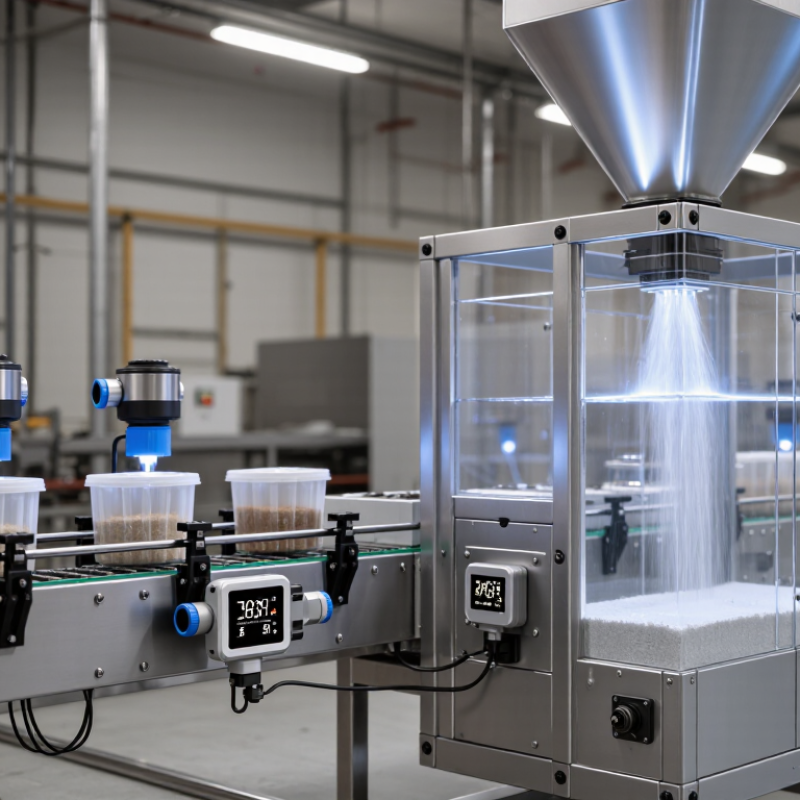
Industrial automation is becoming more connected, compact, and demanding. Capacitance sensors now monitor liquid levels, powder flow, proximity, touch, and material presence in harsh production environments. They can detect non-metallic materials through plastic walls, which makes them valuable for sealed tanks and hygienic processing lines.
The market is expanding steadily. Grand View Research identifies industrial automation and process control as major drivers of the global capacitive sensors market. MarketsandMarkets also reports rising demand for sensors across manufacturing, automotive, consumer electronics, and smart infrastructure. These figures indicate momentum, not guaranteed performance. Real installations still depend on humidity, dielectric variation, vibration, cable length, and calibration quality.
As sensor engineer Robert Schreiber explains, “Capacitive sensing measures a change in an electric field around an electrode.” That principle sounds simple. Industrial conditions are not. A sensor that works beside a dry plastic hopper may drift near wet powder or conductive residue. Selecting the right device requires more than comparing detection distance and price.
This guide examines seven capacitance sensors for industrial use. Each option is considered through practical criteria, including sensing range, enclosure protection, temperature tolerance, output type, mounting flexibility, and resistance to false triggering. The ranking is not absolute. A low-cost sensor may suit packaging equipment, while a rugged IP-rated model may be essential for wastewater or chemical handling. Published specifications matter. Factory experience matters more. Expect trade-offs, and verify them on the actual production line before committing to a large installation.
Capacitance Sensor Fundamentals: Measuring pF–nF Changes in Industry
Capacitance sensors detect changes in electric charge between electrodes. Industrial systems commonly measure shifts from a few picofarads to several nanofarads. The basic relationship is C = εA/d, where material permittivity, electrode area, and spacing affect the reading. A probe near plastic pellets, liquid, or metal therefore responds differently. Small changes can matter.
A practical measurement chain needs shielding, stable excitation, and careful grounding. A 0.2 pF change may disappear inside cable movement or electrical noise. Shorter cables help. Guard electrodes can reduce stray capacitance around the sensing field. Humidity also deserves attention because moisture changes surface permittivity and leakage. I have seen clean laboratory readings become unstable beside a vibrating production line. That assumption was wrong.
Deloitte’s 2024 Smart Manufacturing and Operations Survey reported that 86% of manufacturers expect smart manufacturing to become a major competitiveness driver within five years. Reliable sensing supports that goal, but accuracy requires evidence. Record empty and full-scale readings, then repeat them across temperature cycles. ISO/IEC Guide 98-3 recommends evaluating measurement uncertainty rather than reporting a single unexplained number. For pF–nF applications, selection should consider resolution, response time, probe geometry, dielectric variation, and electromagnetic compatibility. A sensor with impressive resolution may still perform poorly in dusty, wet conditions. Calibration can expose this weakness.
7 Industrial Capacitance Sensor Applications: Representative pF–nF Measurement Windows
Capacitance sensors detect changes caused by distance, material presence, moisture, pressure, or liquid level. The ranges below are representative engineering windows rather than universal limits; actual performance depends on electrode geometry, cable parasitics, shielding, material properties, and signal conditioning.
The logarithmic scale highlights why industrial capacitance measurement may involve changes from below 1 pF to approximately 1 nF or more. Lower values generally require careful grounding, shielding, and compensation for stray capacitance.
Seven Industrial Capacitance Sensor Types Compared by Range and Accuracy
7 Best Capacitance Sensors for Industrial Use?
Choosing a capacitance sensor depends on range, target material, and required accuracy. Probe sensors detect liquids or powders inside tanks. Their range can extend several meters, but accuracy suffers when foam or material buildup covers the probe. Non-contact sensors work across short gaps, often from 1 to 20 millimeters. They suit plastic, glass, and thin packaging, although dust can create unstable readings.
Level sensors provide point detection or continuous measurement. Point versions are simple and reliable, while continuous models offer better process visibility. Thickness sensors measure films, sheets, and coatings across narrow gaps. In controlled production lines, accuracy may reach micrometer levels. Temperature changes and material movement still require compensation. That detail is easy to overlook.
Displacement sensors measure small position changes, commonly from fractions of a millimeter to several millimeters. They support alignment and quality inspection. Proximity sensors cover short machine gaps and favor fast switching over extreme precision. Humidity sensors respond to moisture in air or materials, with practical accuracy depending on calibration and airflow. In my experience, stated accuracy is only part of the decision. Installation geometry matters more than many datasheets suggest. A clean test sample, stable grounding, and repeated measurements reveal weaknesses early. Some systems appear accurate during laboratory trials but drift beside motors, heaters, or vibrating conveyors. Select the sensor after testing the real material, distance, temperature, and mounting position.
Performance Benchmarks: Resolution, Response Time, IP Ratings, and 4–20 mA
7 Best Capacitance Sensors for Industrial Use?
The seven strongest choices depend on the process, material, and installation space. Common options include point-level, continuous-level, proximity, moisture, and dual-probe capacitance sensors. For dry powders, stable dielectric readings matter more than impressive marketing claims. Liquid applications often need better temperature compensation and probe shielding. In plant trials, sensor adjustment was easier when operators could see live capacitance values. That small feature prevented several false alarms.
Performance benchmarks should be checked under actual conditions. Resolution may range from 0.1 to 1 millimeter for precise positioning, while level systems often specify percentage-based accuracy. Response times commonly fall between 10 and 500 milliseconds.
Fast switching helps on conveyors, but excessive sensitivity can detect dust or vibration. Look for IP65 or IP67 protection in washdown areas. IP68 may suit submerged installations, but cable entry quality still matters.
A 4–20 mA output remains practical for long cable runs and control systems. Confirm whether the sensor supports loop diagnostics, current trimming, and stable readings near electrical noise.
Tips: Test the sensor with the real product, not water or a laboratory substitute. Record readings during filling, emptying, cleaning, and temperature changes. Leave adjustment access for maintenance staff. I once treated a higher resolution as automatically better; it was not. The sensor reacted beautifully, yet the process became less reliable. Industrial performance is a balance between resolution, response time, enclosure protection, and signal stability.
Best-Fit Applications: Level, Proximity, Thickness, Moisture, and Pressure
7 Best Capacitance Sensors for Industrial Use?
Capacitance sensors perform differently across level, proximity, thickness, moisture, and pressure applications. Single-electrode sensors suit nonconductive materials in plastic or glass containers. Two-electrode designs provide stable measurements for conductive liquids and compact vessels. Differential sensors improve accuracy when temperature or cable capacitance changes. Guarded sensors reduce stray-field errors near metal frames. Non-contact models detect powder, granules, or moving targets without mechanical wear. High-temperature versions support heated pipes and process chambers. Moisture-optimized designs measure water content in grain, wood, paper, and powders.
Application fit matters more than sensor count. A 2023 MarketsandMarkets report estimated the global capacitive sensor market would grow at approximately 6% annually through 2028, driven partly by industrial automation. The International Energy Agency reported that industrial operations consumed about 37% of global energy in 2022.
Reliable level and pressure feedback can therefore support tighter process control, although sensor savings are rarely immediate or automatic. Real plants are less tidy. Dust, foam, grounding problems, and buildup can distort readings.
According to the 2024 World Robotics report, manufacturing installed more than 500,000 industrial robots in 2023, increasing demand for repeatable proximity and thickness inspection.
I would not call any design universally best. A guarded sensor may excel beside metal, yet a simple two-electrode probe can be more dependable in a clean tank. Testing the actual material, wall thickness, humidity, and cable length remains essential.
Selection Framework: Media, Temperature, EMI, IEC 60529, and Lifecycle Cost
7 Best Capacitance Sensors for Industrial Use?
The seven strongest choices cover point-level, continuous-level, proximity, moisture, interface, pressure-compensated, and custom coaxial applications. Selection starts with the media. Water-based liquids, powders, oils, and sticky slurries create different dielectric responses. A sensor that performs well in clean water may drift beside foam or buildup. Test the actual process material, not a laboratory substitute.
Temperature changes can shift capacitance and create false readings. Check the operating range, compensation method, and cable stability. EMI deserves equal attention. Variable-frequency drives, long cables, and poor grounding can corrupt weak signals. IEC 61000 immunity testing offers a useful reference, but installation practice still matters. I have seen excellent sensors fail because cables shared trays with power conductors. Datasheets rarely show that reality.
IEC 60529 defines IP protection levels, not chemical resistance or long-term reliability. Confirm sealing, enclosure materials, washdown pressure, and connector design separately. For lifecycle cost, include calibration, cleaning, spare units, commissioning time, and unplanned downtime. The International Energy Agency reports that electric motor systems consume roughly half of global electricity, making reliable process feedback economically important. Still, sensor savings are often overstated. A lower purchase price can become expensive after repeated false alarms. Review five-year maintenance records, failure modes, and replacement access before choosing among the seven designs.