Choosing the right Inverter Outlet can be difficult for global buyers. Plug shapes vary across regions. Voltage, frequency, grounding, and load capacity also differ. A compact outlet may fit perfectly, yet perform poorly with sensitive equipment.
This guide examines practical outlet types for homes, vehicles, backup systems, and portable power stations. It compares universal outlets, regional socket designs, USB-C combinations, and heavy-duty grounded models. Each type serves a different need. For example, a hotel traveler may prefer a universal design, while a workshop needs stronger terminals and verified overload protection. Fit matters. So does heat control.
Reliable selection begins with technical evidence. Check the inverter’s continuous wattage, surge rating, output waveform, and connection method. Then review the outlet’s rated voltage, current, grounding design, and manufacturer instructions. Certification marks can support confidence, but they should not replace careful inspection. A qualified electrician should assess permanent installations, especially where moisture or high loads are present.
Real-world testing often reveals small weaknesses. Some outlets feel secure but loosen after repeated use. Others provide USB charging but lack enough power for modern laptops. A few designs advertise broad compatibility without explaining frequency limits. That is not always clear. Buyers should compare datasheets, regional standards, warranty terms, and independent reviews before ordering. No single outlet is perfect. The best choice balances compatibility, durability, safety, and repairability for the intended market.
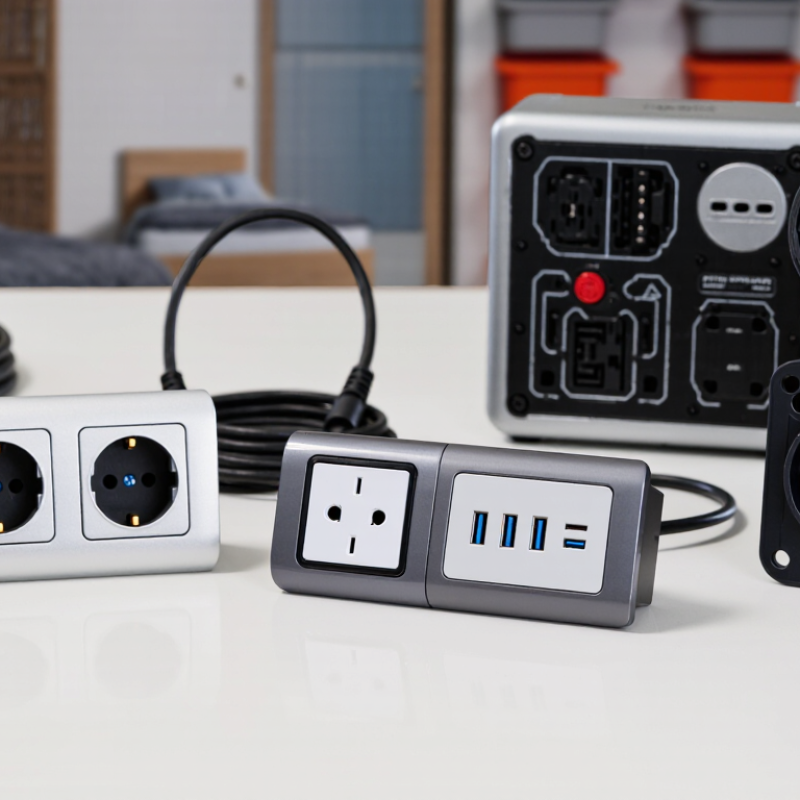
An inverter outlet delivers alternating current from a battery or vehicle’s direct-current system. It is not a power source by itself. Internal electronic switches create a rapidly changing waveform, while transformers and filters shape it into usable AC power. Pure sine wave outlets produce smoother electricity for laptops, medical equipment, motors, and sensitive chargers. Modified sine wave outlets cost less, but may create noise, heat, or poor motor performance.
Outlet shape is another issue. Type A and B suit North America, while Type C, E, F, G, and I serve other regions. Voltage and frequency must also match the connected device. The International Energy Agency reported that global battery-storage additions reached about 42 GW in 2023, more than doubling from the previous year. That growth increases demand for practical battery-to-AC connections, but it does not make every inverter outlet suitable for every country.
Tips: Check continuous wattage, surge wattage, voltage, frequency, and socket format. Use pure sine wave output for sensitive electronics. Add a certified adapter only when grounding remains reliable. A high-wattage outlet can still fail with a weak battery or thin cable. I have found that buyers often focus on socket appearance first. That is understandable, but incomplete. The waveform and protection system matter more. Some product claims also sound precise without explaining test conditions, so verify the technical sheet and independent safety documentation.
2026 Best Inverter Outlet Types for Global Buyers
Main Inverter Outlet Types for Different Electrical Systems
Choosing an inverter outlet starts with the destination’s electrical system, not the appliance label. Type A and Type B outlets suit many 100–127V systems, while Type C, E, and F commonly serve 220–240V networks. Type G is widely used with 230V systems, and Type I appears in several 230V markets. Each design differs in pin shape, grounding, and contact spacing. A simple adapter may change the shape, but it cannot correct voltage or frequency.
From field checks, grounded outlets are usually the safer choice for metal-cased equipment and high-load devices. Inverters with universal sockets can support several plug styles, yet their internal contacts may not fit every plug equally well. Loose connections create heat, noise, and unexpected shutdowns. Pure sine wave inverters generally work better with sensitive electronics, although outlet compatibility still matters. I have seen buyers focus on socket appearance and overlook frequency. That mistake can affect motors, clocks, and chargers.
Tips: Check voltage, frequency, grounding, and maximum current before purchase. Match the outlet to the local plug standard. Use a certified cable with firm contact pressure. Avoid forcing unusual plugs into universal sockets. Keep ventilation openings clear around the inverter. If the system will power medical, workshop, or outdoor equipment, ask a qualified electrician to verify the installation. Specifications can be incomplete, and assumptions sometimes fail.
Type A and Type B outlets are commonly associated with 100–127 V systems and 50/60 Hz power. Types C, E, F, G, and I are generally used with 220–240 V systems, most commonly at 50 Hz. Outlet type alone does not determine compatibility; buyers should also verify voltage, frequency, grounding, plug dimensions, and inverter protection requirements for the destination market.
2026 Best Inverter Outlet Types for Global Buyers
Voltage, frequency, plug shape, and safety rules determine whether an inverter outlet is truly suitable. IEC 60038 identifies common nominal systems, including 230 V at 50 Hz and 120 V at 60 Hz. Europe, Africa, Australia, and much of Asia commonly use 220–240 V, 50 Hz. North America generally uses 120 V, 60 Hz. Japan remains unusual, with 100 V and regional 50 or 60 Hz networks. Check the destination carefully.
Plug geometry also changes by region. Type C, E, and F outlets dominate many European markets. Type G is common in the United Kingdom and several nearby regions. Australia and New Zealand mainly use Type I, while North America uses Type A and B. India and parts of Africa may require Type D or M. A universal socket can accept more plugs, but it does not convert voltage or frequency.
Safety needs equal attention. IEC 60884-1 covers household plugs and socket-outlets, while IEC 60364 addresses low-voltage electrical installations. Look for overload, short-circuit, thermal, and residual-current protection. The IEA’s Electricity 2024 report recorded 2.2% global demand growth in 2023 and expects stronger growth through 2026, increasing interest in portable power equipment. Still, a neat global chart can mislead. Local wiring, earthing, and certification requirements may differ. Test compatibility with the actual appliance label, not the plug alone.
Choosing the right inverter outlet begins with the destination, not the product label. Type A and B outlets suit many North American installations. Type C, E, and F patterns are common across Europe and nearby markets. Type G and I outlets require different pin layouts and safety arrangements. Check voltage, frequency, grounding, and plug dimensions before ordering. An adapter changes shape, not electrical output.
Installation needs careful load planning. Confirm that the outlet rating exceeds the inverter’s continuous load, not only its short-term peak. High-demand appliances can heat a weak connection quickly. A licensed electrician should verify conductor size, protective devices, polarity, and neutral-ground bonding. Residual-current protection may be required in some locations. Outdoor outlets also need suitable weather resistance. I have seen installations fail because the enclosure looked strong but lacked proper sealing.
Compatibility does not end after installation. Test the outlet under a realistic load, then inspect for warmth, buzzing, loose screws, or discoloration. Keep ventilation openings clear of dust and stored materials. Review terminals during scheduled maintenance, because vibration can reduce contact pressure over time. Do not connect sensitive equipment until the inverter’s waveform and frequency are confirmed. A pure sine wave is often preferable, but not every load needs it. My own early mistake was trusting a universal adapter too much. It fitted neatly, yet the grounding path was uncertain. That detail deserves more attention.
| Outlet Type | Common Regions | Typical Supply Compatibility | Grounding Arrangement | Best Inverter Use Case | Installation Considerations | Compatibility and Maintenance Notes |
|---|---|---|---|---|---|---|
| Type A | United States, Canada, Japan, and parts of Central America | Usually 100–127 V AC; commonly 50 or 60 Hz depending on country | Two flat parallel pins; no dedicated earth contact | Compact, low-power inverter systems and double-insulated appliances | Use a properly rated receptacle and overcurrent protection. Do not use an ungrounded outlet for equipment that requires protective earth. | Confirm voltage and frequency before connection. Inspect the narrow contacts for looseness, heat discoloration, or arcing. |
| Type B | United States, Canada, Japan, and parts of Central America | Usually 100–127 V AC; 50 or 60 Hz depending on the electrical grid | Two flat pins plus a round grounding pin | Residential and portable inverter outputs requiring grounding continuity | The grounding conductor must remain continuous from the inverter or transfer equipment to the outlet. Follow local requirements for neutral-to-ground bonding. | Suitable for grounded plugs, but outlet rating must match the circuit. Test grounding and polarity after installation. |
| Type C | Europe, South America, Africa, the Middle East, and parts of Asia | Commonly 220–240 V AC at 50 Hz; some regions use approximately 127 V | Two round pins; no dedicated earth contact | Low-power, double-insulated devices where grounding is not required | Do not install a Type C outlet where a protective-earth connection is required. Verify local socket dimensions and clearance. | Commonly accepted by several grounded socket systems, but it does not provide earth protection by itself. Keep contacts clean and dry. |
| Type E | France, Belgium, Poland, Slovakia, Czechia, and nearby regions | Generally 220–240 V AC at 50 Hz | Two round pins with a socket-mounted earth pin | Fixed inverter installations requiring a grounded European-style outlet | The outlet and plug must provide mechanical and electrical compatibility with the earth pin. Use a certified protective device where required. | Some hybrid plugs fit both Type E and Type F systems. Check earth continuity and terminal torque during scheduled service. |
| Type F | Germany, Spain, Portugal, the Netherlands, Scandinavia, and much of continental Europe | Generally 220–240 V AC at 50 Hz | Two round pins with side earth contacts | Residential and commercial inverter circuits using grounded Schuko-style connections | Ensure the receptacle is securely mounted because side contacts depend on proper plug insertion. Provide suitable circuit protection and enclosure ventilation. | Many modern hybrid plugs support Type E and Type F outlets. Check for contact wear, dust buildup, and signs of overheating. |
| Type G | United Kingdom, Ireland, Cyprus, Malta, Singapore, Malaysia, and selected Gulf markets | Usually 220–240 V AC at 50 Hz | Three rectangular pins with a dedicated earth pin | Higher-current household and commercial inverter circuits | Use the correct fuse rating in the plug where applicable. The earth pin also operates safety shutters in many compatible sockets. | Never defeat the shutter or replace the fuse with unsuitable wire. Check fuse condition, terminal tightness, and outlet temperature. |
| Type I | Australia, New Zealand, China, and Argentina | Australia and New Zealand commonly use 230–240 V at 50 Hz; China commonly uses 220 V at 50 Hz | Two angled flat pins, with an optional vertical earth pin | Portable and fixed inverter systems in Asia-Pacific markets | Check pin orientation, outlet shutter design, and local wiring rules. Select an outlet rated for the inverter's continuous and peak current. | Some versions include switches and child-protection shutters. Inspect switch operation and confirm polarity during maintenance. |
| Type J | Switzerland and Liechtenstein | Typically 220–230 V AC at 50 Hz | Three round pins, with an offset earth pin | Compact grounded inverter outlets for Swiss-format installations | Use locally approved socket boxes and wiring accessories. Confirm that the inverter enclosure and outlet support the required earth connection. | Type C plugs may fit some Type J sockets, but grounding is not provided. Test earth continuity and inspect the compact contacts carefully. |
| Type K | Denmark and Greenland | Typically 230 V AC at 50 Hz | Two round pins with a dedicated earth pin | Grounded inverter outlets for Danish-format circuits | Use a socket and plug combination approved for the installation location. Do not rely on adapters for permanent wiring. | Confirm compatibility with local grounded plugs. Inspect the earth pin, terminal screws, and faceplate for damage or heat marks. |
| Type L | Italy, Chile, and selected areas of North Africa | Typically 220–240 V AC at 50 Hz | Three round pins in a straight line; central pin is earth | Inverter installations needing Italian-style grounded outlets | Select the correct current version because Type L outlets are commonly available in different current ratings. Match the outlet to conductor size and breaker rating. | Some sockets accept multiple plug formats, but physical fit does not guarantee correct grounding or current capacity. Check contact pressure and heat buildup. |
| Universal Multi-Standard Outlet | Hotels, laboratories, export equipment, and temporary international installations | May accept several plug shapes, but voltage is determined by the connected circuit and inverter | Grounding varies by design; some versions do not provide reliable earth continuity for every plug type | Short-term, low-risk use where several plug formats must be accommodated | Avoid using universal outlets as a substitute for country-approved fixed receptacles. Verify shutter function, contact spacing, current rating, and enclosure certification. | Physical plug acceptance does not confirm voltage, frequency, polarity, or grounding compatibility. Replace the outlet if contacts become loose or warm. |
As a specialist in environmental and flow sensor technology, ScioSense enables companies to use the planet’s resources more sustainably, helping to create a healthier future for all.