2026 Top Air Temperature Sensors for Global Buyers

Choosing the right air temperature sensors in 2026 requires more than comparing prices or advertised accuracy. Global buyers must examine measurement conditions, installation practices, calibration records, and long-term stability. A sensor placed beside a warm motor may report a misleading room temperature. A probe exposed to condensation may drift quietly for months. Small installation details can create expensive decisions.

William Thomson, Lord Kelvin, a pioneering authority in measurement, stated, “When you can measure what you are speaking about, and express it in numbers, you know something about it.” His principle remains relevant for modern temperature monitoring. Reliable buyers should review accuracy across the expected temperature range, response time, operating humidity, signal type, and calibration uncertainty. Digital, RTD, thermistor, and thermocouple designs each suit different environments. None is perfect.

This guide evaluates leading air temperature sensors for commercial buildings, industrial equipment, agriculture, laboratories, and connected monitoring systems. It considers real-world factors, including airflow, enclosure protection, cable length, electromagnetic interference, and maintenance access. Product claims still require careful verification. A listed accuracy value may apply only under controlled laboratory conditions. That matters.

The comparison also considers global purchasing concerns, such as documentation, technical support, replacement availability, and compatibility with common control systems. Readers will find practical differences between compact room sensors, duct probes, outdoor units, and remote wireless devices. The final choice should match the application, not merely the specification sheet. Sometimes, the simplest sensor performs best. Sometimes, it does not.
2026 Top Air Temperature Sensors for Global Buyers

Air Temperature Sensors: Definition, Purpose, and Core Measurement Principles

Air temperature sensors detect thermal energy in surrounding air and convert it into a readable signal. Common sensing elements include resistance devices, thermistors, thermocouples, and semiconductor circuits. Each responds differently to temperature changes. The output may be analog, digital, or sent through a control network. In practical testing, placement can matter as much as sensor selection. A probe beside a warm motor may measure local heat, not room temperature.

Their purpose includes monitoring storage areas, controlling ventilation, protecting machinery, and supporting weather equipment. Reliable measurement depends on accuracy, response time, operating range, airflow, and calibration stability. A fast sensor reacts quickly but may fluctuate in turbulent air. A protective housing improves durability, yet it can slow response. No measurement is perfect. Dust, sunlight, moisture, and aging may introduce errors. Users should compare readings with a traceable reference at planned intervals. Installation records and calibration dates also improve measurement reliability. Small mounting errors can create larger problems than expected. That deserves review.

Tips: Keep the sensing element away from direct heat and blocked airflow. Allow settling time before recording data. Check tolerance, not only range. Document calibration conditions for critical applications. A second measurement can expose a hidden installation fault.
Major Types of Air Temperature Sensors and Their Operating Methods

2026 Top Air Temperature Sensors for Global Buyers

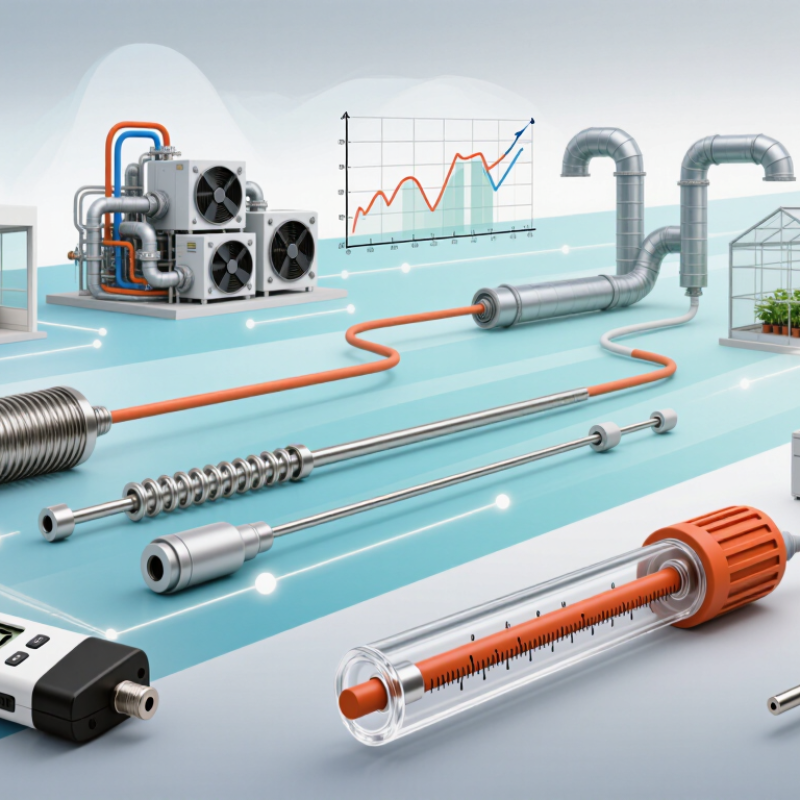
Air temperature sensors measure heat through different physical responses. Thermistors change resistance sharply as air temperature changes. They offer good sensitivity in rooms, cabinets, and ventilation ducts. Their compact probes respond quickly, but calibration can drift over time.

A resistance temperature detector, or RTD, also uses resistance variation. Its response is more stable across broad temperature ranges. RTDs suit laboratories, process areas, and controlled storage rooms. They usually require careful wiring to reduce lead resistance errors.

Thermocouples generate a small voltage when two different metals meet. The measuring instrument converts that voltage into temperature. They tolerate vibration and high temperatures, but their output is relatively weak. Electrical noise may disturb readings in long cables.

Semiconductor sensors use an electronic circuit to produce a voltage or digital signal. They are convenient for building controls and connected monitoring systems. Digital versions can simplify installation, though software errors remain possible.

Infrared sensors measure emitted thermal radiation without touching the air directly. They work better on surfaces than in open, moving air.

Selection should match airflow, humidity, response time, and required accuracy. Place the sensing element away from sunlight, heaters, and cold metal walls. A shield can reduce radiation errors outdoors. During commissioning, compare readings with a traceable reference instrument. Small differences are normal. Large differences need investigation.

I have seen a well-specified sensor fail because its probe was installed beside a fan motor. Datasheets also deserve skepticism; stated accuracy may exclude wiring, placement, and calibration effects. For global buyers, verify measurement units, supply voltage, enclosure protection, and local service capability before ordering.

Key Specifications for Comparing Sensors in 2026

2026 Top Air Temperature Sensors for Global Buyers

When comparing air temperature sensors in 2026, accuracy needs context. A stated ±0.2°C may apply only within a narrow laboratory range. Check the operating range, calibration conditions, and measurement uncertainty. In practical installations, sunlight, airflow, wall heat, and nearby equipment can shift readings. A shield matters. So does placement.

Response time also deserves attention. Fast sensors suit ventilation control, while slower units may work for room monitoring. Compare response time using the same test method. Review output options, such as analog signals, digital interfaces, or wireless transmission. Confirm voltage requirements and data compatibility before purchasing. Small mismatches create expensive delays.

Protection ratings help buyers assess outdoor reliability. Look for resistance to dust, moisture, condensation, and repeated temperature changes. Materials should tolerate the expected environment without affecting thermal response. Calibration certificates add confidence, but traceability and recalibration intervals matter more than paperwork alone. I have seen clean specifications hide unclear test conditions. That is a warning. Sensor accuracy should be verified after installation, not trusted blindly. Consider maintenance access, cable length, mounting position, and local service capability. A low-cost sensor can become costly when replacement requires specialist labor or long shipping times.

Top Air Temperature Sensor Applications Across Global Industries

In 2026, air temperature sensors support critical decisions across global industries. Their value depends on placement, calibration, and response speed. In commercial buildings, sensors regulate ventilation and reduce unnecessary energy use. A poorly positioned sensor can read a warm ceiling instead of occupied space. That mistake increases costs.

Cold-chain logistics uses sensors inside refrigerated trucks, warehouses, and loading areas. Food distributors monitor temperature changes during delays, door openings, and power interruptions. Healthcare facilities need stable readings for storage rooms, laboratories, and patient environments. Reliable systems should record data continuously and flag abnormal trends quickly. Short gaps matter.

Manufacturing plants use air sensors near ovens, clean areas, assembly lines, and control cabinets. Agriculture operations monitor greenhouses, drying rooms, and livestock shelters. Data centers depend on accurate readings around server aisles, cooling units, and return-air paths. Industrial teams often select probes with suitable protection, fast response, and traceable calibration. Yet specifications alone do not guarantee accuracy. Dust, airflow, humidity, and installation errors can distort results. Field checks should compare sensor readings with a calibrated reference under real operating conditions. Engineers may need to relocate sensors after observing airflow changes, rather than trusting the original design. That practical step is often overlooked.

How Global Buyers Can Select, Install, and Maintain the Right Sensor

2026 Top Air Temperature Sensors for Global Buyers

Selecting an air temperature sensor starts with the measurement environment, not the product catalogue. Define the expected temperature range, accuracy, response time, and signal type. A warehouse may need a stable digital sensor, while a fast process area may require a thermocouple. Check humidity, dust, vibration, and condensation before choosing the enclosure rating. Small details matter.

Install the sensor where air represents the real condition. Keep it away from sunlight, heaters, cooling coils, doors, and warm cables. Use a shield or protective housing in harsh areas, but avoid blocking airflow. Place the sensing element at the breathing zone when monitoring occupied rooms. Cable routing also deserves attention. Separate low-level signals from power cables to reduce electrical noise. Follow the installation instructions and applicable measurement standards.

Maintenance should be planned before the sensor is commissioned. Compare readings with a calibrated reference at scheduled intervals. Record the date, location, reference value, and adjustment made. Clean exposed probes carefully, especially in dusty facilities. Replace damaged seals and inspect connectors after seasonal changes. No selection guide is perfect. In practice, unexpected drafts or poor placement often cause larger errors than the sensor itself. Review the data, question unusual readings, and adjust the maintenance interval when field evidence supports it.